2.4 GHz


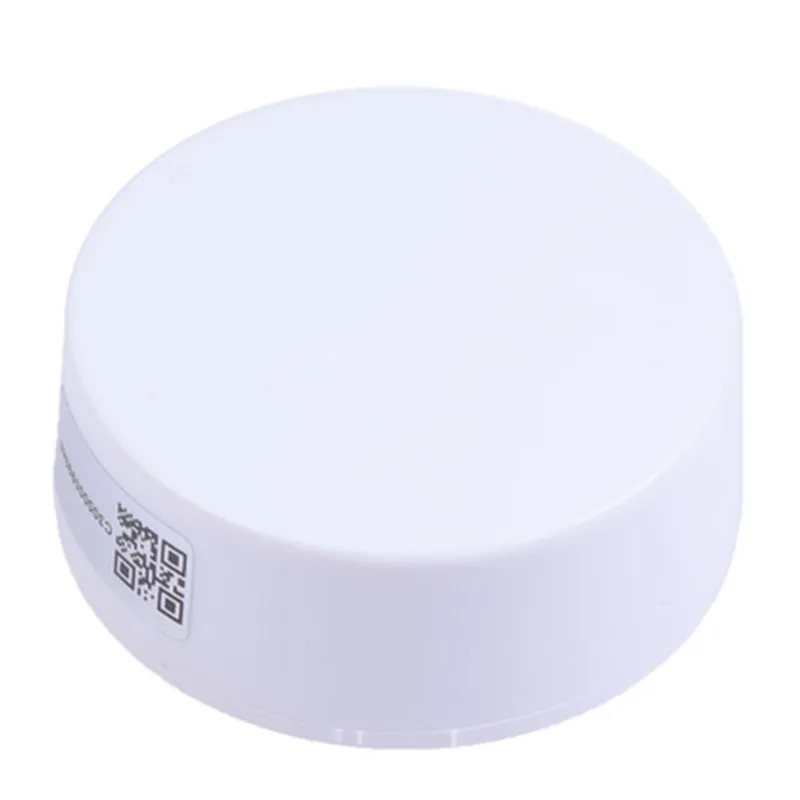

2.4 GHz
Up to 20 dBm
-90 dBm
Up to 125 kbps
| Average current consumption | 10 mA, peak current consumption: 20 mA |
-20C to 60C (-4F to 140F)
25 mm x 15 mm x 5 mm (0.98 in x 0.59 in x 0.20 in)
5 grams (0.18 oz)
Applications
| The E5 Location Beacon is ideal for a wide range of applications, including |
Asset tracking and management
Inventory tracking and optimization
Smart logistics and supply chain management
Industrial automation and monitoring
Environmental monitoring and tracking
By combining the E5 Location Beacon with the SenseCAP T1000 Tracker, developers and users can create powerful IoT solutions that leverage the benefits of accurate location tracking and proximity detection.
E5 Location Beacon for SenseCAP T1000 TrackerOverviewThe E5 Location Beacon is a compact, low-power wireless module designed for the SenseCAP T1000 Tracker, enabling accurate location tracking and low-power wide-area network (LPWAN) communication. This module operates on the E5 protocol, a modified version of the LoRaWAN protocol, and is optimized for IoT applications requiring low power consumption and long-range communication.Technical SpecificationsFrequency Band: 868 MHz (EU) / 915 MHz (US)
Modulation: Chirp Spread Spectrum (CSS)
Data Rate: Up to 20 kbps
Range: Up to 10 km (line of sight)
Power Consumption: Typically 30 mA (transmit) / 10 mA (receive)
Operating Voltage: 2.0 V to 3.6 V
Dimensions: 13.5 mm x 12.5 mm x 2.5 mmUsing the E5 Location Beacon with SenseCAP T1000 TrackerThe E5 Location Beacon can be used with the SenseCAP T1000 Tracker to enable location tracking and LPWAN communication. Here are some code examples to demonstrate its usage:Example 1: Basic Location TrackingThis example demonstrates how to use the E5 Location Beacon to send location data to a server using the SenseCAP T1000 Tracker.```c
#include <SenseCAP_T1000.h>
#include <E5_Location_Beacon.h>// Initialize the SenseCAP T1000 Tracker and E5 Location Beacon
SenseCAP_T1000 tracker;
E5_Location_Beacon e5;void setup() {
// Initialize the tracker and E5 module
tracker.begin();
e5.begin(tracker);
// Set the device ID and authentication key
e5.setDeviceID("device-123456");
e5.setAuthenticationKey("your-auth-key");
}void loop() {
// Read the GPS location
float lat, lon, alt;
tracker.readGPS(lat, lon, alt);
// Create a location data packet
uint8_t data[6];
data[0] = (lat >> 16) & 0xFF;
data[1] = (lat >> 8) & 0xFF;
data[2] = lat & 0xFF;
data[3] = (lon >> 16) & 0xFF;
data[4] = (lon >> 8) & 0xFF;
data[5] = lon & 0xFF;
// Send the location data using the E5 Location Beacon
e5.send(data, 6);
// Wait for 10 minutes before sending the next location update
delay(600000);
}
```Example 2: Integration with Cloud ServicesThis example demonstrates how to use the E5 Location Beacon to send location data to a cloud-based IoT platform, such as AWS IoT Core or Microsoft Azure IoT Hub.```c
#include <SenseCAP_T1000.h>
#include <E5_Location_Beacon.h>
#include <WiFi.h>
#include <HTTPClient.h>// Initialize the SenseCAP T1000 Tracker, E5 Location Beacon, and WiFi
SenseCAP_T1000 tracker;
E5_Location_Beacon e5;
WiFiClient wifiClient;
HTTPClient http;const char ssid = "your-wifi-ssid";
const char password = "your-wifi-password";
const char endpoint = "https://your-cloud-endpoint.com/locations";void setup() {
// Initialize the tracker, E5 module, and WiFi
tracker.begin();
e5.begin(tracker);
WiFi.begin(ssid, password);
while (WiFi.status() != WL_CONNECTED) {
delay(1000);
Serial.println("Connecting to WiFi...");
}
Serial.println("Connected to WiFi");
}void loop() {
// Read the GPS location
float lat, lon, alt;
tracker.readGPS(lat, lon, alt);
// Create a JSON payload for the location data
String json = "{""lat"":";
json += String(lat, 6);
json += ",""lon"":";
json += String(lon, 6);
json += ",""alt"":";
json += String(alt, 2);
json += "}";
// Send the location data to the cloud endpoint using HTTP
http.begin(endpoint);
http.addHeader("Content-Type", "application/json");
int responseCode = http.POST(json);
if (responseCode == 200) {
Serial.println("Location data sent to cloud endpoint");
} else {
Serial.println("Error sending location data to cloud endpoint");
}
// Wait for 10 minutes before sending the next location update
delay(600000);
}
```These examples demonstrate the basic usage of the E5 Location Beacon with the SenseCAP T1000 Tracker. For more advanced usage, such as customizing the E5 protocol parameters or integrating with other IoT devices, please refer to the datasheet and documentation provided by the manufacturer.