MAX30100 Pulse Oximeter Heart Rate Sensor Module


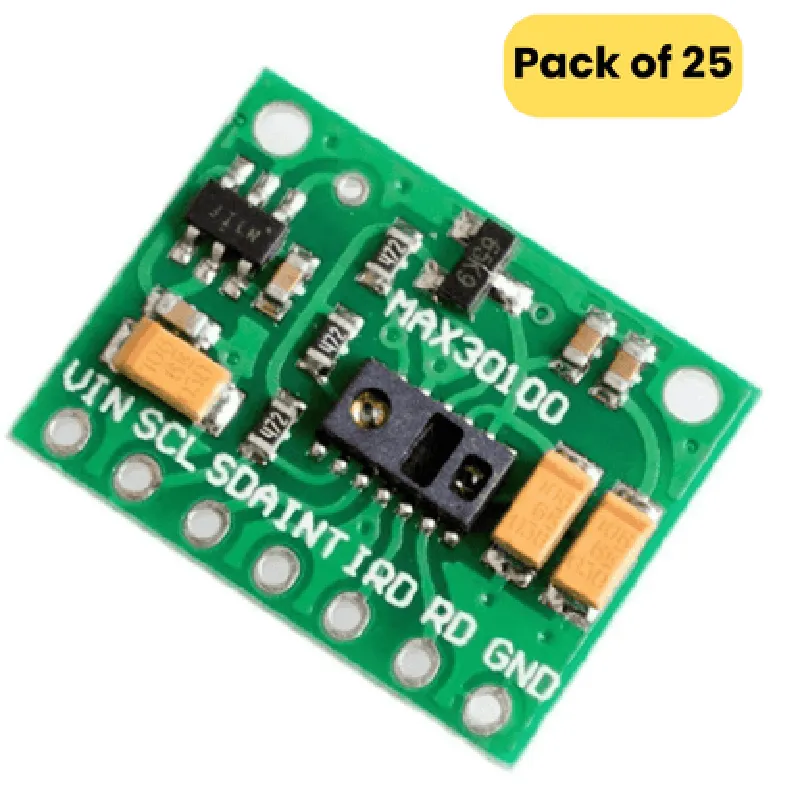
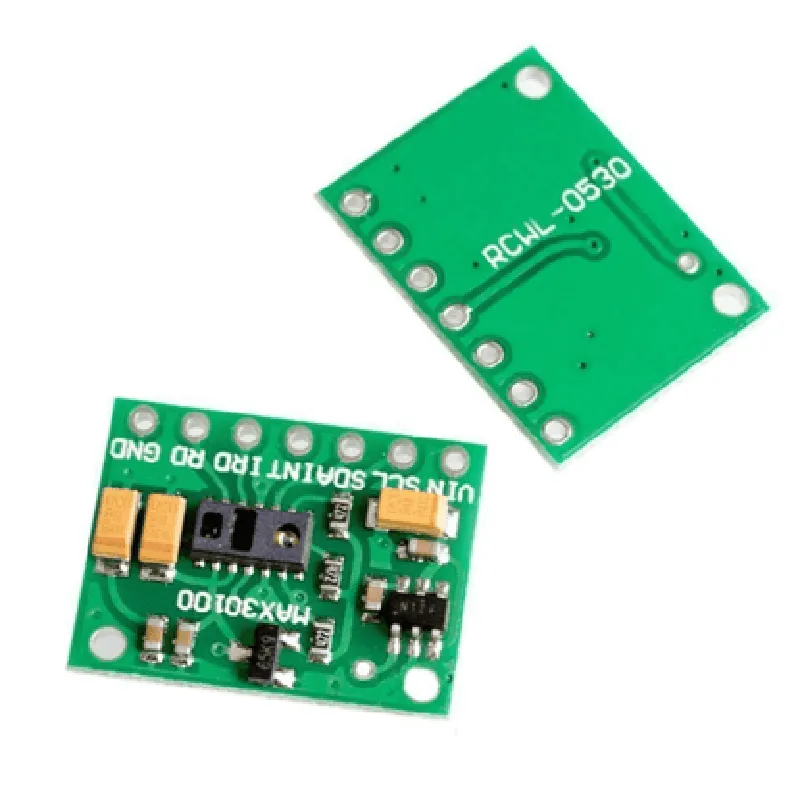
MAX30100 Pulse Oximeter Heart Rate Sensor Module
The MAX30100 Pulse Oximeter Heart Rate Sensor Module is a compact, low-power, and high-performance sensor module designed for measuring heart rate and oxygen saturation levels in real-time. This module is based on the MAX30100 integrated circuit, a highly sensitive and accurate pulse oximeter sensor from Maxim Integrated. The module is available in a pack of 25 units, making it an ideal choice for a wide range of applications, from wearable devices to medical equipment.
| The MAX30100 Pulse Oximeter Heart Rate Sensor Module is designed to measure the following physiological parameters | |
| Heart Rate (HR) | The module detects the pulse rate of an individual, providing accurate measurements in beats per minute (bpm). |
| Oxygen Saturation (SpO2) | The module measures the percentage of oxygen bound to hemoglobin in the blood, providing valuable insights into respiratory and circulatory health. |
The module uses a combination of photoplethysmography (PPG) and electro-optical sensing technologies to detect changes in blood flow and oxygenation levels. The MAX30100 IC is a highly sensitive and accurate sensor that uses a proprietary algorithm to process the raw data and provide reliable and consistent measurements.
| The MAX30100 Pulse Oximeter Heart Rate Sensor Module is suitable for a wide range of applications, including |
Wearable devices, such as smartwatches and fitness trackers
Medical devices, such as pulse oximeters and patient monitoring systems
Health and fitness monitoring systems
Sports and athletic performance tracking
Internet of Things (IoT) applications, such as remote health monitoring and wearable sensors
| The pack of 25 MAX30100 Pulse Oximeter Heart Rate Sensor Modules includes |
25 x MAX30100 Pulse Oximeter Heart Rate Sensor Modules
1 x Datasheet and user manual
| When ordering the MAX30100 Pulse Oximeter Heart Rate Sensor Module, please specify the following |
25 units per pack
[Insert part number]
The MAX30100 Pulse Oximeter Heart Rate Sensor Module is backed by a 1-year limited warranty. Technical support and documentation are available through the manufacturer's website and support team.
MAX30100 Pulse Oximeter Heart Rate Sensor Module DocumentationOverviewThe MAX30100 Pulse Oximeter Heart Rate Sensor Module is a highly integrated, low-power, and small-size sensor module designed for pulse oximetry and heart rate monitoring applications. This module is based on the MAX30100 IC, which combines two LEDs, photodetectors, and low-noise electronics with ambient light cancellation to provide accurate and reliable measurements.Pinout and ConnectionThe MAX30100 Pulse Oximeter Heart Rate Sensor Module has a 5-pin interface:| Pin | Function |
| --- | --- |
| VCC | Power supply (3.3V or 5V) |
| GND | Ground |
| SCL | I2C clock pin |
| SDA | I2C data pin |
| INT | Interrupt pin (optional) |I2C CommunicationThe MAX30100 module communicates with a microcontroller or host device via the I2C protocol. The I2C address of the module is 0x57.Register MapThe MAX30100 has several registers that can be accessed via I2C:| Register Address | Register Name | Description |
| --- | --- | --- |
| 0x00 | MODE_STAT | Mode and status register |
| 0x01 | IR_LED_CURRENT | IR LED current control register |
| 0x02 | LED_PULSE_AMPLITUDE | LED pulse amplitude control register |
| 0x03 | MULTI_LED_MODE_CONTROL | Multi-LED mode control register |
| 0x04 | SLOT_SET | Slot setting register |
| 0x05 | LED_PULSE_WIDTH | LED pulse width control register |Code Examples### Example 1: Read Heart Rate and Oxygen Saturation using ArduinoThis example demonstrates how to read heart rate and oxygen saturation data from the MAX30100 module using an Arduino board.```cpp
#include <Wire.h>#define MAX30100_ADDRESS 0x57void setup() {
Serial.begin(9600);
Wire.begin();
}void loop() {
byte heartRate;
byte spo2;// Read heart rate and oxygen saturation data
Wire.beginTransmission(MAX30100_ADDRESS);
Wire.write(0x00); // MODE_STAT register
Wire.endTransmission(false);
Wire.requestFrom(MAX30100_ADDRESS, 2);
heartRate = Wire.read();
spo2 = Wire.read();// Print heart rate and oxygen saturation data
Serial.print("Heart Rate: ");
Serial.print(heartRate);
Serial.println(" bpm");
Serial.print("Oxygen Saturation: ");
Serial.print(spo2);
Serial.println(" %");
Serial.println();delay(1000);
}
```### Example 2: Read Raw Data using Raspberry Pi (Python)This example demonstrates how to read raw data from the MAX30100 module using a Raspberry Pi and Python.```python
import smbus
import time# Initialize I2C bus
bus = smbus.SMBus(1)# MAX30100 I2C address
max30100_address = 0x57while True:
# Read raw data (6 bytes)
raw_data = bus.read_i2c_block_data(max30100_address, 0x04, 6)# Print raw data
print("Raw Data: ", end="")
for byte in raw_data:
print(f"{byte:02x} ", end="")
print()time.sleep(0.1)
```### Example 3: Interrupt-based Heart Rate Monitoring using ESP32 (C++)This example demonstrates how to use the interrupt pin of the MAX30100 module to detect new heart rate data and read it using an ESP32 board.```cpp
#include <WiFi.h>
#include <Wire.h>#define MAX30100_ADDRESS 0x57
#define INTERRUPT_PIN 2volatile bool newDataAvailable = false;void IRAM_ATTR handleInterrupt() {
newDataAvailable = true;
}void setup() {
Serial.begin(9600);
Wire.begin();
pinMode(INTERRUPT_PIN, INPUT);
attachInterrupt(INTERRUPT_PIN, handleInterrupt, RISING);
}void loop() {
if (newDataAvailable) {
byte heartRate;// Read heart rate data
Wire.beginTransmission(MAX30100_ADDRESS);
Wire.write(0x00); // MODE_STAT register
Wire.endTransmission(false);
Wire.requestFrom(MAX30100_ADDRESS, 1);
heartRate = Wire.read();// Print heart rate data
Serial.print("Heart Rate: ");
Serial.print(heartRate);
Serial.println(" bpm");newDataAvailable = false;
}
delay(10);
}
```These code examples demonstrate the basic usage of the MAX30100 Pulse Oximeter Heart Rate Sensor Module in various contexts. You can modify and expand on these examples to suit your specific application requirements.