ROCK 4 SE Single Board Computer


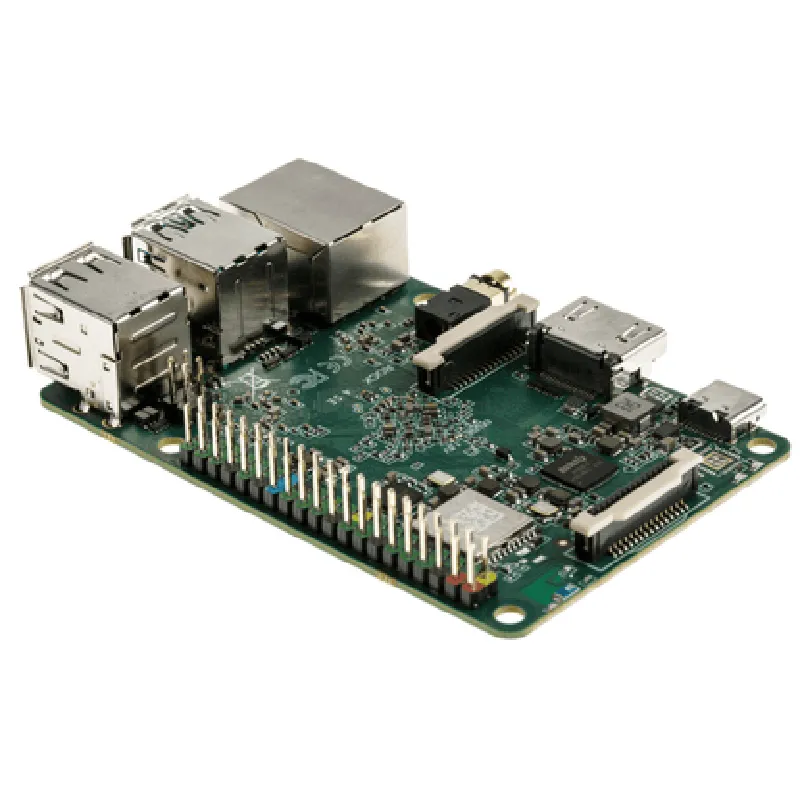
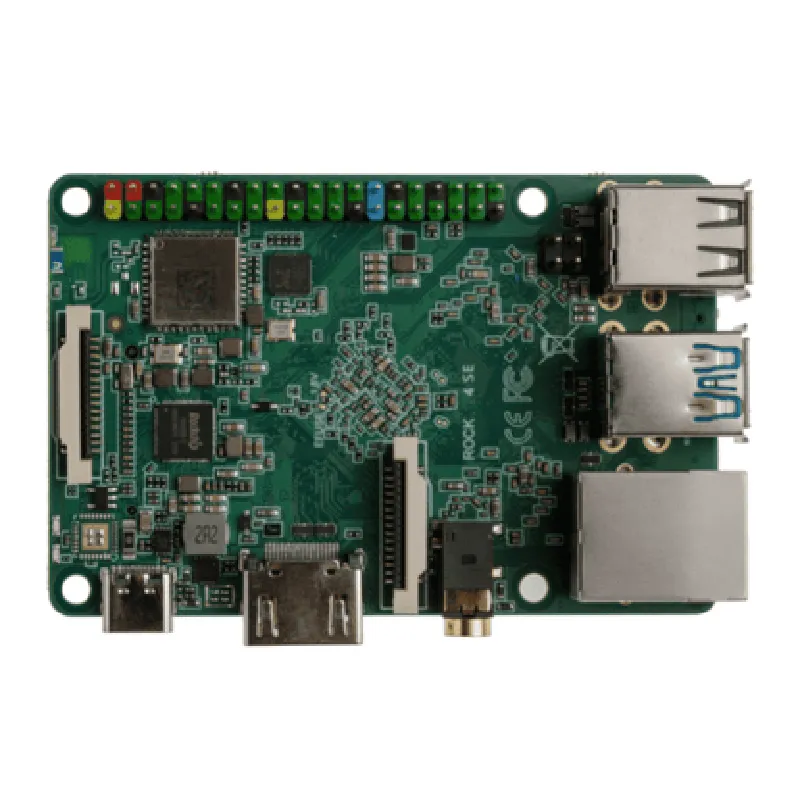
ROCK 4 SE Single Board Computer
The ROCK 4 SE Single Board Computer (SBC) is a powerful, feature-rich, and compact computing platform based on the Rockchip RK3399-T system-on-chip (SoC). This single-board computer is designed for a wide range of applications, including IoT, artificial intelligence, machine learning, and robotics, as well as for use in industrial control systems, media centers, and more.
### Processors and Memory
Rockchip RK3399-T, a hexa-core processor featuring two ARM Cortex-A72 cores and four ARM Cortex-A53 cores
Up to 2.0 GHz
4GB LPDDR4, offering high-bandwidth and low-power memory for demanding applications
Supports microSD card expansion up to 128GB, as well as eMMC storage (optional)
### Connectivity and Interfaces
Dual-band Wi-Fi 5 (802.11ac), Bluetooth 5.0, and Gigabit Ethernet (RJ45)
2x USB 3.0 Type-A, 1x USB 3.0 Type-C, and 1x USB 2.0 Type-C (OTG)
1x HDMI 2.0 (4K@60Hz), 1x MIPI-DSI (4 lanes), and 1x eDP (4 lanes)
1x 3.5mm audio jack, 1x digital microphone, and 1x speaker connector
1x SPI, 1x I2C, 2x UART, 1x I2S, 1x PCM, and 1x JTAG
### Operating System and Software
Android, Ubuntu, Debian, and other Linux distributions
Supports popular development tools and frameworks, including Android SDK, Android Things, and Linux SDK
### Power and Dimensions
5V DC, via USB-C or GPIO headers
<10W (typical), <15W (max)
85mm x 56mm x 18mm (3.34in x 2.20in x 0.71in)
Approximately 65g (2.29oz)
### Additional Features
Supports secure boot mechanisms for secure-boot enabled operating systems
Features a range of hardware accelerators, including a GPU, VPU, and ISP
Designed with thermal management in mind, featuring a heat sink and thermal tape for efficient heat dissipation
The ROCK 4 SE Single Board Computer offers a unique combination of performance, power efficiency, and features, making it an ideal choice for a wide range of applications, from IoT and AI to industrial automation and beyond.
ROCK 4 SE Single Board Computer DocumentationOverviewThe ROCK 4 SE Single Board Computer is a powerful and compact computing platform based on the Rockchip RK3399-T ARM Cortex-A72 processor. This SBC is equipped with 4GB of LPDDR4 RAM, making it suitable for a wide range of IoT applications, from multimedia processing to artificial intelligence and machine learning.Technical SpecificationsProcessor: Rockchip RK3399-T ARM Cortex-A72
RAM: 4GB LPDDR4
Storage: eMMC 5.1, MicroSD card slot
Operating System: Android 10, Ubuntu 20.04 LTS, Debian 10
Connectivity: Wi-Fi 5, Bluetooth 5.0, Gigabit Ethernet, USB 3.0, HDMI 2.0
GPIO: 2x 40-pin headers, 1x 16-pin headerCode Examples### Example 1: Python Script for GPIO Control using RPi.GPIOThis example demonstrates how to use the ROCK 4 SE's GPIO pins to control an LED using Python and the RPi.GPIO library.Hardware RequirementsROCK 4 SE Single Board Computer
Breadboard
LED
Resistor (1k)
Jumper wiresSoftware RequirementsPython 3.x installed on the ROCK 4 SE
RPi.GPIO library installedCode
```python
import RPi.GPIO as GPIO
import time# Set up GPIO mode
GPIO.setmode(GPIO.BCM)# Define the LED pin
LED_PIN = 17# Set up the LED pin as an output
GPIO.setup(LED_PIN, GPIO.OUT)try:
while True:
# Turn the LED on
GPIO.output(LED_PIN, GPIO.HIGH)
print("LED is on")
time.sleep(1)
# Turn the LED off
GPIO.output(LED_PIN, GPIO.LOW)
print("LED is off")
time.sleep(1)except KeyboardInterrupt:
# Clean up GPIO on exit
GPIO.cleanup()
```
### Example 2: Linux Shell Script for System Information and Temperature MonitoringThis example demonstrates how to use the ROCK 4 SE's Linux operating system to create a shell script that displays system information and monitors the CPU temperature.Software RequirementsLinux operating system installed on the ROCK 4 SE
`lm-sensors` package installedCode
```bash
#!/bin/bash# Display system information
echo "System Information:"
echo "-----------------"
uname -a
cat /proc/cpuinfo | grep "model name"
cat /proc/meminfo | grep "MemTotal"# Monitor CPU temperature
echo "CPU Temperature:"
echo "-----------------"while true
do
temperature=$(sensors -f | grep "CPU Temperature" | awk '{print $2}')
echo "Temperature: $temperatureC"
sleep 1
done
```
### Example 3: C++ Program for Image Processing using OpenCVThis example demonstrates how to use the ROCK 4 SE's camera interface and OpenCV library to capture and process images.Hardware RequirementsROCK 4 SE Single Board Computer
Camera module (e.g., OV5647)Software RequirementsOpenCV library installed on the ROCK 4 SE
C++ compiler (e.g., GCC)Code
```cpp
#include <opencv2/opencv.hpp>
#include <iostream>int main() {
// Initialize the camera
cv::VideoCapture cap(0);if (!cap.isOpened()) {
std::cerr << "Error: Unable to open camera" << std::endl;
return 1;
}while (true) {
// Capture a frame
cv::Mat frame;
cap >> frame;// Convert the frame to grayscale
cv::Mat gray;
cv::cvtColor(frame, gray, cv::COLOR_BGR2GRAY);// Display the grayscale image
cv::imshow("GrayScale", gray);// Exit on key press
if (cv::waitKey(1) == 27) {
break;
}
}// Release resources
cap.release();
cv::destroyAllWindows();return 0;
}
```
These examples demonstrate the ROCK 4 SE's capabilities in various contexts, including GPIO control, system information and temperature monitoring, and image processing. The ROCK 4 SE's flexibility and versatility make it an ideal choice for a wide range of IoT applications.