Stufin
Home Quick Cart Profile

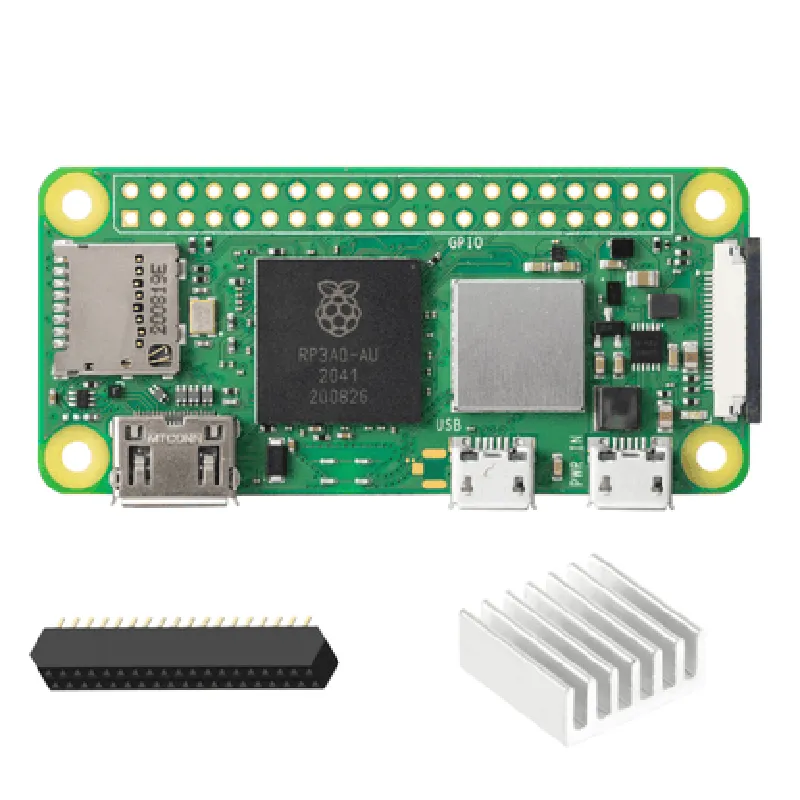
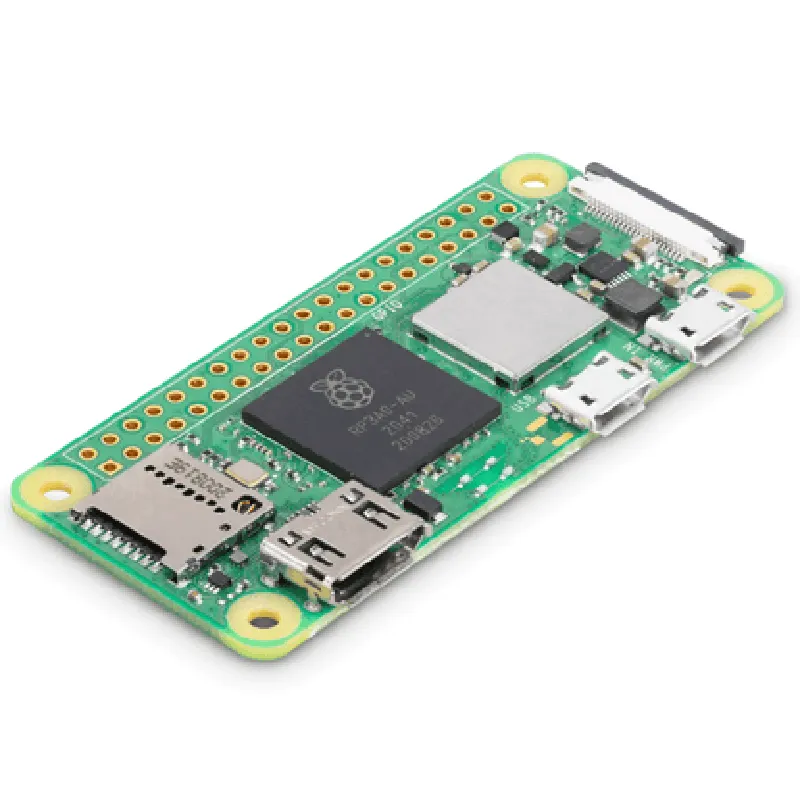
RASPBERRY PI ZERO 2W WITH ALUMINIUM HEATSINK AND 20X2 HEADER

Buy Now on Stufin

CPU

Quad-core Cortex-A53 CPU, 1.0 GHz


Memory

512 MB RAM

Storage

MicroSD card slot

Wireless Connectivity

802.11 b/g/n wireless LAN, Bluetooth 4.2

Headers

20x2 header with GPIO, I2C, SPI, UART interfaces

Operating System

Compatible with various operating systems, including Raspbian, Ubuntu, and Windows 10 IoT

Power Consumption

Typical 1-2W

Dimensions

65mm x 30mm

Weight

Approximately 10 grams

Conclusion

The Raspberry Pi Zero 2W with Aluminium Heatsink and 20x2 Header is a powerful, compact, and feature-rich SBC that offers a unique combination of performance, connectivity, and affordability. Its versatility, ease of use, and low power consumption make it an ideal choice for a wide range of applications, from IoT projects to robotics and embedded systems.

Pin Configuration

  • RASPBERRY PI ZERO 2W WITH ALUMINIUM HEATSINK AND 20X2 HEADER PINOUT DOCUMENTATION
  • The Raspberry Pi Zero 2W with an aluminium heatsink and 20x2 header is a compact and powerful single-board computer designed for IoT and robotics applications. The 20x2 header provides a range of GPIO (General Purpose Input/Output) pins that enable users to connect various peripherals and modules. Below is a detailed explanation of each pin on the 20x2 header:
  • Pinout Structure:
  • The 20x2 header is divided into two rows: Row A and Row B. Each row has 20 pins, labeled from 1 to 20.
  • Row A (Left Side):
  • 1. 3V3 Power (Pin 1): A 3.3V power supply pin, used to power external circuitry or devices.
  • 2. 5V Power (Pin 2): A 5V power supply pin, used to power external circuitry or devices.
  • 3. GPIO 2 (Pin 3): A GPIO pin that can be used as an input or output.
  • 4. GPIO 3 (Pin 4): A GPIO pin that can be used as an input or output.
  • 5. GPIO 4 (Pin 5): A GPIO pin that can be used as an input or output.
  • 6. Ground (Pin 6): A ground connection pin, used to provide a common ground reference.
  • 7. GPIO 14 (Pin 7): A GPIO pin that can be used as an input or output.
  • 8. GPIO 15 (Pin 8): A GPIO pin that can be used as an input or output.
  • 9. GPIO 17 (Pin 9): A GPIO pin that can be used as an input or output.
  • 10. GPIO 18 (Pin 10): A GPIO pin that can be used as an input or output.
  • 11. GPIO 27 (Pin 11): A GPIO pin that can be used as an input or output.
  • 12. GPIO 22 (Pin 12): A GPIO pin that can be used as an input or output.
  • 13. GPIO 23 (Pin 13): A GPIO pin that can be used as an input or output.
  • 14. Ground (Pin 14): A ground connection pin, used to provide a common ground reference.
  • 15. GPIO 24 (Pin 15): A GPIO pin that can be used as an input or output.
  • 16. GPIO 10 (Pin 16): A GPIO pin that can be used as an input or output.
  • 17. GPIO 9 (Pin 17): A GPIO pin that can be used as an input or output.
  • 18. GPIO 25 (Pin 18): A GPIO pin that can be used as an input or output.
  • 19. GPIO 11 (Pin 19): A GPIO pin that can be used as an input or output.
  • 20. GPIO 8 (Pin 20): A GPIO pin that can be used as an input or output.
  • Row B (Right Side):
  • 1. ID 0 (Pin 1): A identification pin, used to detect the presence of the Raspberry Pi.
  • 2. ID 1 (Pin 2): A identification pin, used to detect the presence of the Raspberry Pi.
  • 3. UART TXD (Pin 3): The transmit data pin for the UART (Universal Asynchronous Receiver-Transmitter) interface.
  • 4. UART RXD (Pin 4): The receive data pin for the UART interface.
  • 5. GPIO 5 (Pin 5): A GPIO pin that can be used as an input or output.
  • 6. Ground (Pin 6): A ground connection pin, used to provide a common ground reference.
  • 7. GPIO 6 (Pin 7): A GPIO pin that can be used as an input or output.
  • 8. GPIO 12 (Pin 8): A GPIO pin that can be used as an input or output.
  • 9. GPIO 13 (Pin 9): A GPIO pin that can be used as an input or output.
  • 10. GPIO 19 (Pin 10): A GPIO pin that can be used as an input or output.
  • 11. GPIO 16 (Pin 11): A GPIO pin that can be used as an input or output.
  • 12. GPIO 26 (Pin 12): A GPIO pin that can be used as an input or output.
  • 13. GPIO 20 (Pin 13): A GPIO pin that can be used as an input or output.
  • 14. Ground (Pin 14): A ground connection pin, used to provide a common ground reference.
  • 15. GPIO 21 (Pin 15): A GPIO pin that can be used as an input or output.
  • 16. 3V3 Power (Pin 16): A 3.3V power supply pin, used to power external circuitry or devices.
  • 17. I2C SDA (Pin 17): The data pin for the I2C (Inter-Integrated Circuit) interface.
  • 18. I2C SCL (Pin 18): The clock pin for the I2C interface.
  • 19. SPI MOSI (Pin 19): The master out slave in pin for the SPI (Serial Peripheral Interface) interface.
  • 20. SPI CE0 (Pin 20): The chip enable pin for the SPI interface.
  • Connecting the Pins:
  • When connecting peripherals or modules to the Raspberry Pi Zero 2W, ensure that the voltage levels and signal compatibility are matched. Follow these guidelines:
  • Use a breadboard or a PCB with a compatible layout to connect your peripherals or modules.
  • Use jumper wires or suitable connectors to connect the pins.
  • Ensure that the power supply pins (3V3 and 5V) are connected to a suitable power source.
  • Ground connections should be made to a common ground reference.
  • When using GPIO pins, ensure that they are configured as inputs or outputs in your software or firmware.
  • When using communication interfaces like UART, I2C, or SPI, ensure that the correct pins are connected and configured correctly.
  • Remember to refer to the official Raspberry Pi documentation and datasheets for more detailed information on pinouts, electrical characteristics, and software configurations.

Code Examples

RASPBERRY PI ZERO 2W WITH ALUMINIUM HEATSINK AND 20X2 HEADER
Overview
The Raspberry Pi Zero 2W is a miniature single-board computer that is part of the Raspberry Pi family. This specific model comes with an aluminum heatsink for improved thermal management and a 20x2 header for expanding its capabilities. With its compact size, low power consumption, and affordability, the Raspberry Pi Zero 2W is an ideal choice for IoT projects, robotics, and other embedded systems applications.
Technical Specifications
Processor: Broadcom BCM2837B0 quad-core Cortex-A53 SoC
 Memory: 512MB RAM
 Storage: microSD card slot
 Wireless: Dual-band 802.11ac wireless LAN and Bluetooth 4.2
 GPIO: 20x2 header with 28 GPIO pins
 Power: Micro-USB port for power input, 5V, 2.5A recommended
 Operating System: Raspberry Pi OS, Ubuntu, and other Linux distributions supported
Code Examples
### Example 1: Blinking an LED using Python
This example demonstrates how to use the Raspberry Pi Zero 2W's GPIO pins to control an LED.
Hardware Requirements:
Raspberry Pi Zero 2W
 LED
 1k resistor
 Breadboard and jumper wires
Software Requirements:
Raspberry Pi OS with Python 3 installed
Code:
```python
import time
import RPi.GPIO as GPIO
# Set up GPIO mode
GPIO.setmode(GPIO.BCM)
# Set up the LED pin as an output
LED_PIN = 17
GPIO.setup(LED_PIN, GPIO.OUT)
try:
    while True:
        # Blink the LED
        GPIO.output(LED_PIN, GPIO.HIGH)
        time.sleep(1)
        GPIO.output(LED_PIN, GPIO.LOW)
        time.sleep(1)
except KeyboardInterrupt:
    # Clean up
    GPIO.cleanup()
```
Run this code on the Raspberry Pi Zero 2W to blink the LED connected to pin 17.
### Example 2: Reading temperature and humidity using a sensor (DHT11)
This example demonstrates how to use the Raspberry Pi Zero 2W to read temperature and humidity data from a DHT11 sensor.
Hardware Requirements:
Raspberry Pi Zero 2W
 DHT11 temperature and humidity sensor
 Breadboard and jumper wires
Software Requirements:
Raspberry Pi OS with Python 3 installed
 `Adafruit_DHT` library installed (`sudo pip3 install Adafruit_DHT`)
Code:
```python
import Adafruit_DHT
# Set up the DHT11 sensor
DHT_PIN = 4
DHT_SENSOR = Adafruit_DHT.DHT11
while True:
    # Read temperature and humidity
    humidity, temperature = Adafruit_DHT.read(DHT_SENSOR, DHT_PIN)
if humidity is not None and temperature is not None:
        print(f"Temperature: {temperature:.1f}C, Humidity: {humidity:.1f}%")
    else:
        print("Failed to read data from sensor")
# Wait 1 second before taking the next reading
    time.sleep(1)
```
Run this code on the Raspberry Pi Zero 2W to read temperature and humidity data from the DHT11 sensor connected to pin 4.
These examples demonstrate the basics of using the Raspberry Pi Zero 2W with an aluminum heatsink and 20x2 header. With its compact size and GPIO capabilities, this board is ideal for a wide range of IoT projects.