Stufin
Home Quick Cart Profile

Raspberry Pi Black Case for Model 3B, 3B+ and 2B (Multicomp)

Buy Now on Stufin

Component Name

Raspberry Pi Black Case for Model 3B, 3B+, and 2B (Multicomp)


Description

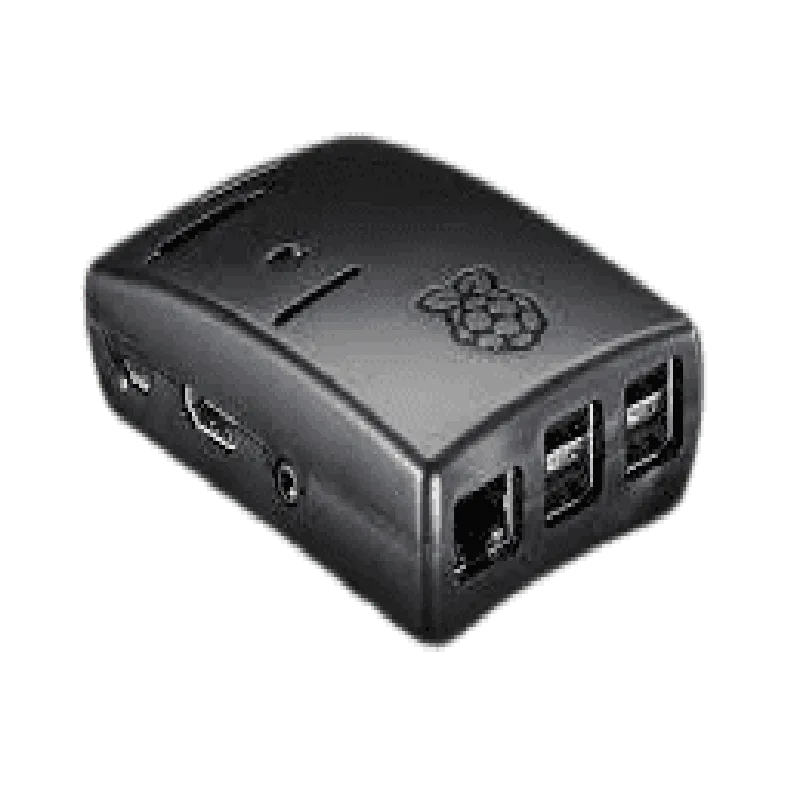
The Raspberry Pi Black Case for Model 3B, 3B+, and 2B (Multicomp) is a high-quality enclosure designed specifically for the popular Raspberry Pi single-board computers. This case provides a durable, compact, and aesthetically pleasing housing for your Raspberry Pi project, protecting it from environmental factors and enhancing its overall appearance.
Functionality

The primary function of the Raspberry Pi Black Case is to securely enclose and protect the Raspberry Pi board from physical damage, dust, and other environmental elements. The case also provides easy access to all ports and connectors on the board, making it convenient to connect peripherals, sensors, and other devices.

Key Features

  • Compatibility: The case is designed to fit Raspberry Pi Models 3B, 3B+, and 2B, ensuring compatibility with a wide range of projects and applications.
  • Durable Construction: The case is made from high-quality ABS plastic, providing excellent protection against physical shocks, scratches, and other forms of damage.
  • Compact Design: The case has a compact and slim profile, making it ideal for space-constrained projects and applications.
  • Easy Access: The case features easy access to all ports and connectors on the Raspberry Pi board, including USB, HDMI, Ethernet, and GPIO pins.
  • Ventilation: The case has strategically placed ventilation holes to ensure efficient heat dissipation and airflow, preventing overheating and promoting reliable operation.
  • Aesthetics: The black finish gives the case a sleek and professional appearance, making it suitable for a wide range of applications, from prototyping to production environments.
  • Easy Installation: The case is designed for easy installation, with a simple snap-together design that requires no screws or adhesives.
  • Protection: The case provides protection against electromagnetic interference (EMI) and radio-frequency interference (RFI), ensuring reliable operation in noisy environments.
  • Weight and Dimensions: The case weighs approximately 55 grams and measures 92mm x 58mm x 25mm (L x W x H), making it compact and lightweight.

Material

ABS plastic

Color

Black

Dimensions

92mm x 58mm x 25mm (L x W x H)

Weight

Approximately 55 grams

Compatibility

Raspberry Pi Models 3B, 3B+, and 2B

Ventilation

Strategically placed ventilation holes

Ports and Connectors

Easy access to all ports and connectors on the Raspberry Pi board

Certifications and Compliance

CE marked

RoHS compliant

FCC compliant

Warranty and Support

Manufacturer's warranty1-year limited warranty

Technical support

Provided by the manufacturer and online community resources

Packaging and Accessories

The case is packaged in a protective box with a clear plastic window

Includes a set of rubber feet for added stability and grip

The Raspberry Pi Black Case for Model 3B, 3B+, and 2B (Multicomp) is an excellent choice for anyone looking for a high-quality, durable, and easy-to-use enclosure for their Raspberry Pi project.
Pin Configuration

  • Raspberry Pi Black Case for Model 3B, 3B+, and 2B (Multicomp) - Pinout Explanation
  • The Raspberry Pi Black Case for Model 3B, 3B+, and 2B (Multicomp) is a compact and durable enclosure designed to house the Raspberry Pi single-board computer. The case provides access to all GPIO (General Purpose Input/Output) pins, allowing users to connect various peripherals and devices to the Raspberry Pi. This documentation provides a detailed explanation of each pin and guides on how to connect them.
  • GPIO Pinout:
  • The Raspberry Pi has 40 GPIO pins, which are divided into two rows of 20 pins each. The pinout is as follows:
  • Row 1:
  • 1. 3.3V Power (PIN 1): Provides 3.3V power supply to external devices.
  • Connection: Connect to a 3.3V power input on external devices or modules.
  • 2. 5V Power (PIN 2): Provides 5V power supply to external devices.
  • Connection: Connect to a 5V power input on external devices or modules.
  • 3. SDA (PIN 3): I2C (Inter-Integrated Circuit) data line for serial communication.
  • Connection: Connect to SDA pin on I2C devices or modules.
  • 4. 5V Power (PIN 4): Provides 5V power supply to external devices.
  • Connection: Connect to a 5V power input on external devices or modules.
  • 5. SCL (PIN 5): I2C clock line for serial communication.
  • Connection: Connect to SCL pin on I2C devices or modules.
  • 6. GPIO 6 (PIN 6): General-purpose digital input/output pin.
  • Connection: Connect to GPIO 6 pin on external devices or modules.
  • 7. GPIO 7 (PIN 7): General-purpose digital input/output pin.
  • Connection: Connect to GPIO 7 pin on external devices or modules.
  • 8. TXD (PIN 8): UART (Universal Asynchronous Receiver-Transmitter) transmit data line for serial communication.
  • Connection: Connect to TX pin on serial devices or modules.
  • 9. GPIO 8 (PIN 9): General-purpose digital input/output pin.
  • Connection: Connect to GPIO 8 pin on external devices or modules.
  • 10. RXD (PIN 10): UART receive data line for serial communication.
  • Connection: Connect to RX pin on serial devices or modules.
  • 11. GPIO 9 (PIN 11): General-purpose digital input/output pin.
  • Connection: Connect to GPIO 9 pin on external devices or modules.
  • 12. GPIO 10 (PIN 12): General-purpose digital input/output pin.
  • Connection: Connect to GPIO 10 pin on external devices or modules.
  • 13. GPIO 11 (PIN 13): General-purpose digital input/output pin.
  • Connection: Connect to GPIO 11 pin on external devices or modules.
  • 14. GPIO 14 (PIN 14): General-purpose digital input/output pin.
  • Connection: Connect to GPIO 14 pin on external devices or modules.
  • 15. GPIO 15 (PIN 15): General-purpose digital input/output pin.
  • Connection: Connect to GPIO 15 pin on external devices or modules.
  • 16. 3.3V Power (PIN 16): Provides 3.3V power supply to external devices.
  • Connection: Connect to a 3.3V power input on external devices or modules.
  • 17. GPIO 17 (PIN 17): General-purpose digital input/output pin.
  • Connection: Connect to GPIO 17 pin on external devices or modules.
  • 18. GPIO 18 (PIN 18): General-purpose digital input/output pin.
  • Connection: Connect to GPIO 18 pin on external devices or modules.
  • 19. GPIO 19 (PIN 19): General-purpose digital input/output pin.
  • Connection: Connect to GPIO 19 pin on external devices or modules.
  • 20. GND (PIN 20): Ground connection for external devices.
  • Connection: Connect to GND pin on external devices or modules.
  • Row 2:
  • 21. GPIO 20 (PIN 21): General-purpose digital input/output pin.
  • Connection: Connect to GPIO 20 pin on external devices or modules.
  • 22. GPIO 21 (PIN 22): General-purpose digital input/output pin.
  • Connection: Connect to GPIO 21 pin on external devices or modules.
  • 23. GPIO 22 (PIN 23): General-purpose digital input/output pin.
  • Connection: Connect to GPIO 22 pin on external devices or modules.
  • 24. GPIO 23 (PIN 24): General-purpose digital input/output pin.
  • Connection: Connect to GPIO 23 pin on external devices or modules.
  • 25. GPIO 24 (PIN 25): General-purpose digital input/output pin.
  • Connection: Connect to GPIO 24 pin on external devices or modules.
  • 26. GPIO 25 (PIN 26): General-purpose digital input/output pin.
  • Connection: Connect to GPIO 25 pin on external devices or modules.
  • 27. ID_SD (PIN 27): Identification pin for boot mode configuration.
  • Connection: Not typically used in most applications.
  • 28. ID_SC (PIN 28): Identification pin for boot mode configuration.
  • Connection: Not typically used in most applications.
  • 29. GPIO 5 (PIN 29): General-purpose digital input/output pin.
  • Connection: Connect to GPIO 5 pin on external devices or modules.
  • 30. GPIO 6 (PIN 30): General-purpose digital input/output pin.
  • Connection: Connect to GPIO 6 pin on external devices or modules.
  • 31. GPIO 13 (PIN 31): General-purpose digital input/output pin.
  • Connection: Connect to GPIO 13 pin on external devices or modules.
  • 32. GPIO 19 (PIN 32): General-purpose digital input/output pin.
  • Connection: Connect to GPIO 19 pin on external devices or modules.
  • 33. GPIO 16 (PIN 33): General-purpose digital input/output pin.
  • Connection: Connect to GPIO 16 pin on external devices or modules.
  • 34. GPIO 26 (PIN 34): General-purpose digital input/output pin.
  • Connection: Connect to GPIO 26 pin on external devices or modules.
  • 35. GPIO 20 (PIN 35): General-purpose digital input/output pin.
  • Connection: Connect to GPIO 20 pin on external devices or modules.
  • 36. GND (PIN 36): Ground connection for external devices.
  • Connection: Connect to GND pin on external devices or modules.
  • 37. GPIO 21 (PIN 37): General-purpose digital input/output pin.
  • Connection: Connect to GPIO 21 pin on external devices or modules.
  • 38. GPIO 22 (PIN 38): General-purpose digital input/output pin.
  • Connection: Connect to GPIO 22 pin on external devices or modules.
  • 39. GPIO 23 (PIN 39): General-purpose digital input/output pin.
  • Connection: Connect to GPIO 23 pin on external devices or modules.
  • 40. GND (PIN 40): Ground connection for external devices.
  • Connection: Connect to GND pin on external devices or modules.
  • When connecting pins:
  • Make sure to match the pin numbers on the Raspberry Pi with the corresponding pins on the external device or module.
  • Use jumper wires or a breadboard to connect the pins securely.
  • Be cautious when handling the GPIO pins to avoid damage or electrical shock.
  • Always refer to the documentation of the external device or module for specific connection requirements.
  • By following this pinout explanation, you can successfully connect various peripherals and devices to your Raspberry Pi Black Case for Model 3B, 3B+, and 2B (Multicomp).

Code Examples

Raspberry Pi Black Case for Model 3B, 3B+, and 2B (Multicomp)
Overview
The Raspberry Pi Black Case is a compact and durable enclosure designed specifically for the Raspberry Pi Model 3B, 3B+, and 2B single-board computers. This case provides excellent protection for your Raspberry Pi board while still allowing access to all ports and features.
Features
Compact and lightweight design
 Durable black plastic construction
 Compatible with Raspberry Pi Model 3B, 3B+, and 2B
 Easy to assemble and disassemble
 Access to all ports, including HDMI, USB, Ethernet, and GPIO
 Ventilation holes for heat dissipation
Technical Specifications
Material: Black plastic
 Dimensions: 94mm x 60mm x 25mm (L x W x H)
 Weight: approximately 60g
 Compatible with Raspberry Pi Model 3B, 3B+, and 2B
Using the Raspberry Pi Black Case in Various Contexts
### Example 1: Basic Setup with Raspberry Pi 3B+
In this example, we will demonstrate how to set up a basic Raspberry Pi 3B+ system using the black case.
Hardware Requirements
Raspberry Pi 3B+
 Raspberry Pi Black Case
 Power supply (5V, 2.5A)
 MicroSD card (8GB or larger)
 HDMI cable
 Monitor or TV
Software Requirements
Raspbian OS (or any other compatible operating system)
Steps
1. Insert the Raspberry Pi 3B+ board into the case, ensuring it is properly aligned and secured.
2. Connect the power supply, HDMI cable, and microSD card to the corresponding ports on the Raspberry Pi board.
3. Turn on the power supply and boot up the Raspberry Pi.
4. Install and configure the Raspbian OS (or your preferred operating system).
### Example 2: IoT Project with Temperature Sensor and LCD Display
In this example, we will demonstrate how to use the Raspberry Pi Black Case in an IoT project that measures temperature using a DS18B20 sensor and displays the reading on an LCD display.
Hardware Requirements
Raspberry Pi 3B+
 Raspberry Pi Black Case
 DS18B20 temperature sensor
 LCD display (16x2 characters)
 Breadboard and jumper wires
 Power supply (5V, 2.5A)
Software Requirements
Raspbian OS (or any other compatible operating system)
 Python programming language
 RPi.GPIO library
Code Example (Python)
```python
import RPi.GPIO as GPIO
import time
# Set up GPIO pins for LCD display
LCD_RS = 7
LCD_EN = 8
LCD_D4 = 25
LCD_D5 = 24
LCD_D6 = 23
LCD_D7 = 18
# Set up GPIO pin for DS18B20 temperature sensor
TEMP_SENSOR_PIN = 4
# Initialize GPIO pins
GPIO.setmode(GPIO.BCM)
GPIO.setup(LCD_RS, GPIO.OUT)
GPIO.setup(LCD_EN, GPIO.OUT)
GPIO.setup(LCD_D4, GPIO.OUT)
GPIO.setup(LCD_D5, GPIO.OUT)
GPIO.setup(LCD_D6, GPIO.OUT)
GPIO.setup(LCD_D7, GPIO.OUT)
GPIO.setup(TEMP_SENSOR_PIN, GPIO.IN)
# Initialize LCD display
lcd_init()
# Read temperature from DS18B20 sensor
def read_temperature():
    temp_data = []
    GPIO.output(TEMP_SENSOR_PIN, GPIO.HIGH)
    time.sleep(0.015)
    GPIO.output(TEMP_SENSOR_PIN, GPIO.LOW)
    time.sleep(0.015)
    temp_data = []
    for i in range(9):
        temp_data.append(GPIO.input(TEMP_SENSOR_PIN))
    temp = 0
    for i in range(8):
        temp += temp_data[i]  2i
    return temp
# Display temperature on LCD display
while True:
    temp = read_temperature()
    lcd_string("Temperature: {:.1f}C".format(temp), 1)
    time.sleep(1)
```
### Example 3: Home Automation with Raspberry Pi and Relay Module
In this example, we will demonstrate how to use the Raspberry Pi Black Case in a home automation project that controls a relay module using the Raspberry Pi's GPIO pins.
Hardware Requirements
Raspberry Pi 3B+
 Raspberry Pi Black Case
 Relay module (5V, 4-channel)
 Breadboard and jumper wires
 Power supply (5V, 2.5A)
Software Requirements
Raspbian OS (or any other compatible operating system)
 Python programming language
 RPi.GPIO library
Code Example (Python)
```python
import RPi.GPIO as GPIO
import time
# Set up GPIO pins for relay module
RELAY_PIN_1 = 17
RELAY_PIN_2 = 23
RELAY_PIN_3 = 24
RELAY_PIN_4 = 25
# Initialize GPIO pins
GPIO.setmode(GPIO.BCM)
GPIO.setup(RELAY_PIN_1, GPIO.OUT)
GPIO.setup(RELAY_PIN_2, GPIO.OUT)
GPIO.setup(RELAY_PIN_3, GPIO.OUT)
GPIO.setup(RELAY_PIN_4, GPIO.OUT)
# Define relay control functions
def relay_on(pin):
    GPIO.output(pin, GPIO.HIGH)
def relay_off(pin):
    GPIO.output(pin, GPIO.LOW)
# Control relay 1
while True:
    relay_on(RELAY_PIN_1)
    time.sleep(1)
    relay_off(RELAY_PIN_1)
    time.sleep(1)
```
These examples demonstrate the versatility and ease of use of the Raspberry Pi Black Case with various IoT projects and applications.