[Insert dimensions, e.g., 25.5 mm x 18.5 mm x 4.5 mm]


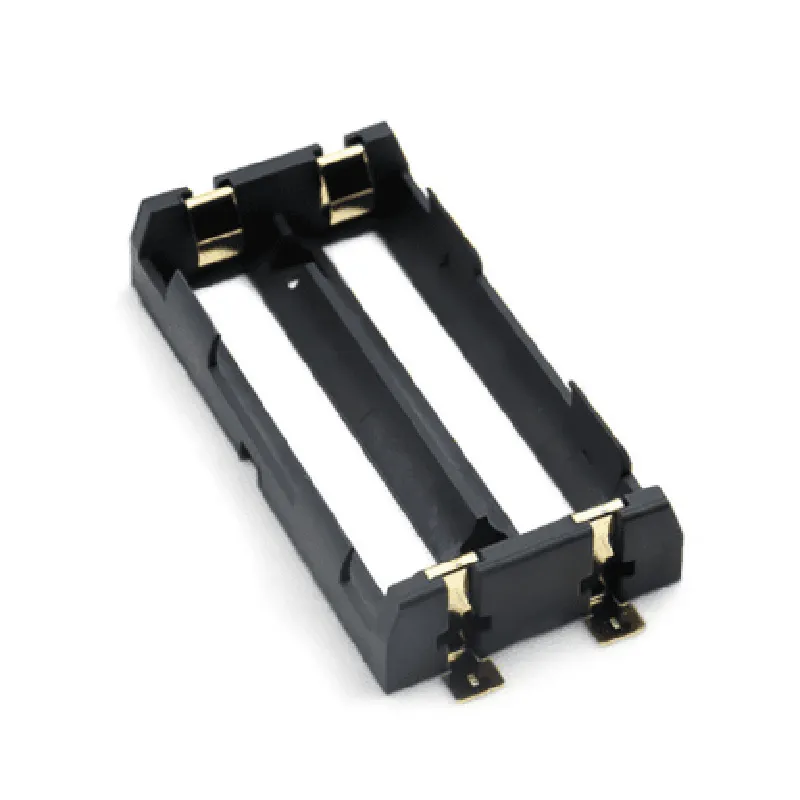
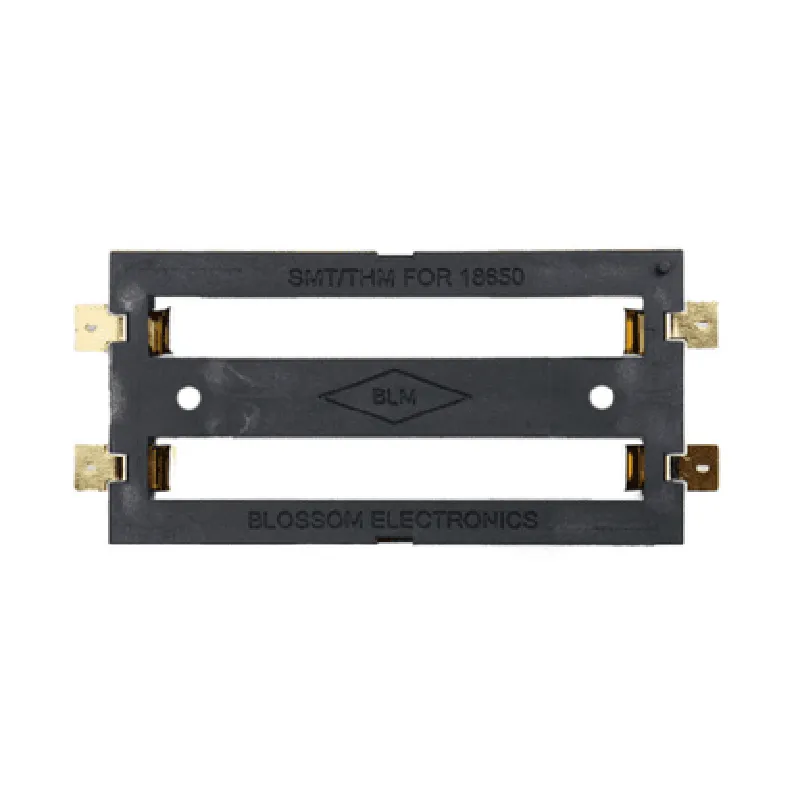
[Insert dimensions, e.g., 25.5 mm x 18.5 mm x 4.5 mm]
[Insert material, e.g., PCB-compatible plastic]
[Insert weight, e.g., 2.5 grams]
Electrical Specifications
18650 lithium-ion
Up to 4400mAh (depending on battery type and configuration)
[Insert temperature range, e.g., -20C to 60C]
Applications
| The 18650 SMD/SMT Dual Battery Holder is suitable for use in a wide range of IoT devices, including |
Wearables (smartwatches, fitness trackers, etc.)
IoT sensors and devices
Smart home devices
Robotics and automation systems
Portable electronic devices
By providing a compact, secure, and reliable way to integrate 18650 batteries into IoT devices, the 18650 SMD/SMT Dual Battery Holder is an essential component for many modern applications.
18650 SMD/SMT Dual Battery Holder DocumentationOverviewThe 18650 SMD/SMT Dual Battery Holder is a compact, surface-mount component designed to hold two 18650 lithium-ion batteries in a compact, space-saving design. This component is ideal for IoT projects that require a reliable and efficient power source.FeaturesDual 18650 battery holder with SMD/SMT mounting options
Compact design, ideal for space-constrained IoT projects
Supports batteries with a diameter of 18mm and a height of 65mm
Gold-plated contacts for reliable connectivityPinoutThe 18650 SMD/SMT Dual Battery Holder has a total of 4 pins:GND (Ground)
VCC (Positive terminal of Battery 1)
VCC (Positive terminal of Battery 2)
GND (Ground)Code Examples### Example 1: Arduino-based IoT Project with Battery MonitoringIn this example, we will use the 18650 SMD/SMT Dual Battery Holder to power an Arduino board and monitor the battery voltage levels.Hardware Requirements18650 SMD/SMT Dual Battery Holder
Arduino Board (e.g., Arduino Uno or Arduino Nano)
Voltage Divider (2x 10k resistors)
Breadboard and jumper wiresSoftware```cpp
const int batteryPin1 = A0; // Analog input pin for Battery 1
const int batteryPin2 = A1; // Analog input pin for Battery 2void setup() {
Serial.begin(9600);
}void loop() {
int batteryVoltage1 = analogRead(batteryPin1);
int batteryVoltage2 = analogRead(batteryPin2);float batteryVoltage1Volts = (batteryVoltage1 5.0) / 1023.0;
float batteryVoltage2Volts = (batteryVoltage2 5.0) / 1023.0;Serial.print("Battery 1 Voltage: ");
Serial.print(batteryVoltage1Volts);
Serial.println("V");Serial.print("Battery 2 Voltage: ");
Serial.print(batteryVoltage2Volts);
Serial.println("V");delay(1000);
}
```### Example 2: ESP32-based IoT Project with Battery SwitchoverIn this example, we will use the 18650 SMD/SMT Dual Battery Holder to power an ESP32 board and implement a battery switchover feature.Hardware Requirements18650 SMD/SMT Dual Battery Holder
ESP32 Board (e.g., ESP32 DevKitC)
Breadboard and jumper wires
Diode (e.g., 1N4148)Software```cpp
#include <WiFi.h>const int batteryPin1 = 32; // GPIO pin for Battery 1
const int batteryPin2 = 33; // GPIO pin for Battery 2
const int switchoverPin = 25; // GPIO pin for switchover controlbool battery1Enabled = true;void setup() {
Serial.begin(9600);
pinMode(switchoverPin, OUTPUT);
}void loop() {
int batteryVoltage1 = analogRead(batteryPin1);
int batteryVoltage2 = analogRead(batteryPin2);if (batteryVoltage1 < 3000 && battery1Enabled) {
// Switch to Battery 2
digitalWrite(switchoverPin, LOW);
battery1Enabled = false;
} else if (batteryVoltage2 < 3000 && !battery1Enabled) {
// Switch to Battery 1
digitalWrite(switchoverPin, HIGH);
battery1Enabled = true;
}delay(1000);
}
```In this example, the ESP32 board is powered by the 18650 SMD/SMT Dual Battery Holder, and the switchover feature is implemented using a diode and a GPIO pin. The code monitors the battery voltage levels and switches between the two batteries when one of them reaches a low voltage threshold.