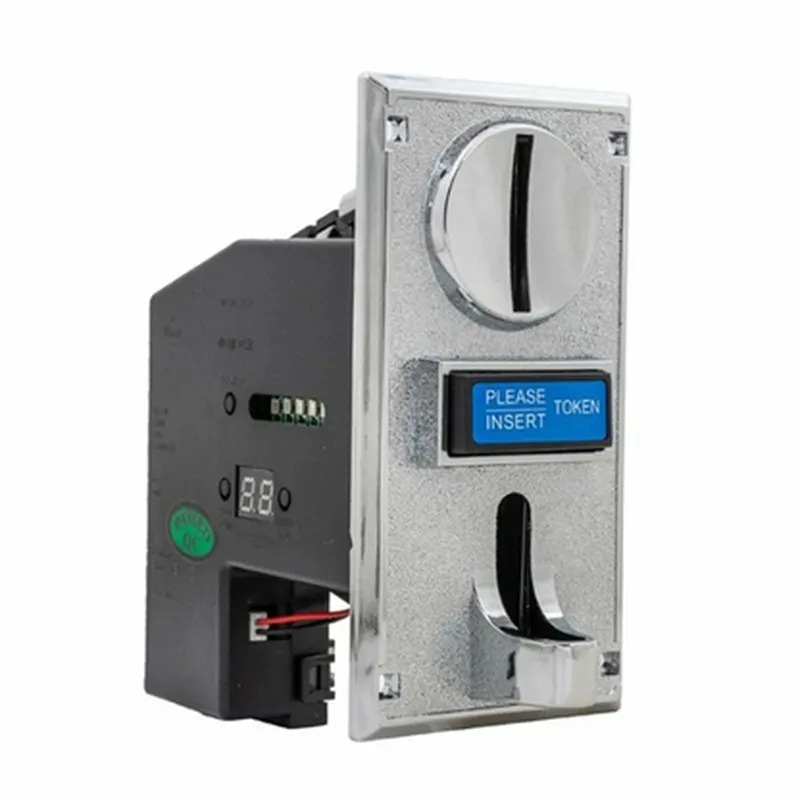
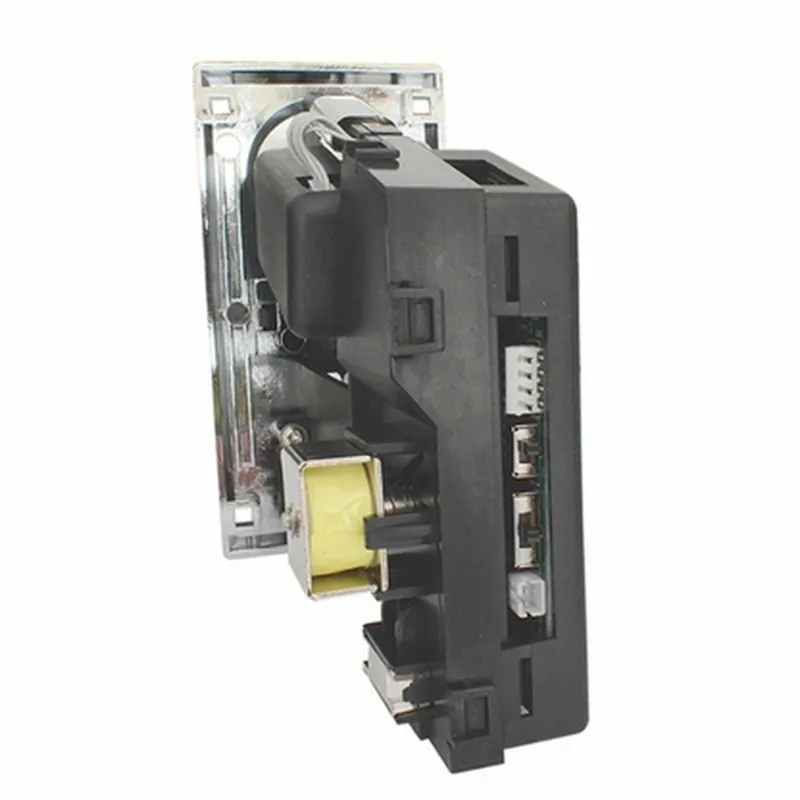
Multi Coin Acceptor Programmable for Vending Machines Documentation
The Multi Coin Acceptor Programmable for Vending Machines is a sophisticated IoT component designed to accept multiple coins and denominations, making it an ideal solution for vending machines, laundry machines, and other automated payment systems. This component is highly customizable, allowing users to program and configure it according to their specific requirements.
Accepts multiple coins and denominations
 Programmable for different currencies and coin combinations
 High accuracy and reliability in coin detection and validation
 Robust design with anti-jamming and anti-cheating mechanisms
 Serial communication interface for easy integration with microcontrollers and other devices
 Compatible with various vending machine platforms and protocols
Operating Voltage: 5V - 12V DC
 Operating Current: 100mA - 500mA
 Coin Detection Accuracy: 95% or higher
 Communication Interface: Serial (UART, TTL)
 Baud Rate: 9600 - 115200 bps
 Coin Storage Capacity: Up to 500 coins (depending on coin size and type)
Programming and Integration
The Multi Coin Acceptor Programmable for Vending Machines can be programmed and integrated using a variety of programming languages and microcontrollers. Here are some code examples to demonstrate its usage:
Example 1: Arduino Integration
In this example, we will use an Arduino Uno board to demonstrate the integration of the Multi Coin Acceptor with a vending machine.
```c
#include <SoftwareSerial.h>
#define COIN_ACCEPTOR_RX 2
#define COIN_ACCEPTOR_TX 3
SoftwareSerial coinAcceptorSerial(COIN_ACCEPTOR_RX, COIN_ACCEPTOR_TX);
void setup() {
  coinAcceptorSerial.begin(9600);
  Serial.begin(9600);
}
void loop() {
  if (coinAcceptorSerial.available() > 0) {
    char coinData = coinAcceptorSerial.read();
    switch (coinData) {
      case '1':
        Serial.println("1 EUR coin accepted");
        // Dispense product or perform desired action
        break;
      case '2':
        Serial.println("2 EUR coin accepted");
        // Dispense product or perform desired action
        break;
      // Add more cases for different coin denominations
      default:
        Serial.println("Invalid coin");
        break;
    }
  }
  delay(50);
}
```
Example 2: Python Integration with Raspberry Pi
In this example, we will use a Raspberry Pi board with Python to demonstrate the integration of the Multi Coin Acceptor with a vending machine.
# Open the serial connection to the coin acceptor
coin_acceptor_serial = serial.Serial('/dev/ttyUSB0', 9600, timeout=1)
while True:
    if coin_acceptor_serial.inWaiting() > 0:
        coin_data = coin_acceptor_serial.readline().decode('utf-8').strip()
        if coin_data == '1':
            print("1 EUR coin accepted")
            # Dispense product or perform desired action
        elif coin_data == '2':
            print("2 EUR coin accepted")
            # Dispense product or perform desired action
        # Add more elif statements for different coin denominations
        else:
            print("Invalid coin")
        coin_acceptor_serial.flushInput()
```
Example 3: Coin Configuration and Programming
In this example, we will demonstrate how to program and configure the Multi Coin Acceptor to accept specific coins and denominations.
```c
// Set the coin acceptor to accept 1 EUR and 2 EUR coins
coinAcceptorSerial.print("SET COIN 1 EUR 100
");
coinAcceptorSerial.print("SET COIN 2 EUR 200
");
// Set the coin acceptor to accept 5 EUR and 10 EUR banknotes
coinAcceptorSerial.print("SET BILL 5 EUR 500
");
coinAcceptorSerial.print("SET BILL 10 EUR 1000
");
// Save the configurations to the coin acceptor's EEPROM
coinAcceptorSerial.print("SAVE CONFIG
");
```
Note: The above code examples are for demonstration purposes only and may require modifications to suit specific vending machine platforms and protocols. It is recommended to consult the component's datasheet and user manual for detailed programming and integration guidelines.