plastic molding, hot stamping, and heat treatment


plastic molding, hot stamping, and heat treatment
medical equipment sterilization, laboratory equipment, and patient care devices
vehicle heating systems, battery warmers, and engine pre-heaters
aircraft heating systems, temperature control systems, and avionics systems
coffee makers, hair dryers, and other small appliances
Key Features
Physical Characteristics
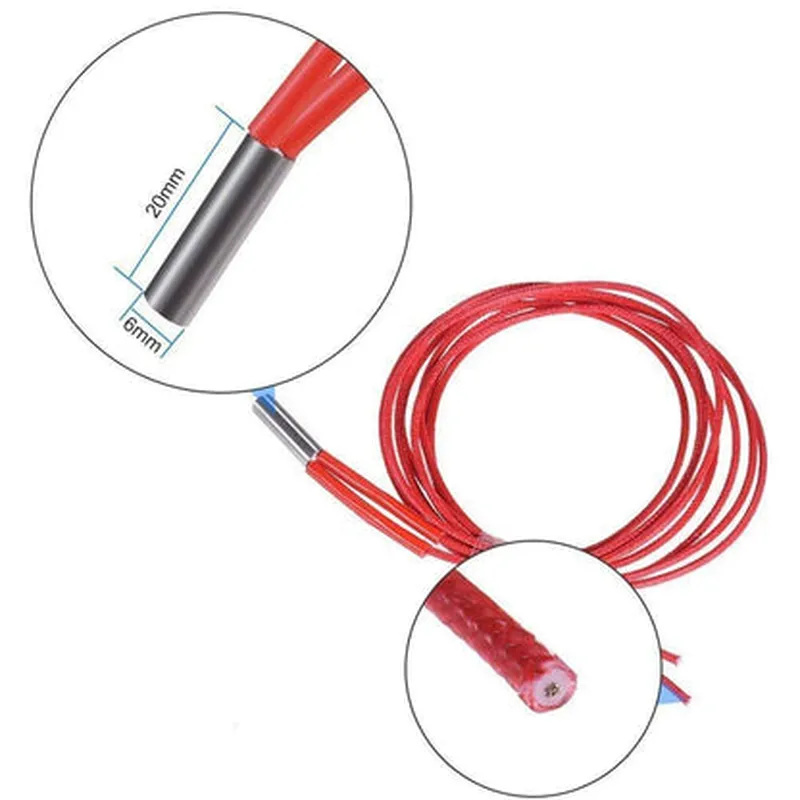
12mm (0.47 inch) diameter x 25mm (0.98 inch) length
Approximately 20 grams
2 x 20 AWG, 150mm (5.9 inch) long
Ceramic and fiberglass
Stainless steel bushing with 1/4-28 UNF threads
Performance Specifications
10C/W (min)
| Heat-Up Time | 15 seconds (typical) |
| Cool-Down Time | 30 seconds (typical) |
-20C to 500C (-4F to 932F)
Safety Considerations
Ensure the heater is properly installed and secured to prevent damage or electrical shock.
Use a thermostat or temperature controller to regulate the heater's temperature and prevent overheating.
Avoid touching the heater's ceramic body or lead wires during operation, as they may be hot.
Certifications and Compliance
| UL (Underwriters Laboratories) Certification | Yes |
| CE (Conformit Europene) Marking | Yes |
| RoHS (Restriction of Hazardous Substances) Compliance | Yes |
| REACH (Registration, Evaluation, Authorization, and Restriction of Chemicals) Compliance | Yes |
By providing a detailed description of the 12V 40W Ceramic Cartridge Heater, this documentation aims to assist technical professionals and informed hobbyists in understanding the component's functionality, key features, and performance specifications. This information will help users to properly design, install, and operate the heater in their applications.
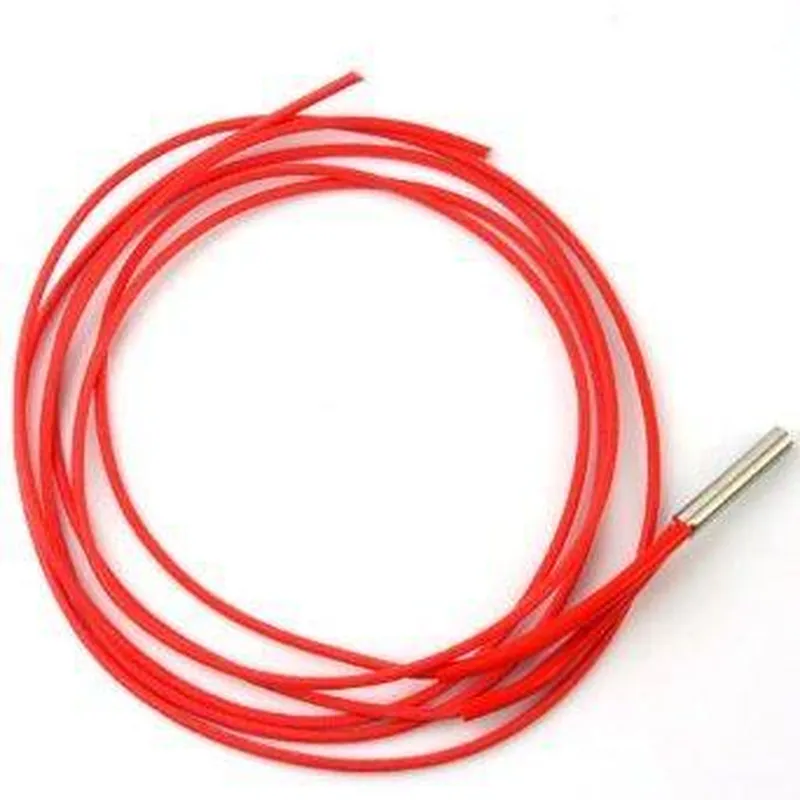
Component Documentation: 12V 40W Ceramic Cartridge HeaterOverviewThe 12V 40W Ceramic Cartridge Heater is a compact and reliable heating element designed for use in various applications, including industrial automation, laboratory equipment, and DIY projects. This ceramic cartridge heater features a durable construction, high-power density, and fast thermal response.Technical SpecificationsVoltage: 12V
Power: 40W
Material: Ceramic
Dimensions: [Insert dimensions, e.g., 6mm diameter, 30mm length]
Operating Temperature: -20C to 250C
Insulation Resistance: >100M
Thermal Time Constant: <10 secondsPinout and ConnectionsThe 12V 40W Ceramic Cartridge Heater has two leads, typically marked as positive (+) and negative (-). The positive lead is usually red, and the negative lead is usually black.Example 1: Basic Heating Circuit with ArduinoIn this example, we will demonstrate how to control the 12V 40W Ceramic Cartridge Heater using an Arduino board.Components:12V 40W Ceramic Cartridge Heater
Arduino Board (e.g., Arduino Uno)
12V Power Supply
Breadboard and Jumpers
1k ResistorCode:
```c
const int heaterPin = 2; // Heater connected to digital pin 2void setup() {
pinMode(heaterPin, OUTPUT);
}void loop() {
// Turn heater on for 5 seconds
digitalWrite(heaterPin, HIGH);
delay(5000);// Turn heater off for 5 seconds
digitalWrite(heaterPin, LOW);
delay(5000);
}
```
Example 2: Temperature Control with Raspberry Pi and DS18B20 SensorIn this example, we will demonstrate how to control the 12V 40W Ceramic Cartridge Heater using a Raspberry Pi and a DS18B20 temperature sensor to maintain a set temperature.Components:12V 40W Ceramic Cartridge Heater
Raspberry Pi (e.g., Raspberry Pi 4)
DS18B20 Temperature Sensor
12V Power Supply
Breadboard and JumpersCode:
```python
import RPi.GPIO as GPIO
import time
import os# Set up GPIO library
GPIO.setmode(GPIO.BCM)# Set up heater pin
heater_pin = 17
GPIO.setup(heater_pin, GPIO.OUT)# Set up temperature sensor
sensor_path = "/sys/bus/w1/devices/28-000007123456/temperature"while True:
# Read temperature from sensor
with open(sensor_path, "r") as f:
temperature = float(f.read()) / 1000# Check if temperature is below setpoint (e.g., 50C)
if temperature < 50:
# Turn heater on
GPIO.output(heater_pin, GPIO.HIGH)
print("Heater on")
else:
# Turn heater off
GPIO.output(heater_pin, GPIO.LOW)
print("Heater off")# Wait for 1 second
time.sleep(1)
```
Safety PrecautionsAlways handle the ceramic cartridge heater with care, as it can be fragile.
Ensure proper insulation and protection from electrical shock when working with the heater.
Use a suitable heat sink or thermal interface material to prevent overheating and ensure efficient heat transfer.
Follow proper safety guidelines when working with high-voltage and high-temperature components.