18650 SMD/SMT Single Battery Holder


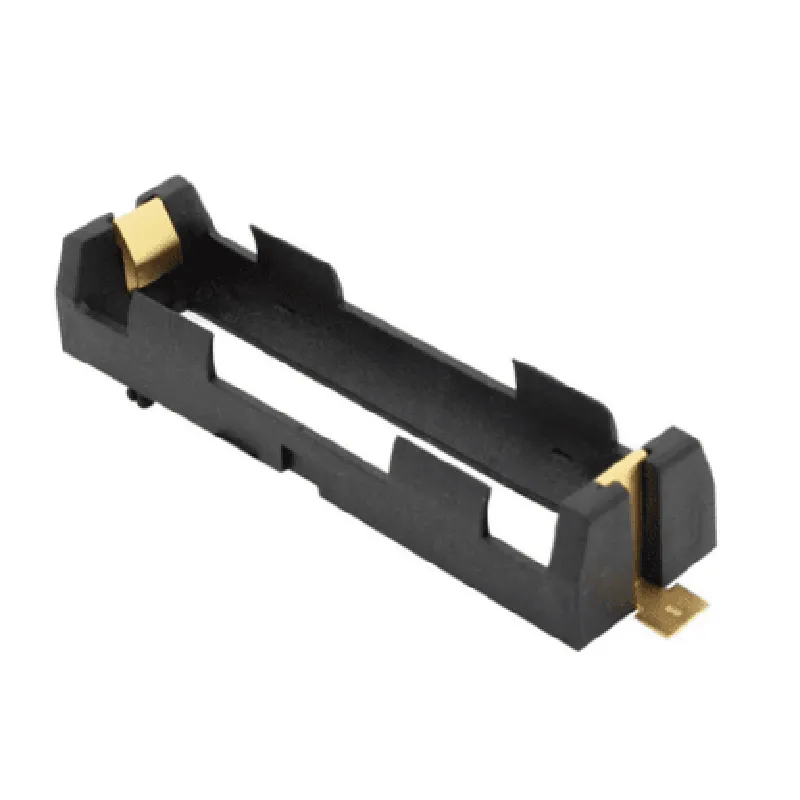

18650 SMD/SMT Single Battery Holder
The 18650 SMD/SMT Single Battery Holder is a compact, surface-mountable component designed to securely hold a single 18650 lithium-ion battery. This holder is ideal for use in a wide range of IoT devices, wireless sensors, and other battery-powered applications where space is limited.
The primary function of the 18650 SMD/SMT Single Battery Holder is to provide a secure and reliable means of housing a single 18650 lithium-ion battery. The holder ensures proper battery alignment and connection, allowing for efficient power delivery to the device.
22.5 mm
15.5 mm
4.5 mm
2.54 mm
10 m
-40C to +125C
FR4 or equivalent
Copper or equivalent
SMT-compatible surface finish (e.g., Ni/Au or Sn)
RoHS compliant
REACH compliant
UL94-V0 flammability rating
IoT devices
Wireless sensors
Battery-powered devices
Portable electronics
Wearable devices
Ensure proper handling and installation to avoid damage to the holder or battery.
Use a compatible 18650 lithium-ion battery to ensure reliable operation.
Follow recommended soldering and assembly procedures to ensure secure connection.
18650 SMD/SMT Single Battery Holder DocumentationOverviewThe 18650 SMD/SMT Single Battery Holder is a surface-mount device (SMD) designed to hold a single 18650 lithium-ion battery. This component is ideal for IoT projects that require a reliable and compact battery holder.FeaturesSMD/SMT design for easy mounting on printed circuit boards (PCBs)
Compatible with 18650 lithium-ion batteries
Single battery holder design for compact form factor
Suitable for high-reliability IoT applicationsPinoutThe 18650 SMD/SMT Single Battery Holder has two pins:Pin 1: Positive (+) terminal
Pin 2: Negative (-) terminalExample 1: Basic Battery Connection (Arduino)In this example, we'll demonstrate how to connect the 18650 SMD/SMT Single Battery Holder to an Arduino board to power a simple LED circuit.Components:18650 SMD/SMT Single Battery Holder
Arduino Uno board
18650 lithium-ion battery
LED
220 resistor
Breadboard and jumper wiresCode:
```c
const int ledPin = 13; // Choose a digital pin for the LEDvoid setup() {
pinMode(ledPin, OUTPUT);
}void loop() {
digitalWrite(ledPin, HIGH); // Turn the LED on
delay(1000); // Wait for 1 second
digitalWrite(ledPin, LOW); // Turn the LED off
delay(1000); // Wait for 1 second
}
```
Connection:1. Connect the 18650 SMD/SMT Single Battery Holder to the Arduino board:
Pin 1 ( Positive terminal) to Arduino's VIN pin
Pin 2 (Negative terminal) to Arduino's GND pin
2. Connect the 18650 lithium-ion battery to the battery holder.
3. Connect the LED and 220 resistor to the breadboard:
LED anode to digital pin 13
LED cathode to the 220 resistor
Resistor to GND
4. Upload the code to the Arduino board and observe the blinking LED.Example 2: Battery Monitoring with ESP32 (MicroPython)In this example, we'll demonstrate how to use the 18650 SMD/SMT Single Battery Holder with an ESP32 board to monitor the battery voltage using MicroPython.Components:18650 SMD/SMT Single Battery Holder
ESP32 DevKitC board
18650 lithium-ion battery
Breadboard and jumper wiresCode:
```python
import machine
import time# Define the ADC pin for battery voltage measurement
adc_pin = machine.Pin(32)# Define the battery voltage measurement function
def read_battery_voltage():
voltage = adc_pin.read_voltage()
return voltage / 4095 3.3 # Convert ADC value to voltage (3.3V max)while True:
voltage = read_battery_voltage()
print("Battery Voltage: {:.2f}V".format(voltage))
time.sleep(1) # Wait for 1 second
```
Connection:1. Connect the 18650 SMD/SMT Single Battery Holder to the ESP32 board:
Pin 1 (Positive terminal) to ESP32's VIN pin
Pin 2 (Negative terminal) to ESP32's GND pin
2. Connect the 18650 lithium-ion battery to the battery holder.
3. Connect the ADC pin (GPIO 32) to the battery holder:
ADC pin to Pin 1 (Positive terminal)
4. Upload the code to the ESP32 board and observe the battery voltage measurements on the serial console.Note: In both examples, ensure proper wiring and connections to avoid damage to the components. Additionally, follow safety guidelines when working with lithium-ion batteries.