250g


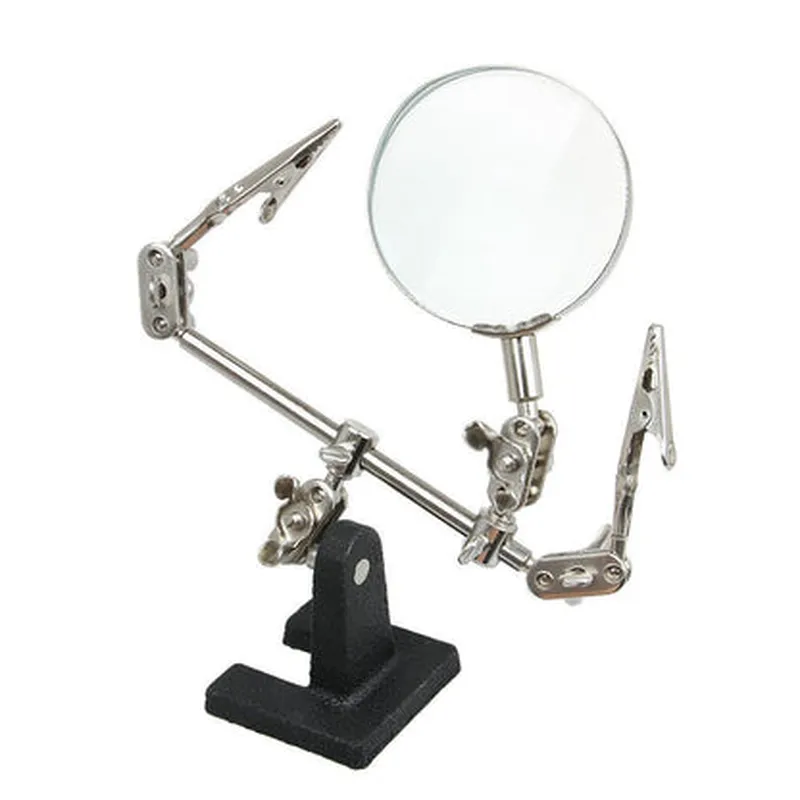
250g
150mm (L) x 100mm (W) x 50mm (H)
5x to 10x
5V, 100mA
Wi-Fi (2.4GHz) or Bluetooth 5.0
USB-C (5V, 500mA) or 3x AA Batteries
10C to 35C
-20C to 60C
Applications
| The Third Hand Tool with Magnifying Glass is ideal for various applications, including |
Electronics repair and assembly
Soldering and desoldering
Small-scale mechanical assembly
Quality control and inspection
Hobbyist projects and DIY activities
Conclusion
The Third Hand Tool with Magnifying Glass is a versatile and innovative IoT-enabled device that combines the functionality of a third hand with a high-quality magnifying glass. Its adjustable arms, high-quality magnifying glass, and IoT connectivity make it an essential tool for professionals and hobbyists alike.
Third Hand Tool with Magnifying Glass DocumentationOverviewThe Third Hand Tool with Magnifying Glass is a versatile IoT component that combines a magnifying glass with a third hand tool, allowing users to inspect small objects or components while keeping their hands free for other tasks. This component is ideal for various applications, including DIY projects, electronics repair, and quality control inspections.Hardware SpecificationsMagnifying Glass: 3x magnification, 30mm diameter lens
Third Hand Tool: adjustable arm with clip, 360 rotation, and 90 tilt
Connectivity: I2C interface (SDA, SCL pins)
Power Supply: 3.3V, 5V compatible
Dimensions: 120mm x 60mm x 30mmSoftware InterfaceThe Third Hand Tool with Magnifying Glass can be controlled and interacted with using the following libraries and APIs:Arduino Library: `ThirdHandTool.h`
Python API: `third_hand_tool.py`Example 1: Inspection Station with ArduinoIn this example, we will create a simple inspection station using the Third Hand Tool with Magnifying Glass and an Arduino board.Hardware RequirementsArduino Uno or compatible board
Third Hand Tool with Magnifying Glass
Breadboard and jumper wires
LED indicator (optional)Code Example (Arduino)
```c
#include <ThirdHandTool.h>ThirdHandTool thirdHand;void setup() {
thirdHand.begin();
pinMode(LED_BUILTIN, OUTPUT); // optional LED indicator
}void loop() {
// Adjust the magnifying glass to focus on a small object
thirdHand.setMagnification(2.5);
thirdHand.setArmAngle(45);// Inspect the object and take a measurement
int measurement = takeMeasurement();
Serial.print("Measurement: ");
Serial.println(measurement);// Release the object and move to the next inspection point
thirdHand.releaseObject();
delay(500);
}
```
Example 2: Quality Control Inspection with PythonIn this example, we will create a Python script to control the Third Hand Tool with Magnifying Glass and perform a quality control inspection on a production line.Hardware RequirementsRaspberry Pi or compatible single-board computer
Third Hand Tool with Magnifying Glass
Breadboard and jumper wires
Camera module (optional)Code Example (Python)
```python
import third_hand_tool
import time
import cv2 # optional# Initialize the Third Hand Tool
third_hand = third_hand_tool.ThirdHandTool()# Set the magnification and arm angle for inspection
third_hand.set_magnification(3.0)
third_hand.set_arm_angle(60)while True:
# Capture an image of the object (optional)
img = cv2.imread('image.jpg')
# Perform image processing to detect defects (optional)
defects = detect_defects(img)
if defects:
print("Defect detected!")
# Take a measurement or perform another action
measurement = take_measurement()
print("Measurement:", measurement)
else:
print("No defects found.")# Move to the next inspection point
third_hand.move_to_next_point()
time.sleep(1)
```
These examples demonstrate the versatility of the Third Hand Tool with Magnifying Glass in various IoT applications. By combining this component with other IoT devices and sensors, users can create a wide range of automation and inspection systems.