1M Ohm Resistor (Pack of 10)


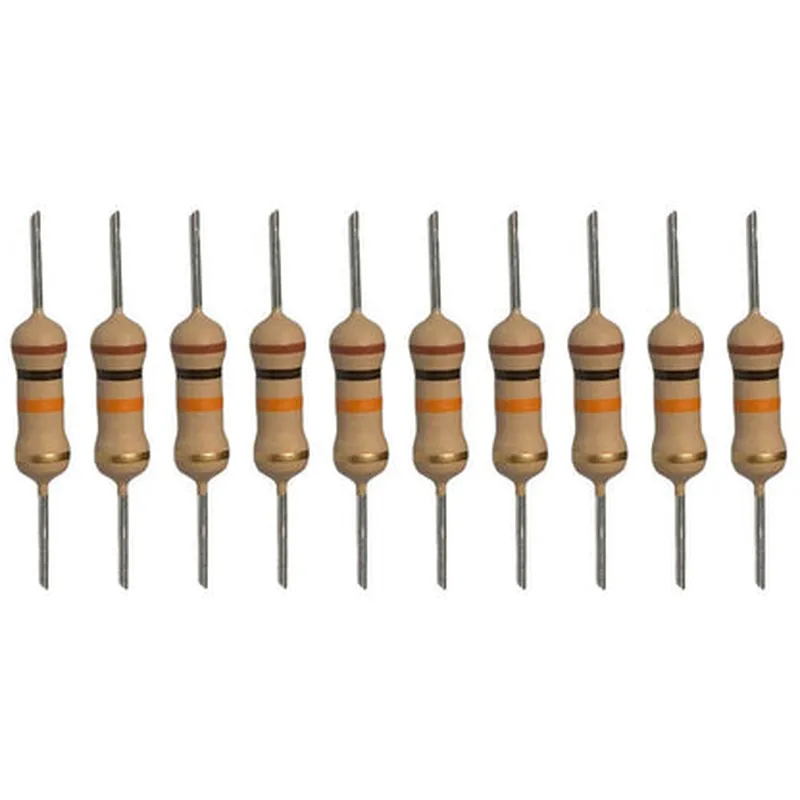
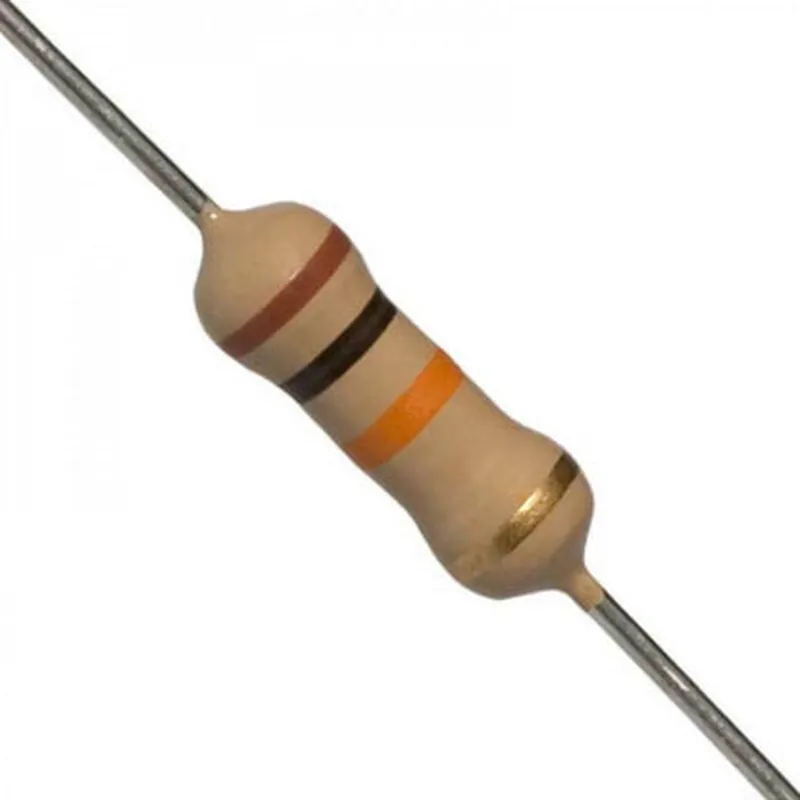
1M Ohm Resistor (Pack of 10)
Passive Component
Resistors
Through-Hole Resistor (THT)
The 1M Ohm Resistor is a passive electronic component that opposes the flow of electric current. It is a fundamental component in electronic circuits, used to regulate voltage, current, and signal levels. This pack of 10 resistors is ideal for prototyping, development, and production of various electronic projects.
| The primary function of a resistor is to resist the flow of electric current. Ohm's Law (R = V/I) describes the relationship between voltage (V), current (I), and resistance (R). The 1M Ohm Resistor ensures a specific voltage-to-current ratio in a circuit, which is crucial for |
Voltage division
Current limiting
Signal attenuation
Impedance matching
The resistors are supplied in a pack of 10 pieces, individually wrapped in a plastic bag or tray to prevent damage and corrosion.
| The 1M Ohm Resistor is suitable for a wide range of applications, including |
Electronic circuits for voltage regulation, filtering, and signal conditioning
Prototyping and development of IoT projects
Automotive, industrial, and consumer electronics
Audio and video equipment
When handling resistors, ensure proper storage, handling, and soldering techniques to prevent damage and maintain their electrical characteristics.
Verify the specific tolerance, power rating, and material type for each product variant to ensure compatibility with your design requirements.
By understanding the characteristics and features of the 1M Ohm Resistor, you can effectively design and implement electronic circuits that meet your project's specifications and requirements.
Component Documentation: 1M Ohm Resistor (Pack of 10)OverviewThe 1M Ohm Resistor is a passive electronic component that offers a precise resistance of 1 megohm (1,000,000 ohms) to the flow of electric current. This pack of 10 resistors is ideal for various electronic projects, prototyping, and circuit design applications.Key FeaturesResistance: 1 megohm (1,000,000 ohms)
Power rating: 0.25W (1/4 watt)
Tolerance: 5%
Operating temperature: -55C to +155C
Package: Through-hole, axial lead
Quantity: 10 pieces per packUsage and Applications1M Ohm resistors are commonly used in:Voltage dividers
Signal attenuation circuits
Impedance matching networks
Filter circuits
Analog-to-digital converter (ADC) circuitsCode Examples### Example 1: Simple Voltage Divider Circuit using ArduinoIn this example, we'll use two 1M Ohm resistors to create a simple voltage divider circuit to measure the voltage across a sensor or another circuit.
```c
const int sensorPin = A0; // Analog input pin
const int voltageDividerPin = A1; // Analog input pinvoid setup() {
Serial.begin(9600);
}void loop() {
int sensorReading = analogRead(sensorPin);
int voltageDividerReading = analogRead(voltageDividerPin);float sensorVoltage = sensorReading (5.0 / 1023.0);
float dividedVoltage = voltageDividerReading (5.0 / 1023.0);Serial.print("Sensor voltage: ");
Serial.print(sensorVoltage);
Serial.println(" V");Serial.print("Divided voltage: ");
Serial.print(dividedVoltage);
Serial.println(" V");delay(500);
}
```
Circuit Diagram:R1 (1M Ohm) and R2 (1M Ohm) form a voltage divider circuit, which attenuates the input voltage (Vin) to approximately half the value.Vin -> R1 -> Vout -> R2 -> GND### Example 2: Impedance Matching Circuit using Raspberry Pi (Python)In this example, we'll use a 1M Ohm resistor to match the impedance of a sensor's output to the input impedance of an operational amplifier (Op-Amp).
```python
import RPi.GPIO as GPIO
import time# Set up GPIO mode
GPIO.setmode(GPIO.BCM)# Define the sensor pin and Op-Amp input pin
sensor_pin = 17
op_amp_in_pin = 23# Set up the sensor pin as an input
GPIO.setup(sensor_pin, GPIO.IN)# Set up the Op-Amp input pin as an input
GPIO.setup(op_amp_in_pin, GPIO.IN)while True:
# Read the sensor voltage
sensor_voltage = GPIO.input(sensor_pin)# Calculate the output voltage using the 1M Ohm resistor
output_voltage = sensor_voltage (1 / (1 + (1 / (1e6))))# Print the output voltage
print("Output voltage: {:.2f} V".format(output_voltage))# Wait for 1 second before taking the next reading
time.sleep(1)
```
Circuit Diagram:R3 (1M Ohm) connects the sensor output to the Op-Amp input, ensuring impedance matching and preventing signal reflection.Vin -> R3 -> Op-Amp input -> GNDThese examples demonstrate how the 1M Ohm resistor can be used in various IoT projects, such as sensor interfaces, signal conditioning, and impedance matching applications.