

Stufin
Home Quick Cart Profile

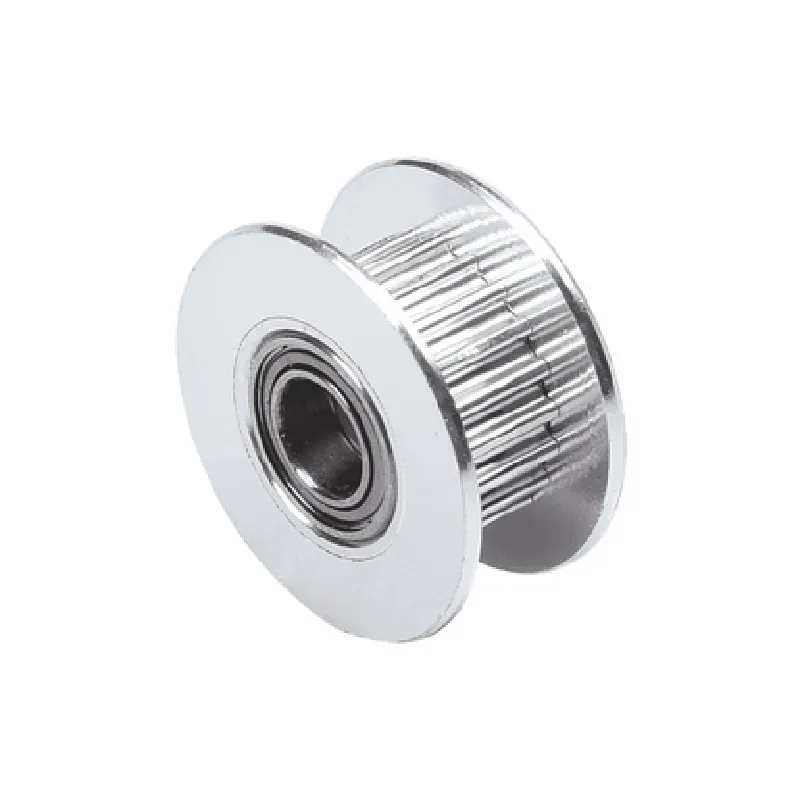
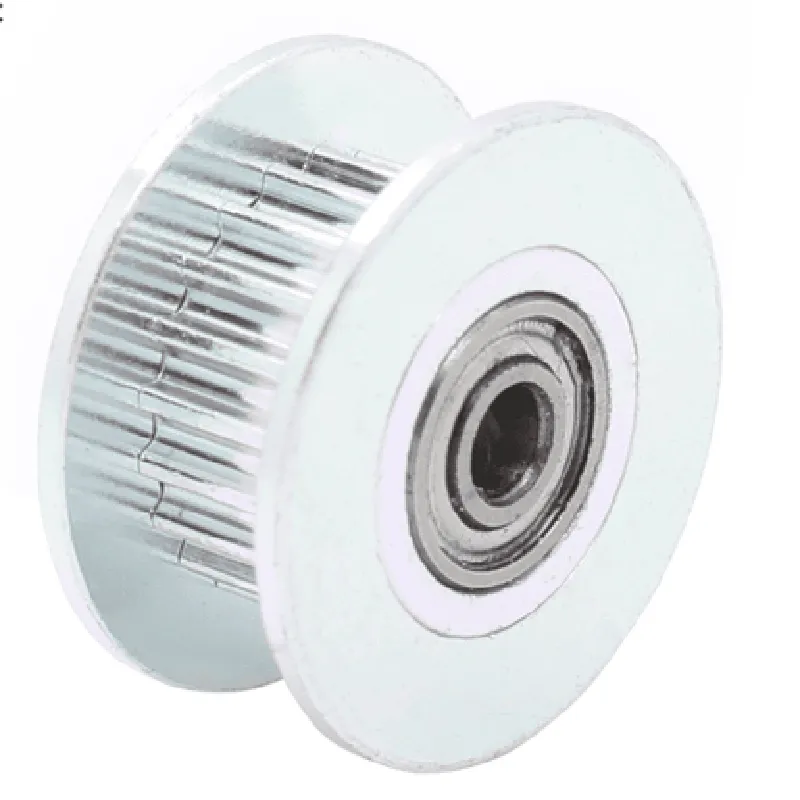
2GT 20 teeth pulley wheel for Belt 6mm Perlin passive idler pulley wheel bore 5mm

Buy Now on Stufin

Component Documentation

2GT 20 Teeth Pulley Wheel for Belt 6mm Perlin Passive Idler Pulley Wheel Bore 5mm

Overview

The 2GT 20 teeth pulley wheel is a critical component in various industrial and IoT applications, designed to work in conjunction with 6mm width belts. This passive idler pulley wheel features a 5mm bore and is optimized for smooth operation, high efficiency, and durability.

Functionality

  • Linear motion systems
  • Conveyor belts
  • Automated machinery
  • Robotics
  • 3D printing and CNC machines
The primary function of this pulley wheel is to change the direction of a belt, maintain tension, and provide a stable platform for linear motion. It acts as a passive idler, meaning it does not transmit power but instead provides mechanical support to the belt system. This component is commonly used in

Key Features

  • Tooth Profile: The pulley wheel features a 2GT tooth profile, which is specifically designed for use with 6mm width belts. This ensures a secure and stable connection, minimizing the risk of belt slippage or damage.
  • Teeth Count: The pulley wheel has 20 teeth, providing a high level of precision and accuracy in belt tracking and direction changes.
  • Bore Diameter: The bore diameter is 5mm, allowing for easy installation and secure fastening of the pulley wheel to a shaft or axle.
  • Material: The pulley wheel is constructed from high-quality, durable materials, ensuring a long lifespan and resistance to wear and tear.
  • Passive Idler Design: The passive idler design ensures that the pulley wheel does not transmit power, reducing the risk of motor overload and increasing overall system efficiency.
  • Compact Design: The pulley wheel's compact design makes it ideal for use in applications where space is limited, such as in robotics, CNC machines, and 3D printing.

Specifications

Tooth profile

2GT

Teeth count

20

Belt width

6mm

Bore diameter

5mm

Material

Durable, high-quality material

Design

Passive idler

Dimension

Compact design for space-constrained applications

Installation and Assembly

  • Align the pulley wheel with the belt and shaft/axle.
  • Secure the pulley wheel to the shaft/axle using a suitable fastening method (e.g., set screws, locking nuts).
  • Verify proper belt tension and alignment.
  • Perform regular maintenance and inspections to ensure optimal system performance.
To ensure proper installation and assembly, please follow these guidelines

Troubleshooting and Maintenance

  • Regularly inspect the pulley wheel and belt for signs of wear or damage.
  • Check and adjust belt tension as necessary.
  • Lubricate the pulley wheel and bearing (if applicable) according to the manufacturer's recommendations.
  • Replace the pulley wheel if signs of excessive wear or damage are detected.
To troubleshoot and maintain the pulley wheel, please refer to the following guidelines

By following these guidelines and specifications, the 2GT 20 teeth pulley wheel for Belt 6mm Perlin passive idler pulley wheel bore 5mm can provide reliable and efficient performance in a wide range of IoT and industrial applications.

Pin Configuration

  • Component Documentation: 2GT 20 Teeth Pulley Wheel for Belt 6mm
  • Overview
  • The 2GT 20 teeth pulley wheel is a passive idler pulley wheel designed for use with 6mm wide belts in various IoT and robotics applications. It features a 5mm bore and is compatible with standardized 6mm belts. This documentation provides a detailed explanation of the pulley wheel's structure, pinouts, and connection guidance.
  • Structure
  • The 2GT 20 teeth pulley wheel consists of the following components:
  • Pulley wheel body: Made of high-quality plastic or metal material, providing a sturdy and durable structure.
  • Teeth: 20 evenly spaced teeth around the circumference of the pulley wheel, designed for precise engagement with 6mm belts.
  • Bore: A 5mm diameter hole at the center of the pulley wheel, allowing for secure mounting to a shaft or axle.
  • Pins: A set of pins located on the pulley wheel body, used for connecting the pulley wheel to a motor or other mechanical components.
  • Pins
  • The 2GT 20 teeth pulley wheel features the following pins:
  • 1. Pin 1: Mounting Hole Pin
  • Function: Used for securing the pulley wheel to a shaft or axle.
  • Description: A small, cylindrical pin located on the pulley wheel body, adjacent to the 5mm bore.
  • Connection: Insert a screw or bolt through the mounting hole and into the pin to secure the pulley wheel.
  • 2. Pin 2: Belt Tensioning Pin
  • Function: Adjusts the belt tension by moving the pulley wheel along the shaft or axle.
  • Description: A small, rounded pin located on the pulley wheel body, near the teeth.
  • Connection: Use a screw or bolt to adjust the position of the pulley wheel on the shaft or axle, which in turn adjusts the belt tension.
  • 3. Pin 3: Pulley Wheel Retaining Pin
  • Function: Prevents the pulley wheel from slipping or rotating on the shaft or axle.
  • Description: A small, rectangular pin located on the pulley wheel body, near the teeth.
  • Connection: Insert a small screw or clip into the pin to secure the pulley wheel in place.
  • Connection Guidance
  • To connect the pins on the 2GT 20 teeth pulley wheel, follow these steps:
  • 1. Mount the pulley wheel to a shaft or axle using Pin 1 (Mounting Hole Pin). Ensure the pulley wheel is securely fastened.
  • 2. Adjust the belt tension by moving the pulley wheel along the shaft or axle using Pin 2 (Belt Tensioning Pin). Tighten or loosen the screw or bolt to achieve the desired tension.
  • 3. Secure the pulley wheel in place using Pin 3 (Pulley Wheel Retaining Pin). Insert a small screw or clip into the pin to prevent the pulley wheel from slipping or rotating.
  • Important Notes
  • Ensure proper alignment of the pulley wheel with the shaft or axle to prevent damage or premature wear.
  • Use suitable fasteners and screws to secure the pulley wheel and avoid over-tightening, which can damage the pins or pulley wheel body.
  • Regularly inspect and maintain the pulley wheel and belt system to ensure optimal performance and prevent failures.
  • By following this documentation, users can properly connect and utilize the 2GT 20 teeth pulley wheel in their IoT and robotics projects.

Code Examples

2GT 20 Teeth Pulley Wheel for Belt 6mm Perlin Passive Idler Pulley Wheel Bore 5mm
Overview
The 2GT 20 teeth pulley wheel is a passive idler pulley wheel designed for use with 6mm wide belts in various IoT applications. The pulley wheel features a 5mm bore and is ideal for use in linear motion systems, robotics, and automation projects.
Technical Specifications
Teeth count: 20
 Pitch: 2mm
 Belt width: 6mm
 Bore diameter: 5mm
 Material: Aluminum alloy
 Operating temperature: -20C to 80C
Using the 2GT 20 Teeth Pulley Wheel in IoT Projects
### Example 1: Linear Motion System using Arduino and Stepper Motor
In this example, we will demonstrate how to use the 2GT 20 teeth pulley wheel in a linear motion system using an Arduino board and a stepper motor.
Hardware Requirements
2GT 20 teeth pulley wheel
 Stepper motor (e.g., NEMA 17)
 Arduino board (e.g., Arduino Uno)
 Linear rail or guide
 Belt (6mm wide)
Software Requirements
Arduino IDE
Code Example
```c
#include <Stepper.h>
// Define stepper motor pins
#define STEPPER_PIN_DIR 2
#define STEPPER_PIN_STEP 3
#define STEPPER_PIN_ENABLE 4
// Define pulley wheel parameters
#define PULLEY_TEETH 20
#define PULLEY_PITCH 2
#define BELT_WIDTH 6
Stepper stepper(STEPPER_PIN_DIR, STEPPER_PIN_STEP, STEPPER_PIN_ENABLE);
void setup() {
  Serial.begin(9600);
  stepper.setSpeed(100); // Set stepper motor speed
}
void loop() {
  // Move the stepper motor to a specific position
  stepper.moveTo(1000); // Move 1000 steps (approx. 10mm)
  delay(1000);
  stepper.moveTo(-500); // Move -500 steps (approx. -5mm)
  delay(1000);
}
```
### Example 2: Automation Project using Raspberry Pi and Python
In this example, we will demonstrate how to use the 2GT 20 teeth pulley wheel in an automation project using a Raspberry Pi board and Python.
Hardware Requirements
2GT 20 teeth pulley wheel
 Raspberry Pi board
 Motor driver (e.g., L298N)
 DC motor
 Linear rail or guide
 Belt (6mm wide)
Software Requirements
Raspbian OS
 Python 3.x
Code Example
```python
import RPi.GPIO as GPIO
import time
# Define motor pins
MOTOR_PIN_DIR = 17
MOTOR_PIN_STEP = 23
MOTOR_PIN_ENABLE = 24
# Define pulley wheel parameters
PULLEY_TEETH = 20
PULLEY_PITCH = 2
BELT_WIDTH = 6
# Set up GPIO pins
GPIO.setmode(GPIO.BCM)
GPIO.setup(MOTOR_PIN_DIR, GPIO.OUT)
GPIO.setup(MOTOR_PIN_STEP, GPIO.OUT)
GPIO.setup(MOTOR_PIN_ENABLE, GPIO.OUT)
def move_motor(steps):
    for i in range(steps):
        GPIO.output(MOTOR_PIN_DIR, GPIO.HIGH)
        GPIO.output(MOTOR_PIN_STEP, GPIO.HIGH)
        time.sleep(0.01)
        GPIO.output(MOTOR_PIN_STEP, GPIO.LOW)
        time.sleep(0.01)
while True:
    # Move the motor to a specific position
    move_motor(1000) # Move 1000 steps (approx. 10mm)
    time.sleep(1)
    move_motor(-500) # Move -500 steps (approx. -5mm)
    time.sleep(1)
```
Note: These code examples are simplified and may require additional modifications to suit your specific IoT project requirements.