47k Ohm Resistor - (Pack of 10)


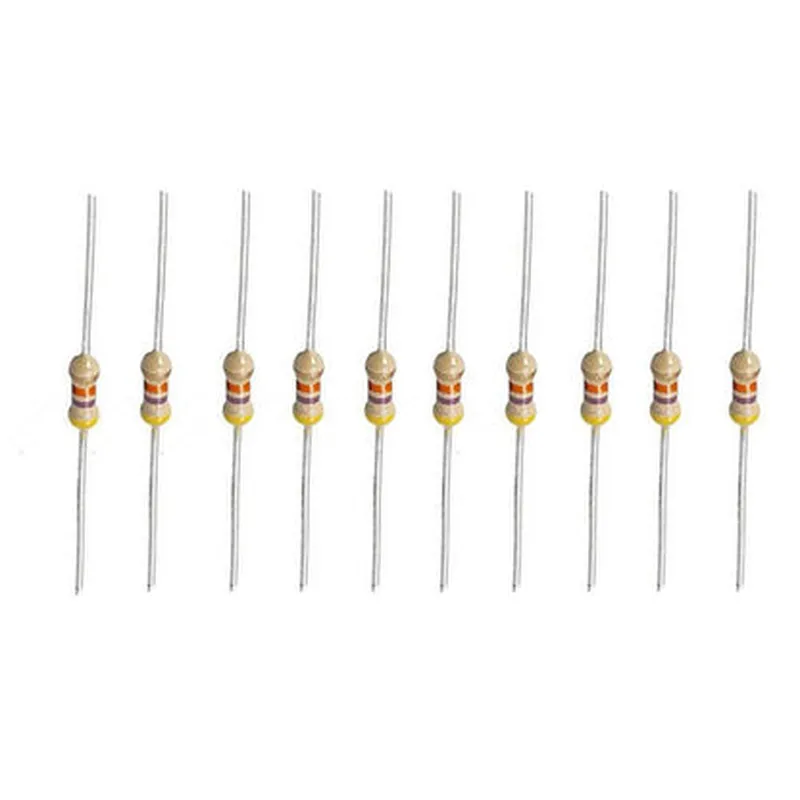
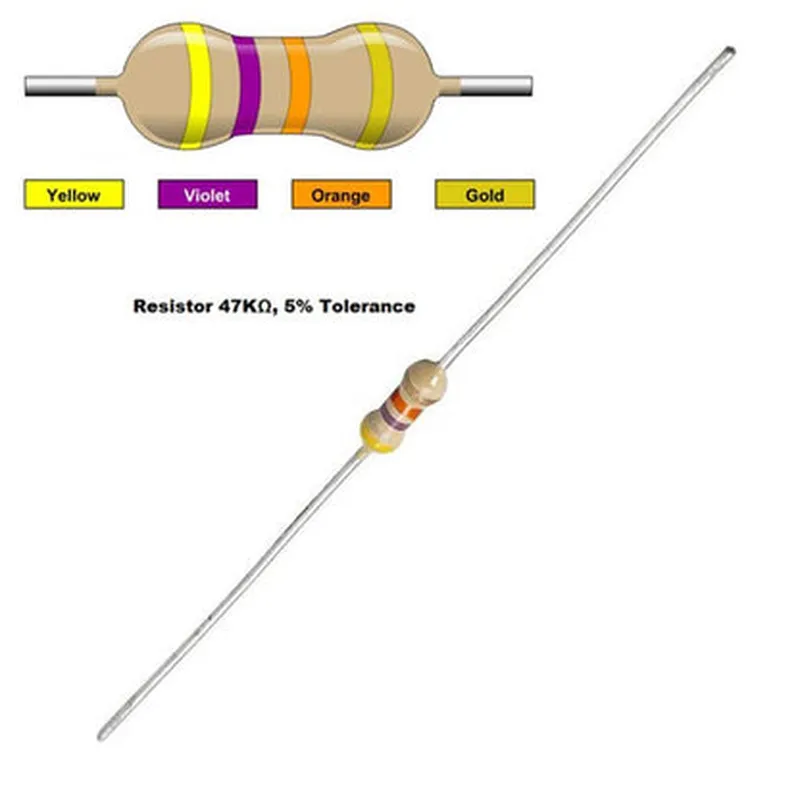
47k Ohm Resistor - (Pack of 10)
The 47k Ohm Resistor is a passive electronic component that belongs to the family of fixed value resistors. It is a high-precision resistor with a resistance value of 47 kilohms (47,000 ohms) and is available in a pack of 10 units.
The primary function of a resistor is to restrict the flow of electrical current in a circuit. Resistors are used to reduce voltage, divide voltage, or limit current in electronic circuits. The 47k Ohm Resistor is used to create a specific voltage drop or current reduction in a circuit, allowing designers to regulate the flow of electrical energy and achieve the desired performance.
| The 47k Ohm Resistor is commonly used in a variety of applications, including |
| Specification | Value |
| --- | --- |
| Resistance Value | 47k Ohms 1% |
| Power Rating | 0.25W |
| Tolerance | 1% |
| Material | Metal Film |
| Operating Temperature | -55C to 155C |
| Physical Characteristics | Radial Lead, 2.5mm x 6.5mm |
| Package Quantity | 10 units |
The 47k Ohm Resistor is a high-quality, precision resistor that is suitable for a wide range of electronic applications. Its compact design, high precision, and low tolerance make it an ideal component for designers and manufacturers seeking to create reliable and efficient electronic circuits.
47k Ohm Resistor (Pack of 10)OverviewThis pack of 10 47k ohm resistors is a versatile component suitable for various electronic projects, including IoT applications, robotics, and circuit design. The 47k ohm resistor is a popular value used in many circuits for voltage division, signal attenuation, and current limiting.SpecificationsResistance: 47 k 1%
Power rating: 1/4 watt
Package: Through-hole, axial lead
Operating temperature: -55C to +155CHow to UseResistors are passive components that can be used in a variety of applications. Here are a few code examples that demonstrate how to use this component in different contexts:### Example 1: Basic Voltage Divider Circuit with ArduinoIn this example, we'll use the 47k ohm resistor to create a simple voltage divider circuit to measure the voltage across a sensor.Circuit DiagramConnect the 47k ohm resistor (R1) between the positive leg of the sensor (e.g., a photodiode) and the positive rail (VCC) of the Arduino board.
Connect a 10k ohm resistor (R2) between the negative leg of the sensor and the analog input pin (A0) of the Arduino board.
Connect the sensor to a power source (e.g., 5V).Arduino Code
```c++
const int sensorPin = A0; // Analog input pin
int sensorValue = 0; // Variable to store sensor readingvoid setup() {
Serial.begin(9600);
}void loop() {
sensorValue = analogRead(sensorPin);
float voltage = sensorValue (5.0 / 1023.0);
Serial.print("Sensor voltage: ");
Serial.println(voltage, 2);
delay(1000);
}
```
### Example 2: Signal Attenuation in a Wireless Sensor Node with ESP32In this example, we'll use the 47k ohm resistor to attenuate the signal from a wireless sensor node to prevent damage to the ESP32 microcontroller.Circuit DiagramConnect the 47k ohm resistor (R1) between the output pin of the wireless sensor (e.g., a temperature sensor) and the input pin of the ESP32 board.
Connect a 10uF capacitor (C1) between the input pin of the ESP32 board and ground to filter out noise.ESP32 Code (MicroPython)
```python
import machine
import utime# Define the pin connections
sensor_pin = machine.Pin(32, machine.Pin.IN)
esp32_pin = machine.Pin(15, machine.Pin.IN)while True:
# Read the sensor value
sensor_value = sensor_pin.value()# Attenuate the signal using the 47k ohm resistor
attenuated_value = sensor_value (5.0 / 3.3) # assume 3.3V input# Print the attenuated value
print("Attenuated sensor value: ", attenuated_value)
utime.sleep(1)
```
These examples demonstrate how to use the 47k ohm resistor in simple circuits for voltage division and signal attenuation. The resistor can be used in various other applications, such as:Current limiting in LED circuits
Impedance matching in audio circuits
Pull-up or pull-down resistors in digital circuitsRemember to always follow proper safety precautions when working with electronic components and to consult the datasheet for specific usage guidelines.