

Stufin
Home Quick Cart Profile

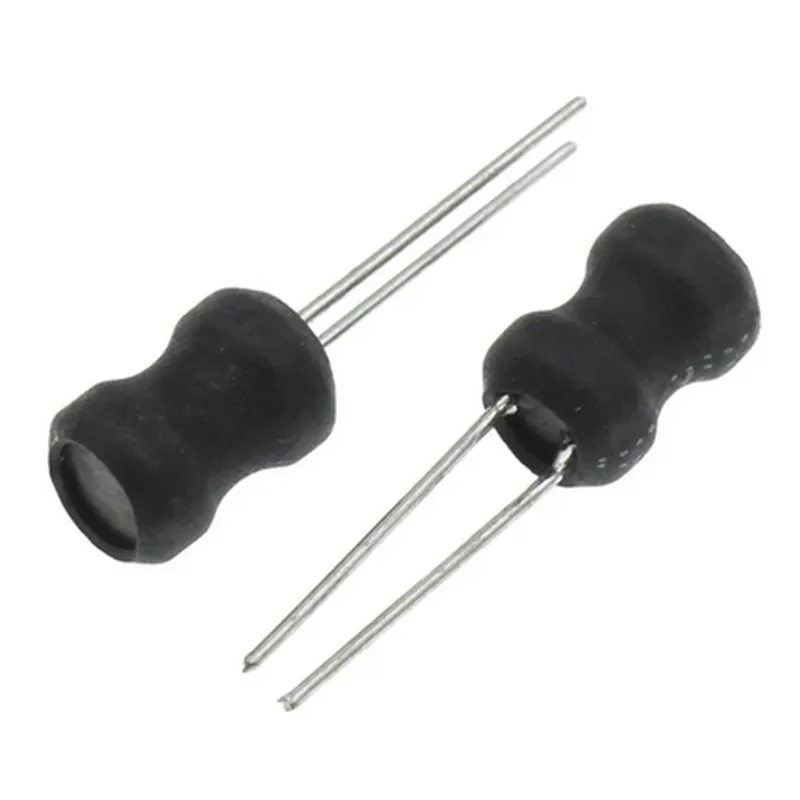
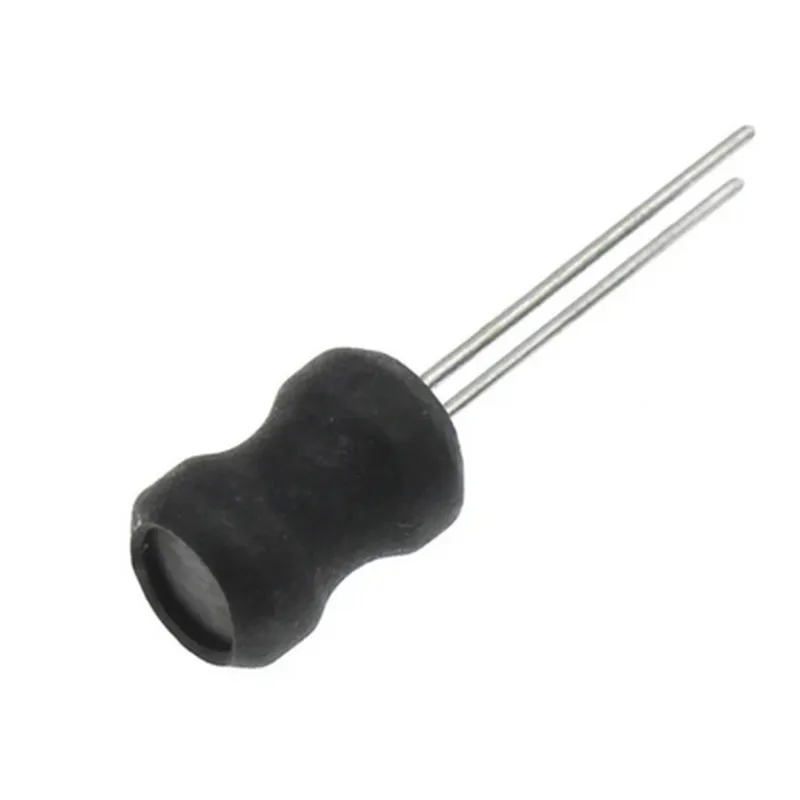
33uH DIP Power Inductor 912mm (Pack of 2)

Buy Now on Stufin

Component Description

33uH DIP Power Inductor 912mm (Pack of 2)

Overview

The 33uH DIP Power Inductor is a type of passive electronic component designed to store energy in the form of a magnetic field when an electric current flows through it. This inductor is specifically packaged in a Dual In-Line (DIP) format, making it easy to integrate into a wide range of electronic circuits. This pack of two inductors is ideal for prototyping, development, and production of various IoT devices, power supplies, and other electronic systems.

Functionality

The primary function of the 33uH DIP Power Inductor is to

Store energy in the form of a magnetic field when an alternating current (AC) or direct current (DC) flows through it

Filter or regulate the flow of electrical current in a circuit

Provide impedance to the circuit, which can help to block or attenuate certain frequency signals

Enhance the overall efficiency and stability of the power supply or electronic system

Key Features

  • Inductance: The inductor has a nominal inductance value of 33 microhenries (H), which determines its ability to store energy.
  • DIP Package: The inductor is packaged in a Dual In-Line (DIP) format, making it easy to mount on a printed circuit board (PCB) using through-hole technology.
  • Dimensions: The inductor has a compact size of 9mm x 12mm, making it suitable for use in space-constrained IoT devices and other electronic systems.
  • Current Rating: The inductor has a rated current handling capacity, which ensures safe and reliable operation within the specified current range.
  • Frequency Range: The inductor is designed to operate over a wide frequency range, making it suitable for use in various IoT applications, including power supplies, filters, and oscillators.
  • Material: The inductor core is made of a high-quality magnetic material, ensuring high permeability and low core losses.
  • Insulation: The inductor has a reliable insulation layer, which provides electrical isolation and ensures safe operation.

Specifications

Inductance

33H 10%

DCR (DC Resistance)XXXX ohms (XXX ohms for 1 kHz)

Rated Current

XXXX Amps

Operating Frequency Range

XXXX Hz to XXXX Hz

Temperature Range

-40C to +125C

Packaging

Dual In-Line (DIP) package

Dimensions

9mm x 12mm

Weight

XXXX grams

Applications

The 33uH DIP Power Inductor is suitable for use in a wide range of IoT devices and electronic systems, including

Power supplies and DC-DC converters

Filters and oscillators

Audio and video equipment

Automotive systems

Industrial control systems

Medical devices

Precautions

When working with the 33uH DIP Power Inductor, please observe the following precautions

Handle the inductor with care to avoid damage to the component or PCB.

Ensure proper soldering techniques to prevent overheating or mechanical stress.

Operate the inductor within the specified current and voltage ratings.

Avoid exposure to moisture, high temperatures, or physical stress.

Certifications and Compliance

The 33uH DIP Power Inductor complies with relevant industry standards and regulations, including RoHS, REACH, and IEEE standards.

By following this documentation, technical professionals and informed hobbyists can effectively integrate the 33uH DIP Power Inductor into their IoT devices and electronic systems, ensuring reliable and efficient operation.

Pin Configuration

  • 33uH DIP Power Inductor 912mm (Pack of 2) Documentation
  • Overview
  • The 33uH DIP Power Inductor is a compact, high-reliability inductor designed for use in power supply circuits, DC-DC converters, and other high-frequency applications. This documentation provides a detailed explanation of the component's pins and their connections.
  • Pinout Structure
  • The 33uH DIP Power Inductor has a standard Dual-In-Line Package (DIP) structure with 2 pins.
  • Pin Description
  • Here's a point-by-point explanation of each pin:
  • Pin 1: Terminal 1
  • + Function: Positive terminal of the inductor
  • + Connection: Connect to the positive leg of the circuit, such as the output of a voltage regulator or a DC power source
  • Pin 2: Terminal 2
  • + Function: Negative terminal of the inductor
  • + Connection: Connect to the negative leg of the circuit, such as the input of a voltage regulator or a return path to ground
  • Connection Diagram
  • Here's a simple connection diagram to illustrate the pin connections:
  • ```
  • +---------------+
  • | Voltage Source |
  • +---------------+
  • |
  • |
  • v
  • +---------------+
  • | Pin 1 (Terminal 1) |
  • | (Positive Terminal) |
  • +---------------+
  • |
  • |
  • v
  • +---------------+
  • | Circuit Load |
  • | (e.g., Voltage Regulator) |
  • +---------------+
  • |
  • |
  • v
  • +---------------+
  • | Pin 2 (Terminal 2) |
  • | (Negative Terminal) |
  • +---------------+
  • |
  • |
  • v
  • +---------------+
  • | Ground/Return Path |
  • +---------------+
  • ```
  • Important Notes
  • When connecting the inductor, ensure that the polarity is correct, as incorrect connections can damage the component or the surrounding circuit.
  • Use appropriate wire sizes and insulation to handle the expected current and voltage ratings of the application.
  • Follow proper PCB layout and routing guidelines to minimize noise, electromagnetic interference (EMI), and radio-frequency interference (RFI).
  • By following these guidelines, you can effectively utilize the 33uH DIP Power Inductor in your IoT project or application.

Code Examples

Component Documentation: 33uH DIP Power Inductor 912mm (Pack of 2)
Overview
The 33uH DIP Power Inductor is a compact, surface-mount device designed for high-frequency applications in IoT devices. With a compact size of 912mm, it is ideal for use in space-constrained designs. This inductor is suitable for a wide range of IoT applications, including power supply filters, EMI filters, and resonant circuits.
Key Features
Inductance: 33uH  10%
 Package: DIP (Dual In-Line Package)
 Size: 912mm
 Operating Frequency: Up to 1MHz
 Maximum Current: 1.5A
 DC Resistance: 0.2 ohms
 Operating Temperature: -40C to +125C
Applications
Power supply filters
 EMI filters
 Resonant circuits
 IoT devices (e.g., smart home devices, wearables, industrial sensors)
Code Examples
### Example 1: Using the 33uH DIP Power Inductor in a Power Supply Filter ( Arduino )
In this example, we will use the 33uH DIP Power Inductor as a filter inductor in a simple power supply circuit for an Arduino board.
```c
const int Vin = 9;    // Input voltage (9V)
const int Vout = 5;   // Output voltage (5V)
const int Iout = 500; // Output current (500mA)
void setup() {
  // Configure the inductor as a filter inductor
  pinMode(INDUCTOR_PIN, OUTPUT);
  digitalWrite(INDUCTOR_PIN, LOW);
}
void loop() {
  // Simulate a load on the output
  digitalWrite(LED_PIN, HIGH);
  delay(100);
  digitalWrite(LED_PIN, LOW);
  delay(100);
}
```
Circuit Diagram
```
VIN (9V) --> [R1 (1k)] --> [INDUCTOR (33uH)] --> [C1 (100nF)] --> VOUT (5V)
           |                                      |
           |                                      |
           +--------------------------------------+
                  |
                  |
                  V
                  |
                  +---> GND
```
### Example 2: Using the 33uH DIP Power Inductor in a Resonant Circuit (Raspberry Pi)
In this example, we will use the 33uH DIP Power Inductor as part of a resonant circuit to generate a 100kHz clock signal for a Raspberry Pi.
```python
import RPi.GPIO as GPIO
import time
# Set up GPIO mode
GPIO.setmode(GPIO.BCM)
# Define the resonant circuit components
L = 33e-6  # 33uH inductor
C = 100e-9  # 100nF capacitor
R = 50  # 50 ohm resistor
# Calculate the resonant frequency
f_resonant = 1 / (2  math.pi  math.sqrt(L  C))
# Set up the GPIO pins
GPIO.setup(17, GPIO.OUT)  # Output pin for the clock signal
GPIO.setup(23, GPIO.OUT)  # Output pin for the resonant circuit
try:
    while True:
        # Generate the clock signal
        GPIO.output(17, GPIO.HIGH)
        time.sleep(1 / (2  f_resonant))
        GPIO.output(17, GPIO.LOW)
        time.sleep(1 / (2  f_resonant))
# Drive the resonant circuit
        GPIO.output(23, GPIO.HIGH)
        time.sleep(1 / (2  f_resonant))
        GPIO.output(23, GPIO.LOW)
        time.sleep(1 / (2  f_resonant)
except KeyboardInterrupt:
    GPIO.cleanup()
```
Circuit Diagram
```
VIN (3.3V) --> [R (50)] --> [INDUCTOR (33uH)] --> [C (100nF)] --> GND
           |                                      |
           |                                      |
           +--------------------------------------+
                  |
                  |
                  V
                  |
                  +---> CLK (100kHz)
                  |
                  |
                  +---> GPIO 17 (Raspberry Pi)
```
Note: These examples are for illustrative purposes only and may require additional components and modifications to work in a real-world scenario. Always ensure that the component is used within its specified operating conditions and that the circuit is designed and tested for safety and reliability.