Stufin
Home Quick Cart Profile

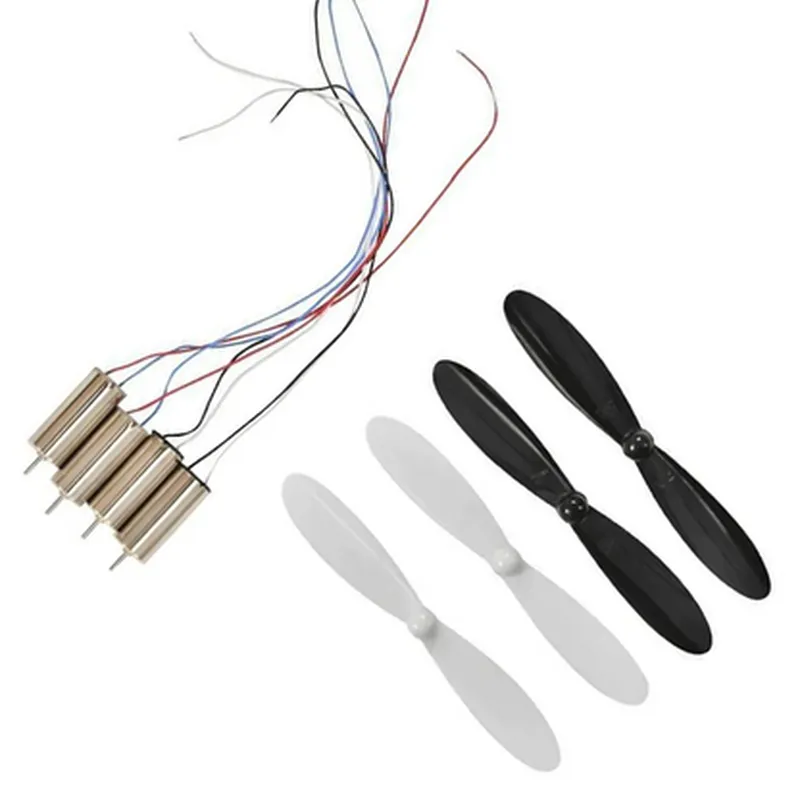
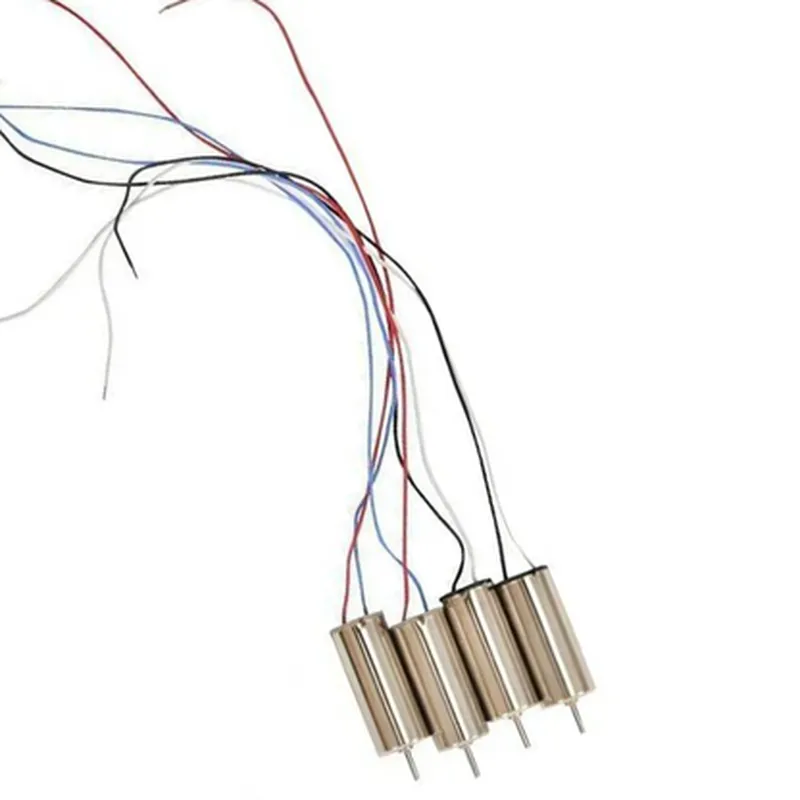
Coreless Motor and Propeller(8x20mm)(Pack of 4)

Buy Now on Stufin

Component Name

Coreless Motor and Propeller (8x20mm) (Pack of 4)


Overview

The Coreless Motor and Propeller (8x20mm) is a compact and efficient motor system designed for use in small-scale unmanned aerial vehicles (UAVs), robotics, and other IoT applications. This pack of 4 includes four individual motor and propeller units, each consisting of a coreless motor and a closely matched propeller. The system is optimized for high performance, low power consumption, and reliability.

Functionality

The Coreless Motor and Propeller system is designed to provide efficient and reliable propulsion for small-scale UAVs, drones, and other IoT devices. The coreless motor uses a unique design that eliminates the traditional iron core, resulting in a lighter and more efficient motor. The motor is paired with a carefully matched propeller, which is designed to optimize airflow and thrust.

Key Features

  • Compact Size: The motor and propeller system measures only 8x20mm, making it ideal for use in small-scale UAVs and IoT devices where space is limited.
  • High Efficiency: The coreless motor design provides high efficiency, resulting in longer battery life and reduced power consumption.
  • Low Weight: The motor and propeller system is extremely light, weighing only a few grams, making it ideal for use in weight-sensitive applications.
  • High Thrust-to-Weight Ratio: The system is optimized to provide a high thrust-to-weight ratio, resulting in efficient propulsion and maneuverability.
  • Reliability: The motor and propeller system is designed for reliability and durability, with a high-quality construction that can withstand the demands of repeated use.
  • Low Noise: The coreless motor design produces minimal noise, making it suitable for use in applications where noise needs to be minimized.
  • Easy Installation: The motor and propeller system is easy to install and integrate into a variety of IoT devices and UAVs.
  • Pack of 4: The pack includes four individual motor and propeller units, providing a convenient and cost-effective solution for developers and manufacturers.

Motor Type

Coreless

Motor Size

8x20mm

Propeller Size

8x20mm

Voltage

3.7V-4.2V

Current

1.5A-2.5A

RPM

10,000-15,000

Thrust

10-15g

Weight

2-3g (per unit)

Operating Temperature

-20C to 40C

Storage Temperature

-30C to 60C

Applications

The Coreless Motor and Propeller (8x20mm) is suitable for use in a variety of IoT applications, including

Small-scale unmanned aerial vehicles (UAVs) and drones

Robotics and robotic arms

IoT devices and gadgets

RC models and toys

Aerospace and defense applications

Important Notes

The motor and propeller system should be used with a suitable electronic speed controller (ESC) and power source.

Care should be taken when handling the motor and propeller system to avoid damage or injury.

The system should be operated within the specified temperature range to ensure optimal performance and reliability.

Pin Configuration

  • Coreless Motor and Propeller (8x20mm) Documentation
  • Component Overview
  • The Coreless Motor and Propeller (8x20mm) is a compact, high-performance motor designed for IoT and robotics applications. It features a coreless motor design, which provides high power density and efficiency. The motor comes with a pre-installed 8x20mm propeller, making it ideal for compact drone, robotic, and other autonomous systems.
  • Pinout Description
  • The Coreless Motor and Propeller has 3 pins, which are used to connect the motor to a control circuit or a microcontroller. The pinout is as follows:
  • Pin 1: VCC (Positive Power Supply)
  • Function: Positive power supply for the motor
  • Recommended voltage: 3.7V to 12V
  • Current rating: Up to 1A (dependent on motor load and operating conditions)
  • Pin 2: GND (Ground)
  • Function: Ground connection for the motor
  • Connection: Connect to the negative terminal of the power supply or the ground pin of the microcontroller
  • Pin 3: SIG (Signal)
  • Function: Motor control signal input
  • Logic level: 3.3V or 5V compatible
  • Frequency: Up to 100 kHz (dependent on motor control algorithm and operating conditions)
  • Connecting the Pins (Structure)
  • To connect the Coreless Motor and Propeller to a control circuit or microcontroller, follow these steps:
  • 1. Power supply connection:
  • Connect Pin 1 (VCC) to the positive terminal of the power supply (e.g., a battery or a DC power adapter).
  • Ensure the power supply voltage is within the recommended range (3.7V to 12V).
  • 2. Ground connection:
  • Connect Pin 2 (GND) to the negative terminal of the power supply or the ground pin of the microcontroller.
  • Ensure a secure and stable ground connection to prevent motor malfunction or damage.
  • 3. Motor control signal connection:
  • Connect Pin 3 (SIG) to the motor control signal output of the microcontroller or the control circuit.
  • Ensure the signal voltage is within the recommended logic level (3.3V or 5V).
  • Configure the microcontroller or control circuit to generate a suitable motor control signal (e.g., PWM, frequency, or voltage-controlled).
  • 4. Additional connections (if required):
  • Depending on the specific application, additional connections may be required, such as a current sense resistor or a motor controller IC.
  • Important Notes
  • When handling the motor, avoid touching the electrical contacts to prevent damage or electrical shock.
  • Ensure proper insulation and isolation of the motor wires to prevent electrical noise or interference.
  • Follow proper motor control and safety guidelines when operating the Coreless Motor and Propeller.
  • By following these pinout descriptions and connection guidelines, you can successfully integrate the Coreless Motor and Propeller into your IoT or robotics project.

Code Examples

Coreless Motor and Propeller (8x20mm) Documentation
Overview
The Coreless Motor and Propeller (8x20mm) is a compact and lightweight motor designed for small-scale applications, particularly in robotics, drones, and IoT projects. This pack of four motors comes with propellers, making it an ideal solution for quadcopters, hexacopters, and other multi-rotor systems.
Key Specifications
Motor Size: 8mm x 20mm
 Propeller Size: 8mm x 20mm
 Voltage: 3-6V
 Current: 0.5-1.5A
 Speed: 12000-18000 RPM
 Torque: 0.5-1.5 gf.cm
 Bearings: Coreless design, low friction
 Weight: 2.5g (motor only), 5g (motor with propeller)
Connectivity and Control
The motor can be controlled using a PWM (Pulse Width Modulation) signal, allowing for precise speed control. The motor wires are typically connected to a microcontroller or a dedicated motor driver IC.
Code Examples
### Example 1: Basic PWM Control using Arduino
This example demonstrates how to control the motor speed using an Arduino board and the built-in `analogWrite()` function.
```c++
const int motorPin = 9;  // Pin 9 for motor control
void setup() {
  pinMode(motorPin, OUTPUT);
}
void loop() {
  // Set motor speed to 50% (medium speed)
  analogWrite(motorPin, 128);
  delay(1000);
// Set motor speed to 25% (low speed)
  analogWrite(motorPin, 64);
  delay(1000);
// Set motor speed to 75% (high speed)
  analogWrite(motorPin, 192);
  delay(1000);
// Turn off the motor
  analogWrite(motorPin, 0);
  delay(1000);
}
```
### Example 2: Quadcopter Control using ESP32 and PWM
This example demonstrates how to control four Coreless Motors and Propellers using an ESP32 board and the `ledc` library for PWM control.
```c++
#include <WiFi.h>
#include <esp32_pwm.h>
// Define motor pins
const int motor1Pin = 18;
const int motor2Pin = 19;
const int motor3Pin = 21;
const int motor4Pin = 22;
void setup() {
  // Initialize motor pins as outputs
  pinMode(motor1Pin, OUTPUT);
  pinMode(motor2Pin, OUTPUT);
  pinMode(motor3Pin, OUTPUT);
  pinMode(motor4Pin, OUTPUT);
// Initialize PWM channels
  ledcSetup(0, 50, 16); // Channel 0, freq 50Hz, 16-bit resolution
  ledcSetup(1, 50, 16);
  ledcSetup(2, 50, 16);
  ledcSetup(3, 50, 16);
// Attach motor pins to PWM channels
  ledcAttachPin(motor1Pin, 0);
  ledcAttachPin(motor2Pin, 1);
  ledcAttachPin(motor3Pin, 2);
  ledcAttachPin(motor4Pin, 3);
}
void loop() {
  // Set motor speeds to stabilize the quadcopter
  ledcWrite(0, 128); // Motor 1: 50% speed
  ledcWrite(1, 128); // Motor 2: 50% speed
  ledcWrite(2, 128); // Motor 3: 50% speed
  ledcWrite(3, 128); // Motor 4: 50% speed
delay(100);
}
```
Note: These examples are for illustrative purposes only and may require additional components, such as a motor driver IC, to operate correctly. Ensure proper safety precautions and voltage regulation when working with electrical components.