

Stufin
Home Quick Cart Profile

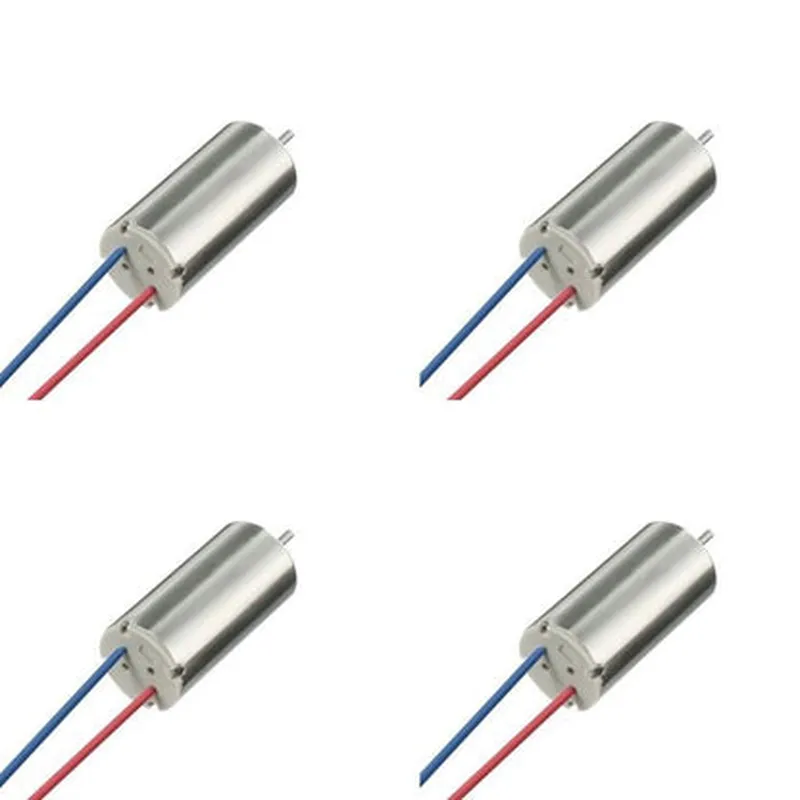
Micro Coreless Motor with propeller(7x20) - 4 Pieces

Buy Now on Stufin

Component Name

Micro Coreless Motor with Propeller (7x20) - 4 Pieces

Overview

The Micro Coreless Motor with Propeller (7x20) is a compact, high-performance motor solution designed for use in small-scale robotics, drones, and UAV applications. This package includes four individual motor units, each equipped with a propeller, making it an ideal choice for quadcopter or other multi-rotor designs.

Functionality

The Micro Coreless Motor with Propeller is a brushed DC motor that utilizes a coreless design, which provides improved efficiency, reliability, and reduced weight compared to traditional cored motor designs. The motor's primary function is to convert electrical energy into mechanical energy, rotating the propeller to generate thrust.

Key Features

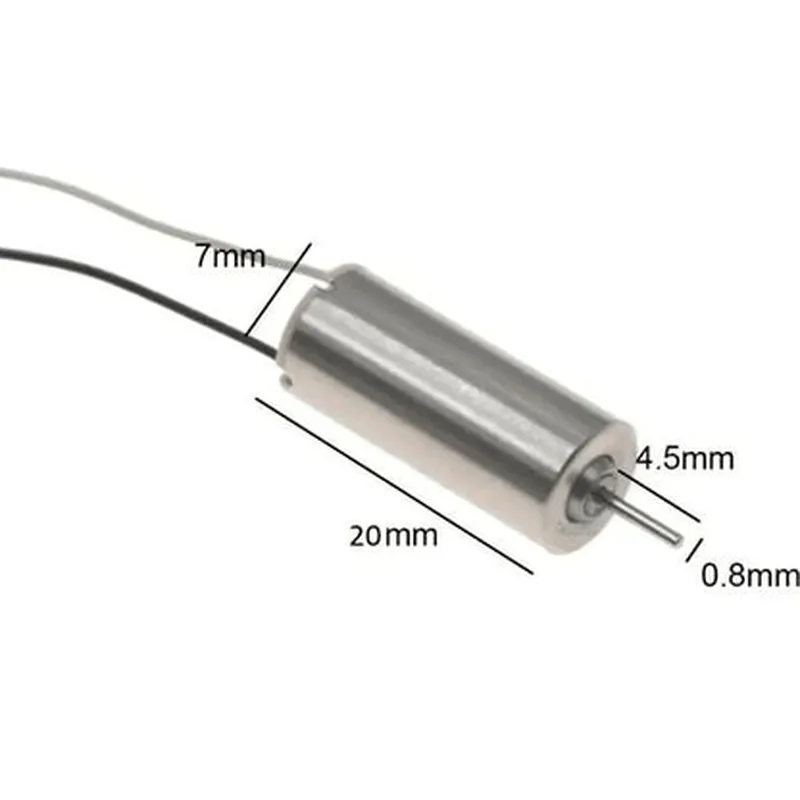
  • Compact Design: The motor measures only 7mm in diameter and 20mm in length, making it an ideal choice for applications where space is limited.
  • High Efficiency: The coreless design enables the motor to operate at a higher efficiency compared to traditional cored motors, resulting in longer battery life and improved overall system performance.
  • High Rotation Speed: The motor is capable of reaching high rotation speeds, making it suitable for applications that require rapid acceleration and deceleration.
  • Low Vibration: The motor's coreless design and optimized bearings minimize vibration, ensuring smoother operation and reduced wear on components.
  • Integrated Propeller: The motor comes with a pre-installed 7x20mm propeller, which is optimized for maximum thrust and efficiency.
  • Multi-Motor Package: The package includes four individual motor units, making it a cost-effective solution for quadcopter or other multi-rotor designs.

Technical Specifications

Motor Type

Brushed DC, Coreless

Motor Diameter

7mm

Motor Length

20mm

Propeller Size

7x20mm

Voltage Range

3.7V - 12V

Current Draw (Max)1.5A
No-Load Speed30,000 RPM

Stall Torque

15g.cm

Weight

4g (each motor unit)

Applications

Quadcopters and multi-rotor drones

Small-scale robotics

UAV applications

Model aircraft

Other applications requiring compact, high-performance motor solutions

Notes

It is recommended to use a suitable ESC (Electronic Speed Controller) and battery to ensure optimal motor performance and safety.

The motor is designed for use in dry, cool environments. Operating in extreme temperatures or humid conditions may affect motor performance and lifespan.

By providing a detailed description of the Micro Coreless Motor with Propeller (7x20), this documentation aims to assist technical professionals and informed hobbyists in understanding the component's functionality, key features, and technical specifications, enabling them to make informed design and development decisions.

Pin Configuration

  • Micro Coreless Motor with Propeller (7x20) - 4 Pieces
  • Pin Description:
  • The Micro Coreless Motor with Propeller (7x20) has a total of 3 pins, which are used to control the motor's rotation. Here is a detailed description of each pin:
  • 1. Positive Pin (+):
  • Function: Supplies positive voltage to the motor.
  • Description: This pin is responsible for providing the positive voltage to the motor, which enables it to rotate. It is usually connected to the power source's positive terminal (VCC).
  • 2. Negative Pin (-):
  • Function: Supplies negative voltage to the motor.
  • Description: This pin is responsible for providing the negative voltage to the motor, which enables it to rotate. It is usually connected to the power source's negative terminal (GND).
  • 3. Signal Pin (S):
  • Function: Controls the motor's rotation speed and direction.
  • Description: This pin is responsible for receiving the control signal from a microcontroller or other control devices. The signal sent to this pin determines the motor's rotation speed and direction.
  • Connection Structure:
  • To connect the Micro Coreless Motor with Propeller (7x20) to a microcontroller or other control devices, follow the below structure:
  • Step 1: Connect the Power Pins
  • Positive Pin (+): Connect to the power source's positive terminal (VCC) through a suitable voltage regulator or a power supply module.
  • Negative Pin (-): Connect to the power source's negative terminal (GND).
  • Step 2: Connect the Signal Pin
  • Signal Pin (S): Connect to a digital output pin of a microcontroller or other control devices. This pin will receive the control signal that determines the motor's rotation speed and direction.
  • Important Notes:
  • The motor requires a suitable voltage regulator or power supply module to regulate the voltage supply, as it may not be compatible with all power sources.
  • The motor's rotation speed and direction can be controlled by sending a PWM (Pulse-Width Modulation) signal to the Signal Pin (S). The duty cycle of the PWM signal determines the motor's rotation speed, while the signal's polarity determines the rotation direction.
  • Proper heat dissipation and motor protection mechanisms should be implemented to ensure the motor's reliability and longevity.
  • By following the above connection structure and guidelines, you can effectively control the Micro Coreless Motor with Propeller (7x20) using a microcontroller or other control devices.

Code Examples

Micro Coreless Motor with Propeller (7x20) - 4 Pieces
Overview
The Micro Coreless Motor with Propeller (7x20) is a small, high-performance motor designed for use in IoT and robotics projects. It comes with a 7x20 propeller, making it suitable for miniature unmanned aerial vehicles (UAVs), robotic arms, and other applications where space is limited. This documentation provides a comprehensive overview of the motor's specifications, pinouts, and code examples to get you started.
Specifications
| Parameter | Value |
| --- | --- |
| Motor Type | Coreless |
| Size | 7x20mm |
| Voltage | 3-6V |
| Current | 100-200mA |
| RPM | 10000-20000 RPM |
| Torque | 0.1-0.2 kg.cm |
| Propeller Size | 7x20mm |
Pinout
The Micro Coreless Motor has a 3-pin interface:
| Pin | Function |
| --- | --- |
| VCC | Power supply (3-6V) |
| GND | Ground |
| SIG | Signal (PWM control) |
Code Examples
### Example 1: Basic Motor Control using Arduino
This example demonstrates how to control the motor using an Arduino board.
```c++
const int motorPin = 9;  // Pin for motor signal
int motorSpeed = 128;  // Initial motor speed (0-255)
void setup() {
  pinMode(motorPin, OUTPUT);
}
void loop() {
  analogWrite(motorPin, motorSpeed);
  delay(1000);
  
  // Change motor speed
  motorSpeed = 200;
  analogWrite(motorPin, motorSpeed);
  delay(1000);
}
```
In this example, the motor is connected to digital pin 9 of the Arduino board. The `analogWrite()` function is used to set the motor speed using PWM (Pulse Width Modulation).
### Example 2: Motor Control using Raspberry Pi and Python
This example demonstrates how to control the motor using a Raspberry Pi and Python.
```python
import RPi.GPIO as GPIO
import time
GPIO.setmode(GPIO.BCM)
motor_pin = 17  # Pin for motor signal
GPIO.setup(motor_pin, GPIO.OUT)
while True:
    # Set motor speed to 50%
    GPIO.PWM(motor_pin, 50).start(50)
    time.sleep(1)
    
    # Set motor speed to 100%
    GPIO.PWM(motor_pin, 100).start(100)
    time.sleep(1)
```
In this example, the motor is connected to GPIO pin 17 of the Raspberry Pi. The RPi.GPIO library is used to control the motor using PWM.
### Example 3: Motor Control using ESP32 and MicroPython
This example demonstrates how to control the motor using an ESP32 board and MicroPython.
```python
import machine
import utime
motor_pin = machine.Pin(27, machine.Pin.OUT)
while True:
    # Set motor speed to 50%
    motor_pin.pwm(50)
    utime.sleep(1)
    
    # Set motor speed to 100%
    motor_pin.pwm(100)
    utime.sleep(1)
```
In this example, the motor is connected to GPIO pin 27 of the ESP32 board. The machine library is used to control the motor using PWM.
Notes
When connecting the motor to a microcontroller or single-board computer, ensure that the voltage and current ratings are not exceeded.
 Use a suitable power supply and decoupling capacitors to minimize electrical noise and ensure reliable motor operation.
 The motor's performance may vary depending on the specific application and environmental conditions.