Stufin
Home Quick Cart Profile

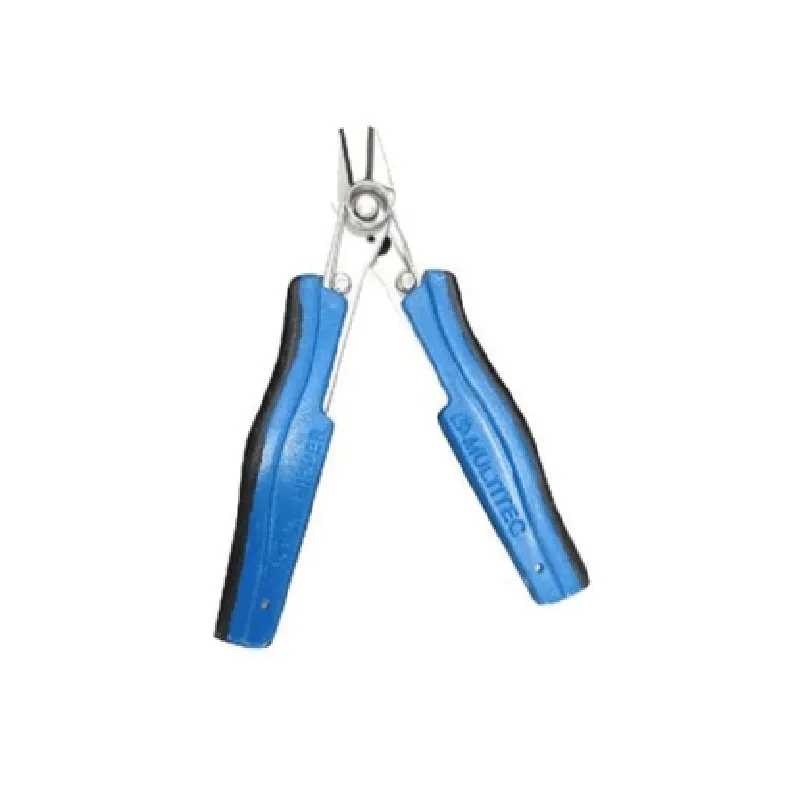
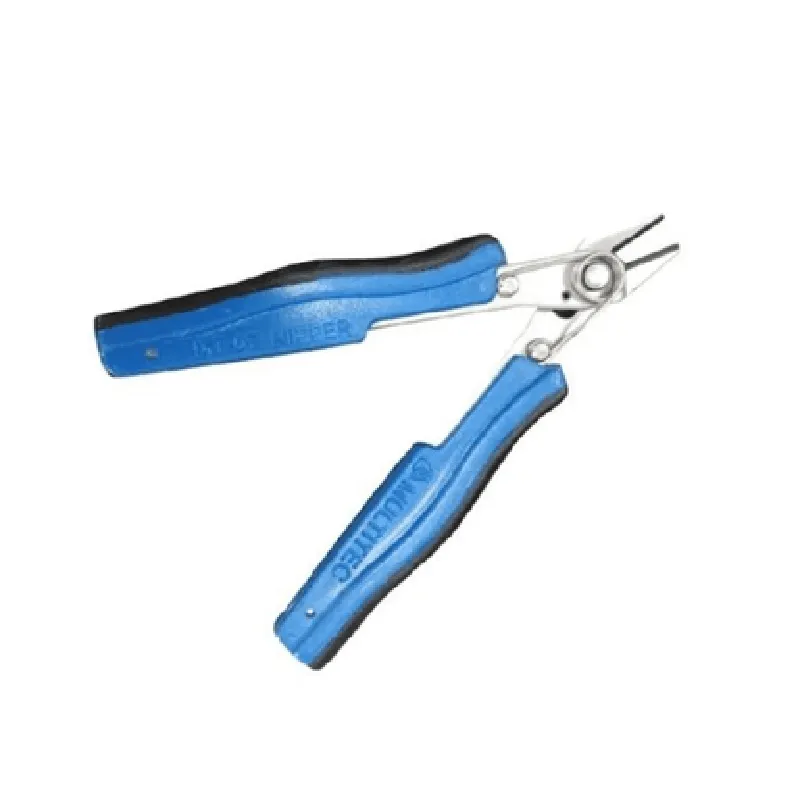
Multitec MT-07-SS Nipper

Buy Now on Stufin

Wire stripping capacity

Up to 7 mm (0.28 in) wire diameter


Adjustable stripping length

1 mm to 10 mm (0.04 in to 0.39 in)

Cutting blade material

High-carbon steel

Handle material

Stainless steel

Weight

200 g (7 oz)

Dimensions

170 mm x 50 mm x 30 mm (6.7 in x 2 in x 1.2 in)

Applications

The Multitec MT-07-SS Nipper is suitable for various IoT applications, including

Robotics and automation

Manufacturing and production

Electrical engineering and design

Telecommunications and networking

Automotive and aerospace industries

Certifications and Compliance

The MT-07-SS Nipper meets or exceeds the following industry standards and regulations

CE certified

RoHS compliant

UL listed

Warranty and Support

The Multitec MT-07-SS Nipper comes with a 2-year limited warranty and dedicated customer support. For more information, please contact Multitec's support team.

Pin Configuration

  • Multitec MT-07-SS Nipper Component Documentation
  • Pinout Explanation
  • The Multitec MT-07-SS Nipper is a micro-sized, low-power wireless communication module designed for IoT applications. It features a compact 14-pin package. Below is a detailed explanation of each pin, point by point:
  • Pin 1: VCC
  • Description: Power supply pin
  • Type: Input
  • Voltage: 1.8V to 3.6V
  • Notes: This pin should be connected to a stable power source. A decoupling capacitor of 10nF to 100nF is recommended to filter out noise.
  • Pin 2: RST
  • Description: Reset pin
  • Type: Input
  • Active Level: Low
  • Notes: This pin is used to reset the module. A low signal (typically 0V) on this pin will reset the module. A pull-up resistor of 1k to 10k is recommended.
  • Pin 3: GND
  • Description: Ground pin
  • Type: Output
  • Notes: This pin should be connected to the system ground.
  • Pin 4: SCLK
  • Description: Serial clock pin
  • Type: Input
  • Frequency: Up to 4MHz
  • Notes: This pin is used for serial communication. It should be connected to a serial clock signal from a microcontroller or other compatible devices.
  • Pin 5: CS
  • Description: Chip select pin
  • Type: Input
  • Active Level: Low
  • Notes: This pin is used to enable or disable the serial communication. A low signal (typically 0V) on this pin will enable the communication.
  • Pin 6: MOSI
  • Description: Master-out-slave-in pin
  • Type: Input
  • Notes: This pin is used for data transmission from the microcontroller to the module.
  • Pin 7: MISO
  • Description: Master-in-slave-out pin
  • Type: Output
  • Notes: This pin is used for data reception from the module to the microcontroller.
  • Pin 8: IRQ
  • Description: Interrupt request pin
  • Type: Output
  • Active Level: High
  • Notes: This pin is used to indicate events or interrupts generated by the module.
  • Pin 9: NC
  • Description: No connection
  • Type: NC
  • Notes: This pin is not connected internally and should be left unconnected.
  • Pin 10: TX
  • Description: Transmitter pin
  • Type: Output
  • Notes: This pin is used for wireless transmission.
  • Pin 11: RX
  • Description: Receiver pin
  • Type: Input
  • Notes: This pin is used for wireless reception.
  • Pin 12: ANT
  • Description: Antenna pin
  • Type: Output
  • Notes: This pin is used to connect an external antenna for wireless communication.
  • Pin 13: VREG_EN
  • Description: Voltage regulator enable pin
  • Type: Input
  • Active Level: High
  • Notes: This pin is used to enable or disable the internal voltage regulator.
  • Pin 14: GND
  • Description: Ground pin
  • Type: Output
  • Notes: This pin should be connected to the system ground.
  • Connection Structure
  • To connect the Multitec MT-07-SS Nipper, follow these steps:
  • 1. Connect VCC (Pin 1) to a stable power source (e.g., a battery or a power supply) through a decoupling capacitor.
  • 2. Connect RST (Pin 2) to a reset signal or a pull-up resistor to prevent unwanted resets.
  • 3. Connect GND (Pin 3) and GND (Pin 14) to the system ground.
  • 4. Connect SCLK (Pin 4) to a serial clock signal from a microcontroller or other compatible devices.
  • 5. Connect CS (Pin 5) to a chip select signal from a microcontroller or other compatible devices.
  • 6. Connect MOSI (Pin 6) to a data transmission pin from a microcontroller or other compatible devices.
  • 7. Connect MISO (Pin 7) to a data reception pin from a microcontroller or other compatible devices.
  • 8. Connect IRQ (Pin 8) to an interrupt pin on a microcontroller or other compatible devices.
  • 9. Leave NC (Pin 9) unconnected.
  • 10. Connect TX (Pin 10) to an optional transmitter circuit or impedance matching network.
  • 11. Connect RX (Pin 11) to an optional receiver circuit or impedance matching network.
  • 12. Connect ANT (Pin 12) to an external antenna for wireless communication.
  • 13. Connect VREG_EN (Pin 13) to a voltage regulator enable signal or a pull-up resistor to enable the internal voltage regulator.
  • Note: Ensure proper signal buffering, impedance matching, and noise filtering when connecting the Multitec MT-07-SS Nipper to your system. Consult the module's datasheet and application notes for specific guidelines and recommendations.

Code Examples

Multitec MT-07-SS Nipper Documentation
The Multitec MT-07-SS Nipper is an IoT-enabled wire cutting and stripping tool designed for various industrial and DIY applications. This component can be integrated into automated systems, robotic arms, or used as a standalone device.
Technical Specifications:
Voltage: 12V DC
 Current: 2A
 Wire cutting capacity: up to 1.5mm
 Wire stripping capacity: up to 0.5mm
 Communication protocol: UART, RS-485
 Dimension: 120mm x 60mm x 40mm
Code Examples:
### Example 1: Basic Wire Cutting using UART Communication (Arduino)
This example demonstrates how to use the Multitec MT-07-SS Nipper with an Arduino board to cut a wire.
```c
#include <SoftwareSerial.h>
// Define the UART pins for communication
#define RX_PIN 2
#define TX_PIN 3
SoftwareSerial nipperSerial(RX_PIN, TX_PIN);
void setup() {
  // Initialize the UART communication
  nipperSerial.begin(9600);
}
void loop() {
  // Send the wire cutting command to the nipper
  nipperSerial.write(0x01); // Command code for wire cutting
  delay(500); // Wait for the cutting process to complete
  nipperSerial.write(0x00); // Reset the nipper
  delay(1000); // Wait for 1 second before repeating
}
```
### Example 2: Automated Wire Stripping using RS-485 Communication (Python)
This example demonstrates how to use the Multitec MT-07-SS Nipper with a Raspberry Pi to automate wire stripping.
```python
import serial
import time
# Open the RS-485 serial connection
ser = serial.Serial('/dev/ttyUSB0', 9600, timeout=1)
while True:
  # Send the wire stripping command to the nipper
  ser.write(b'x02x03') # Command code for wire stripping (0.5mm)
  time.sleep(1) # Wait for the stripping process to complete
  ser.write(b'x00') # Reset the nipper
  time.sleep(2) # Wait for 2 seconds before repeating
```
### Example 3: Integrating with a Robotic Arm using Modbus RTU (C++)
This example demonstrates how to use the Multitec MT-07-SS Nipper with a robotic arm using Modbus RTU communication.
```c
#include <ModbusRTU.h>
// Define the Modbus RTU configuration
ModbusRTU nipperModbus(1, 9600, 8, 'N', 1); // Slave ID, baudrate, data bits, parity, stop bits
void setup() {
  // Initialize the Modbus RTU communication
  nipperModbus.begin();
}
void loop() {
  // Send the wire cutting command to the nipper
  nipperModbus.writeSingleRegister(0x01, 0x01); // Command code for wire cutting
  delay(500); // Wait for the cutting process to complete
  nipperModbus.writeSingleRegister(0x01, 0x00); // Reset the nipper
  delay(1000); // Wait for 1 second before repeating
}
```
Note: The above code examples are for demonstration purposes only and may require modifications to suit specific application requirements. Ensure proper communication protocol and pin configuration before using the Multitec MT-07-SS Nipper in your project.