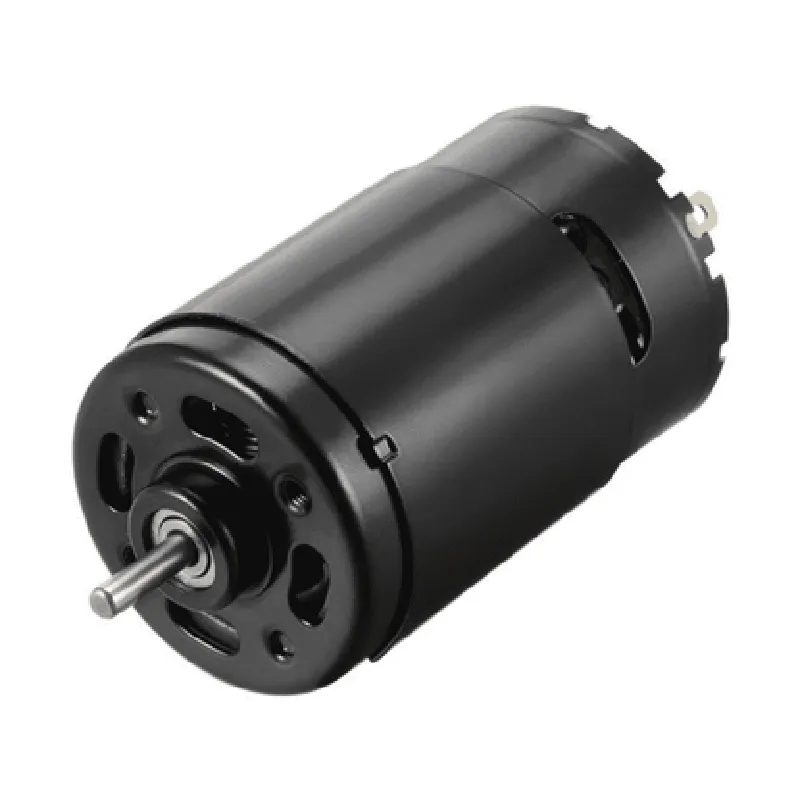
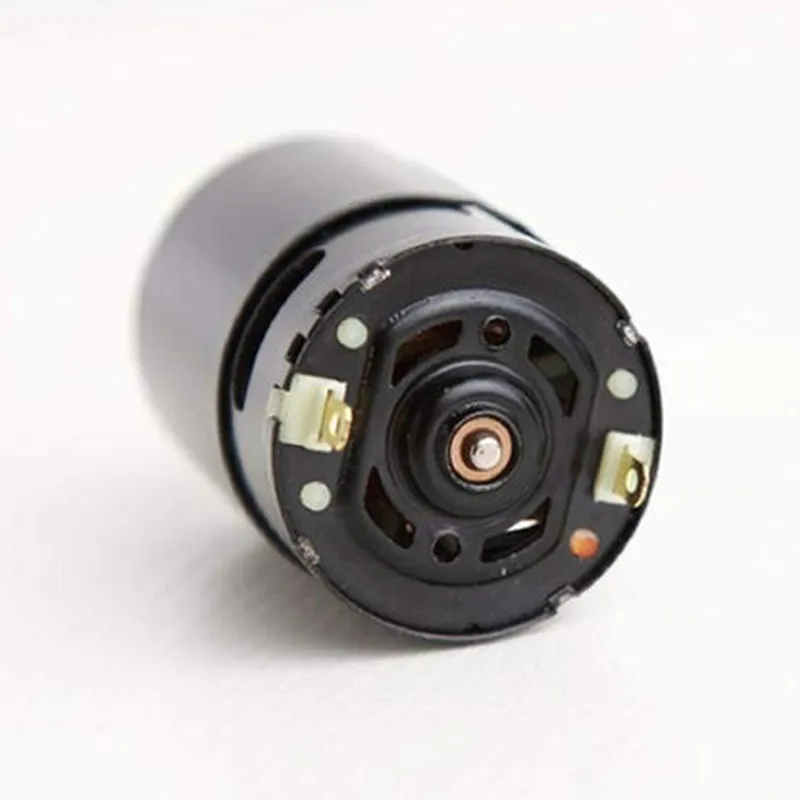
550 10400 RPM High Torque DC Motor


550 10400 RPM High Torque DC Motor
The 550 10400 RPM High Torque DC Motor is a high-performance, direct current (DC) motor designed for applications that require high power, speed, and torque. This motor is suitable for use in various Internet of Things (IoT) projects, robotics, and industrial automation systems.
The primary function of the 550 10400 RPM High Torque DC Motor is to convert electrical energy into mechanical energy. It achieves this by using a DC power source, such as a battery or a DC power supply, to generate a magnetic field that interacts with the motor's windings, resulting in rotation. This motor can be controlled using a motor driver or a microcontroller, allowing for speed and direction control.
550
10400 RPM
(dependent on load and application)
12V - 24V DC
(dependent on load and application)
80%
High-quality, high-temperature resistant bearings
Durable, high-temperature resistant material
(dependent on motor configuration and application)
(dependent on motor configuration and application)
| The 550 10400 RPM High Torque DC Motor is suitable for use in a wide range of applications, including |
Robotics and robotic arms
Drones and autonomous vehicles
Industrial automation systems
Healthcare devices
IoT devices and sensors
Consumer electronics
Aerospace and defense systems
Ensure proper motor selection and sizing for the application to avoid overheating and premature failure.
Use a suitable motor driver or controller to regulate speed and direction.
Provide adequate cooling and ventilation to prevent overheating.
Follow proper safety precautions when handling and installing the motor to avoid electrical shock or injury.
By considering the features, specifications, and precautions outlined above, users can ensure safe and effective operation of the 550 10400 RPM High Torque DC Motor in their IoT projects and applications.
Component Documentation: 550 10400 RPM High Torque DC MotorOverviewThe 550 10400 RPM High Torque DC Motor is a high-performance motor designed for applications requiring high torque and speed. With its robust design and high-quality construction, this motor is ideal for use in robotics, drones, and other IoT projects that demand reliable and efficient motor performance.Technical SpecificationsRated Voltage: 12V DC
Rated Current: 10A
Rated Speed: 10400 RPM
Rated Torque: 550 oz-in (38.5 Nm)
Motor Type: Brushed DC Motor
Connector: 3-pin JST-XH connector (VCC, GND, Signal)Arduino ExampleIn this example, we will demonstrate how to control the motor speed using an Arduino Board. We will use the Arduino's built-in PWM (Pulse Width Modulation) capabilities to regulate the motor speed.Hardware Requirements:Arduino Board (e.g., Arduino Uno or Arduino Mega)
550 10400 RPM High Torque DC Motor
L298N Motor Driver IC
Jumper wires
BreadboardSoftware Requirements:Arduino IDE (version 1.8.x or higher)Code Example:
```c++
const int motorPin = 9; // PWM pin for motor control
const int enablePin = 8; // Enable pin for motor drivervoid setup() {
pinMode(motorPin, OUTPUT);
pinMode(enablePin, OUTPUT);
}void loop() {
// Set motor speed to 50% (medium speed)
analogWrite(motorPin, 128);
digitalWrite(enablePin, HIGH);delay(2000);// Set motor speed to 25% (low speed)
analogWrite(motorPin, 64);
digitalWrite(enablePin, HIGH);delay(2000);// Set motor speed to 75% (high speed)
analogWrite(motorPin, 192);
digitalWrite(enablePin, HIGH);delay(2000);// Turn off the motor
digitalWrite(enablePin, LOW);
}
```
Raspberry Pi Python ExampleIn this example, we will demonstrate how to control the motor using a Raspberry Pi and the RPi.GPIO library.Hardware Requirements:Raspberry Pi Board (e.g., Raspberry Pi 4 or Raspberry Pi 3)
550 10400 RPM High Torque DC Motor
L298N Motor Driver IC
Jumper wires
BreadboardSoftware Requirements:Raspbian OS (version 10.x or higher)
RPi.GPIO library (version 0.7.x or higher)Code Example:
```python
import RPi.GPIO as GPIO
import time# Set up GPIO pins
GPIO.setmode(GPIO.BCM)
motor_pin = 18 # PWM pin for motor control
enable_pin = 23 # Enable pin for motor driverGPIO.setup(motor_pin, GPIO.OUT)
GPIO.setup(enable_pin, GPIO.OUT)# Set motor speed to 50% (medium speed)
GPIO.PWM(motor_pin, 50)
GPIO.output(enable_pin, GPIO.HIGH)time.sleep(2)# Set motor speed to 25% (low speed)
GPIO.PWM(motor_pin, 25)
GPIO.output(enable_pin, GPIO.HIGH)time.sleep(2)# Set motor speed to 75% (high speed)
GPIO.PWM(motor_pin, 75)
GPIO.output(enable_pin, GPIO.HIGH)time.sleep(2)# Turn off the motor
GPIO.output(enable_pin, GPIO.LOW)
```
Note:In both examples, make sure to adjust the motor pin and enable pin numbers according to your specific setup.
The motor driver IC (L298N) is required to handle the high current and voltage requirements of the motor.
Always ensure proper safety precautions when working with electrical components and high-speed motors.