10K 3386P Trimpot (Pack of 5)


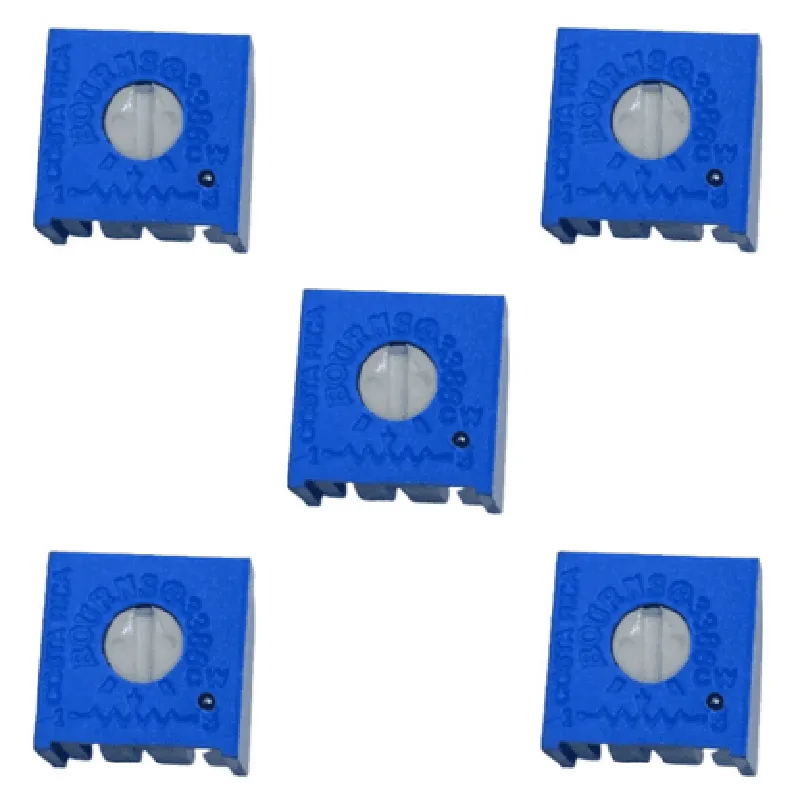
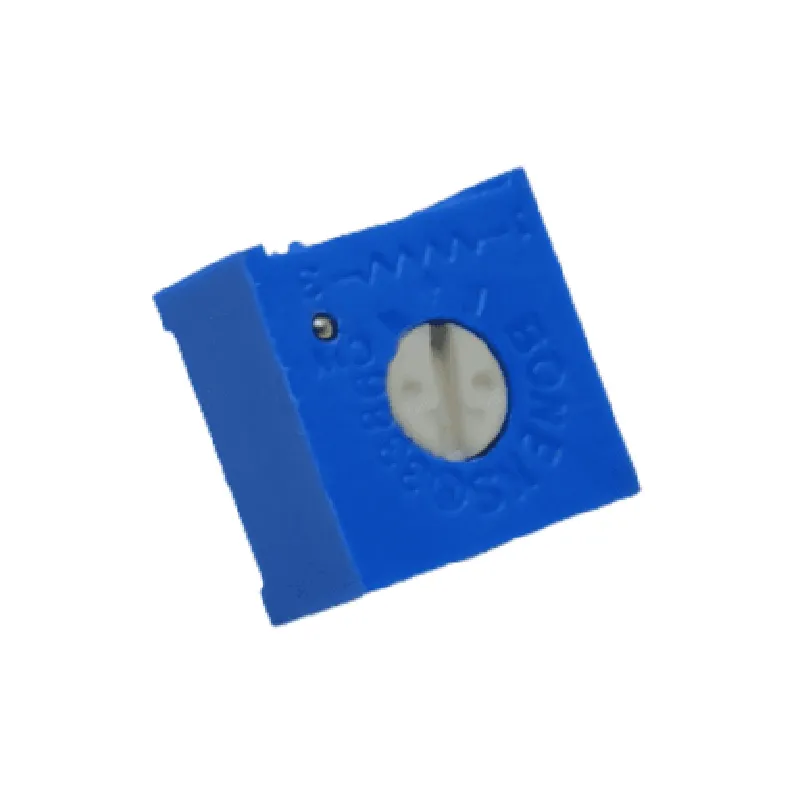
10K 3386P Trimpot (Pack of 5)
The 10K 3386P Trimpot is a precision trimmer potentiometer designed for precision circuit adjustments in various electronic applications. This component is a variable resistor that allows for precise adjustment of resistance values within a specific range. This pack includes five (5) individual trim pots, ideal for prototyping, development, and production purposes.
| The 10K 3386P Trimpot serves as a variable resistor, enabling the user to adjust the resistance value between the input and output terminals. The trimmer potentiometer has three terminals | one for the input signal, one for the output signal, and one for the wiper (adjustment terminal). The wiper terminal is used to adjust the resistance value by rotating the trimmer's adjustment knob. This adjustment changes the proportion of the input signal that is sent to the output terminal, allowing for precise control over the signal amplitude. |
| The 10K 3386P Trimpot is suitable for various applications, including |
Precision circuit adjustments in audio equipment, instrumentation, and measurement devices
Voltage dividers, signal attenuators, and gain control circuits
Prototyping and development of electronic circuits
Educational and training purposes
This component is supplied in a pack of five (5) individual trimmer potentiometers, allowing for convenient stocking and use in various projects.
Before using the 10K 3386P Trimpot, ensure you follow proper mounting and handling procedures to avoid damage and ensure reliable operation. Refer to the manufacturer's datasheet for detailed specifications, safety guidelines, and application notes.
Component Documentation: 10K 3386P Trimpot (Pack of 5)OverviewThe 10K 3386P Trimpot is a premium-quality, 10k, 3-terminal, cermet-based trimmer potentiometer. This component is designed for precise adjustable voltage division and is commonly used in various electronic circuits, including audio equipment, sensors, and IoT devices. This pack of 5 trimpots is an excellent addition to any electronics enthusiast's or professional's collection.Pinout and ConnectionThe 10K 3386P Trimpot has three terminals:Terminal 1 (T1): Connected to the wiper (center terminal)
Terminal 2 (T2): Connected to one end of the resistive track
Terminal 3 (T3): Connected to the other end of the resistive trackCode Examples### Example 1: Basic Trimpot Usage with ArduinoIn this example, we'll use the 10K 3386P Trimpot to control the brightness of an LED connected to an Arduino board.Hardware Requirements:Arduino Board (e.g., Uno or Nano)
10K 3386P Trimpot
LED
220 Resistor
Breadboard and jumper wiresCode:
```c
const int potPin = A0; // Potentiometer connected to analog input A0
const int ledPin = 9; // LED connected to digital output 9int potValue = 0; // Variable to store potentiometer value
int brightness = 0; // Variable to store LED brightnessvoid setup() {
pinMode(ledPin, OUTPUT);
}void loop() {
potValue = analogRead(potPin); // Read potentiometer value (0-1023)
brightness = map(potValue, 0, 1023, 0, 255); // Map pot value to LED brightness (0-255)
analogWrite(ledPin, brightness); // Set LED brightness
delay(10);
}
```
### Example 2: Trimpot as Voltage Divider with Raspberry PiIn this example, we'll use the 10K 3386P Trimpot to create a voltage divider circuit, which can be used to control the input voltage to an analog sensor connected to a Raspberry Pi.Hardware Requirements:Raspberry Pi (any model)
10K 3386P Trimpot
Breadboard and jumper wires
Analog sensor (e.g., photodiode or thermistor)Code:
```python
import RPi.GPIO as GPIO
import timeGPIO.setmode(GPIO.BCM)# Define trimpot pin connections
TRIMPOT_PIN_T1 = 17 # Wiper terminal
TRIMPOT_PIN_T2 = 23 # Resistive track terminal
TRIMPOT_PIN_T3 = 24 # Resistive track terminal# Define sensor pin connections
SENSOR_PIN = 18 # Analog sensor input# Set up trimpot as voltage divider
GPIO.setup(TRIMPOT_PIN_T1, GPIO.IN)
GPIO.setup(TRIMPOT_PIN_T2, GPIO.OUT)
GPIO.setup(TRIMPOT_PIN_T3, GPIO.OUT)while True:
# Read trimpot value (0-1023)
trimpot_value = GPIO.input(TRIMPOT_PIN_T1)# Calculate voltage divider output voltage
voltage_divider_output = trimpot_value 3.3 / 1023# Control sensor input voltage
GPIO.output(TRIMPOT_PIN_T2, GPIO.HIGH if voltage_divider_output > 1.65 else GPIO.LOW)
GPIO.output(TRIMPOT_PIN_T3, GPIO.HIGH if voltage_divider_output < 1.65 else GPIO.LOW)# Read sensor value
sensor_value = GPIO.input(SENSOR_PIN)print("Sensor Value:", sensor_value)
time.sleep(0.1)
```
These examples demonstrate the versatility of the 10K 3386P Trimpot in various IoT applications. With its high-quality construction and precise adjustable resistance, this component is an excellent addition to any electronics project.