

Stufin
Home Quick Cart Profile

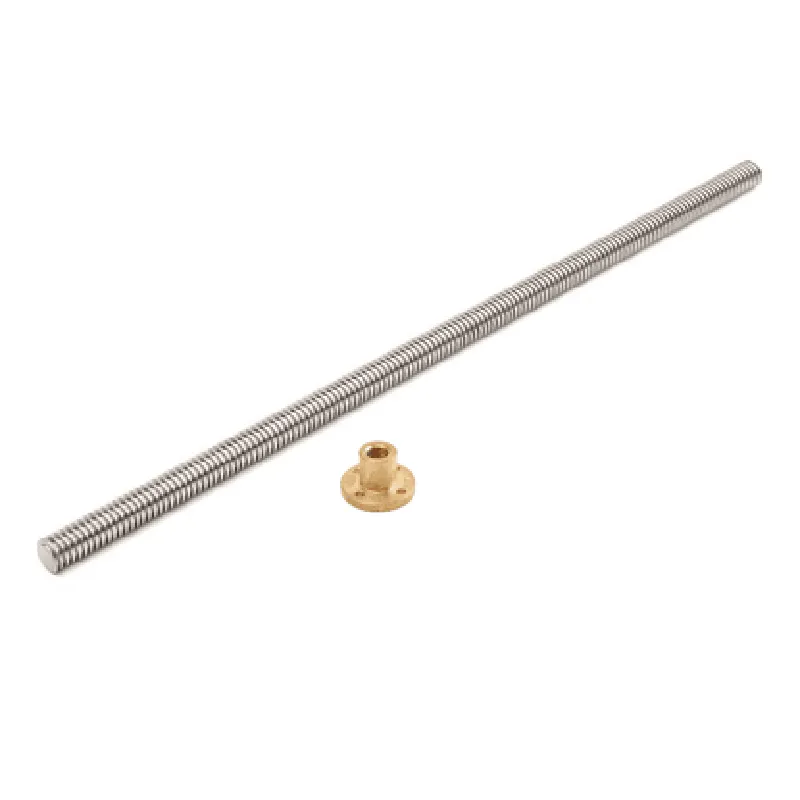
330mm Trapezoidal 4 Start Lead Screw 8mm Thread 2mm Pitch Lead Screw with Copper Nut

Buy Now on Stufin

Component Description

330mm Trapezoidal 4 Start Lead Screw 8mm Thread 2mm Pitch Lead Screw with Copper Nut

Overview

The 330mm Trapezoidal 4 Start Lead Screw 8mm Thread 2mm Pitch Lead Screw with Copper Nut is a type of linear actuator component commonly used in various IoT applications, such as robotics, automation, and precision machinery. This component consists of a lead screw, a copper nut, and a trapezoidal thread design, which enables efficient and precise linear motion.

Functionality

The primary function of this component is to convert rotary motion into linear motion. The lead screw is designed to rotate, which causes the copper nut to move linearly along the screw's length. This mechanism enables the component to provide precise control over linear movement, making it an essential element in various IoT systems.

Key Features

  • Trapezoidal Thread Design: The lead screw features a trapezoidal thread design, which provides a larger contact area between the screw and the nut, resulting in higher efficiency and reduced friction.
  • 4 Start Thread: The 4 start thread design enables faster linear motion compared to single-start threads, making it suitable for applications requiring rapid movement.
  • 8mm Thread Diameter: The lead screw has a thread diameter of 8mm, which provides a robust and stable connection with the copper nut.
  • 2mm Pitch: The lead screw has a pitch of 2mm, which determines the distance between each thread. A smaller pitch results in finer linear movement and higher precision.
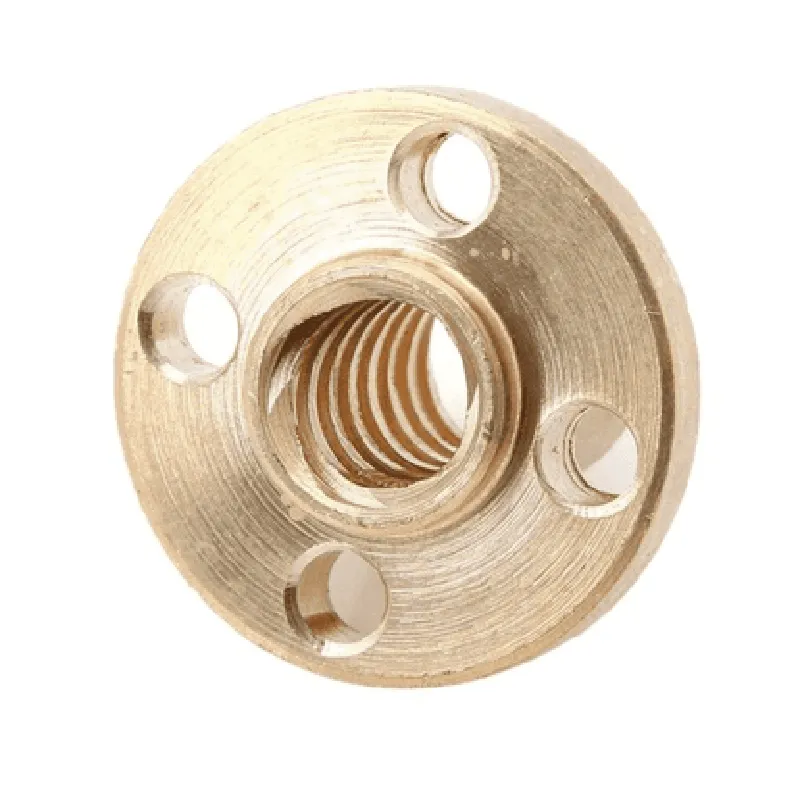
  • Copper Nut: The copper nut is designed to provide smooth and efficient linear motion. Copper's high thermal conductivity and low friction coefficient make it an ideal material for this application.
  • 330mm Length: The lead screw has a length of 330mm, providing ample travel distance for various IoT applications.
  • High Precision: The component is designed to provide high precision and accuracy, making it suitable for applications requiring precise linear movement.

Applications

The 330mm Trapezoidal 4 Start Lead Screw 8mm Thread 2mm Pitch Lead Screw with Copper Nut is commonly used in various IoT applications, including

Robotics

Linear movement in robotic arms, grippers, and other mechanisms.

Automation

Linear movement in automated machinery, such as conveyor belts and pick-and-place systems.

Precision Machinery

Linear movement in precision machinery, such as CNC machines and 3D printers.

Medical Devices

Linear movement in medical devices, such as surgical robots and hospital equipment.

Technical Specifications

Thread Type

Trapezoidal

Thread Diameter

8mm

Pitch

2mm

Starts

4

Length

330mm

Material

Lead screw - Steel or Stainless Steel; Copper Nut - Copper

Operating Temperature

-20C to 80C

Maximum Load Capacity

Depends on the specific application and installation

Installation and Maintenance

Proper installation and maintenance are crucial to ensure the component's optimal performance and longevity. Please refer to the manufacturer's instructions and guidelines for installation, lubrication, and maintenance.

Pin Configuration

  • Component Overview
  • The 330mm Trapezoidal 4 Start Lead Screw 8mm Thread 2mm Pitch Lead Screw with Copper Nut is a linear motion component commonly used in IoT applications, robotics, and CNC machines. This lead screw is designed to convert rotary motion into linear motion, providing precise positioning and movement.
  • Copper Nut Overview
  • The copper nut is a critical component of the lead screw assembly, providing a smooth and precise interface between the lead screw and the moving component. It is designed to thread onto the lead screw and provides a low-friction surface for smooth motion.
  • Pins Explanation
  • The copper nut has a standard 4-pin configuration, which is used to connect the lead screw to a motor or control system. Here's a detailed explanation of each pin:
  • Pin 1: CW (Clockwise) Signal Pin
  • Function: This pin receives the clockwise rotation signal from the motor controller or control system.
  • Connection: Connect to the motor controller's CW output or the controlling microcontroller's digital output.
  • Pin 2: CCW (Counter-Clockwise) Signal Pin
  • Function: This pin receives the counter-clockwise rotation signal from the motor controller or control system.
  • Connection: Connect to the motor controller's CCW output or the controlling microcontroller's digital output.
  • Pin 3: GND (Ground) Pin
  • Function: This pin provides a common ground reference for the lead screw assembly.
  • Connection: Connect to the motor controller's ground or the controlling microcontroller's ground.
  • Pin 4: VCC (Power) Pin
  • Function: This pin provides power to the lead screw assembly.
  • Connection: Connect to the motor controller's power supply or the controlling microcontroller's power supply (typically 5V or 12V).
  • Connection Structure
  • Here's a step-by-step guide to connecting the pins:
  • 1. CW Signal Pin: Connect Pin 1 to the motor controller's CW output or the controlling microcontroller's digital output (e.g., GPIO pin).
  • Use a suitable wire (e.g., 20 AWG) to connect Pin 1 to the motor controller's CW output or the controlling microcontroller's digital output.
  • 2. CCW Signal Pin: Connect Pin 2 to the motor controller's CCW output or the controlling microcontroller's digital output (e.g., GPIO pin).
  • Use a suitable wire (e.g., 20 AWG) to connect Pin 2 to the motor controller's CCW output or the controlling microcontroller's digital output.
  • 3. GND Pin: Connect Pin 3 to the motor controller's ground or the controlling microcontroller's ground.
  • Use a suitable wire (e.g., 20 AWG) to connect Pin 3 to the motor controller's ground or the controlling microcontroller's ground.
  • 4. VCC Pin: Connect Pin 4 to the motor controller's power supply or the controlling microcontroller's power supply (typically 5V or 12V).
  • Use a suitable wire (e.g., 20 AWG) to connect Pin 4 to the motor controller's power supply or the controlling microcontroller's power supply.
  • Important Notes
  • Ensure the wire connections are secure and meet the recommended wire gauge and insulation requirements.
  • Use suitable connectors and wire terminations to prevent loose connections and electrical noise.
  • Consult the motor controller's or microcontroller's datasheet for specific pinouts and connection requirements.
  • Implement proper EMI shielding and grounding techniques to ensure reliable operation and prevent electromagnetic interference.
  • By following this documentation, you should be able to properly connect the pins of the 330mm Trapezoidal 4 Start Lead Screw 8mm Thread 2mm Pitch Lead Screw with Copper Nut and integrate it into your IoT project or application.

Code Examples

Component Documentation: 330mm Trapezoidal 4 Start Lead Screw 8mm Thread 2mm Pitch Lead Screw with Copper Nut
Overview
The 330mm Trapezoidal 4 Start Lead Screw 8mm Thread 2mm Pitch Lead Screw with Copper Nut is a high-precision linear motion component designed for applications requiring high accuracy and reliability. This lead screw features a trapezoidal thread profile, 4-start thread design, and a copper nut for smooth and efficient movement.
Specifications
Lead screw length: 330mm
 Thread diameter: 8mm
 Pitch: 2mm
 Thread profile: Trapezoidal
 Starts: 4
 Nut material: Copper
 Lead screw material: High-carbon steel or stainless steel (optional)
Technical Characteristics
High precision and accuracy
 Smooth and efficient movement
 High load-carrying capacity
 Low backlash and vibration
 Suitable for high-speed and high-accuracy applications
Code Examples
### Example 1: Using the Lead Screw with an Arduino Uno and Stepper Motor
In this example, we will demonstrate how to use the 330mm Trapezoidal 4 Start Lead Screw with an Arduino Uno and a stepper motor to create a linear motion system.
Hardware Requirements
Arduino Uno
 Stepper motor (e.g., NEMA 17)
 330mm Trapezoidal 4 Start Lead Screw 8mm Thread 2mm Pitch Lead Screw with Copper Nut
 Power supply
 Breadboard and jumper wires
Software Requirements
Arduino IDE
Code
```c
#include <Stepper.h>
const int stepsPerRev = 200;  // Steps per revolution for the stepper motor
const int leadScrewPitch = 2;  // Pitch of the lead screw in mm
const int leadScrewLength = 330;  // Length of the lead screw in mm
Stepper stepper(stepsPerRev, 8, 9, 10, 11);  // Initialize the stepper motor
void setup() {
  Serial.begin(9600);
  stepper.setSpeed(100);  // Set the stepper motor speed
}
void loop() {
  int currentPosition = 0;  // Initialize the current position
while (currentPosition < leadScrewLength) {
    stepper.step(1);  // Move the stepper motor one step
    currentPosition += leadScrewPitch;  // Calculate the new position
    Serial.print("Current position: ");
    Serial.println(currentPosition);
    delay(50);  // Wait 50ms before moving to the next step
  }
while (currentPosition > 0) {
    stepper.step(-1);  // Move the stepper motor one step back
    currentPosition -= leadScrewPitch;  // Calculate the new position
    Serial.print("Current position: ");
    Serial.println(currentPosition);
    delay(50);  // Wait 50ms before moving to the next step
  }
}
```
### Example 2: Using the Lead Screw with a Raspberry Pi and Python
In this example, we will demonstrate how to use the 330mm Trapezoidal 4 Start Lead Screw with a Raspberry Pi and Python to create a linear motion system.
Hardware Requirements
Raspberry Pi
 Stepper motor driver (e.g., L298N)
 330mm Trapezoidal 4 Start Lead Screw 8mm Thread 2mm Pitch Lead Screw with Copper Nut
 Power supply
 Breadboard and jumper wires
Software Requirements
Raspbian OS
 Python 3.x
Code
```python
import RPi.GPIO as GPIO
import time
GPIO.setmode(GPIO.BCM)
# Define the GPIO pins for the stepper motor driver
dir_pin = 17
step_pin = 23
# Initialize the GPIO pins
GPIO.setup(dir_pin, GPIO.OUT)
GPIO.setup(step_pin, GPIO.OUT)
# Set the direction and step pins to low initially
GPIO.output(dir_pin, GPIO.LOW)
GPIO.output(step_pin, GPIO.LOW)
pitch = 2  # Pitch of the lead screw in mm
length = 330  # Length of the lead screw in mm
steps_per_rev = 200  # Steps per revolution for the stepper motor
current_position = 0
while current_position < length:
    # Move the stepper motor one step
    GPIO.output(step_pin, GPIO.HIGH)
    time.sleep(0.001)
    GPIO.output(step_pin, GPIO.LOW)
    time.sleep(0.001)
    
    current_position += pitch
    print(f"Current position: {current_position}mm")
while current_position > 0:
    # Move the stepper motor one step back
    GPIO.output(dir_pin, GPIO.HIGH)
    GPIO.output(step_pin, GPIO.HIGH)
    time.sleep(0.001)
    GPIO.output(step_pin, GPIO.LOW)
    time.sleep(0.001)
    
    current_position -= pitch
    print(f"Current position: {current_position}mm")
GPIO.cleanup()
```
These code examples demonstrate how to use the 330mm Trapezoidal 4 Start Lead Screw 8mm Thread 2mm Pitch Lead Screw with Copper Nut with an Arduino Uno and a Raspberry Pi, respectively. The lead screw can be used in various applications, including 3D printers, CNC machines, and robotic arms, where high precision and accuracy are required.