

Stufin
Home Quick Cart Profile

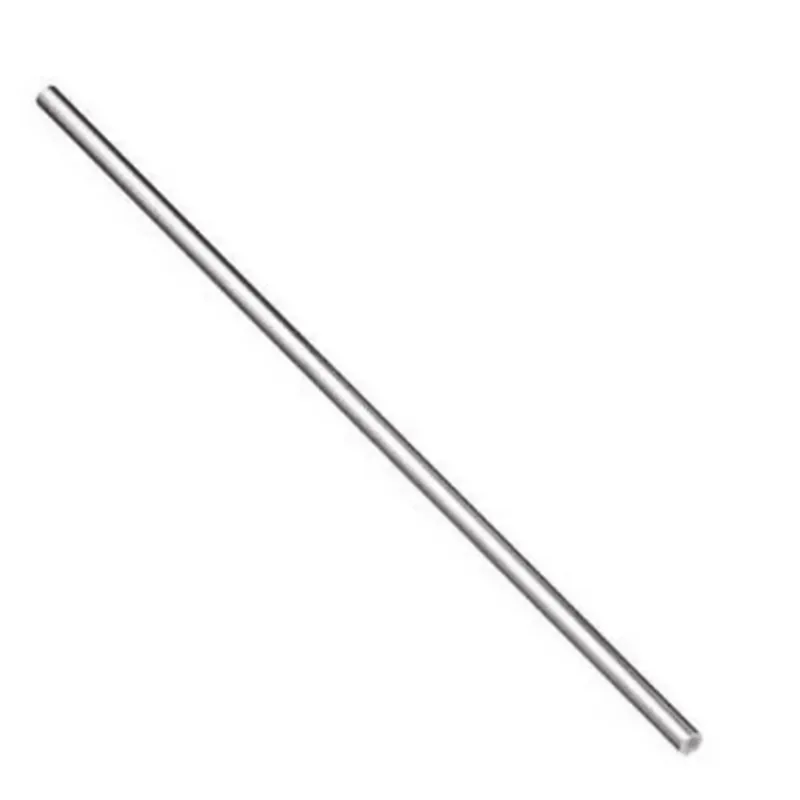
380mm Stainless Steel Rod with 8mm Diameter

Buy Now on Stufin

Component Name

380mm Stainless Steel Rod with 8mm Diameter

Overview

The 380mm Stainless Steel Rod with 8mm Diameter is a high-quality, precision-made rod designed for various applications in the Internet of Things (IoT). This rod is constructed from corrosion-resistant stainless steel, ensuring durability and longevity in harsh environments. Its 380mm length and 8mm diameter make it an ideal component for projects requiring a sturdy, compact, and reliable rod.

Functionality

  • Provide mechanical support: The rod acts as a stable anchor point for various components, enabling the construction of robust and reliable assemblies.
  • Enable motion: The rod can function as an axle, allowing for smooth rotation or linear movement in IoT devices, such as robotic arms, conveyor systems, or doors.
  • Mount sensors and actuators: The rod's durable construction and compact size make it an ideal mounting point for sensors, actuators, and other devices, ensuring secure and precise positioning.
This stainless steel rod is designed to serve as a structural component or axle in IoT projects, providing a reliable and stable connection between moving parts or as a mounting point for sensors, actuators, or other devices. Its primary function is to

Key Features

  • Material: Constructed from high-quality, corrosion-resistant stainless steel (AISI 304 or equivalent) for enhanced durability and resistance to environmental factors.
  • Dimensions: The rod measures 380mm in length and 8mm in diameter, providing a compact yet sturdy structure for various applications.
  • Precision machining: The rod's surface finish is precisely machined to ensure a smooth, even surface, reducing friction and wear.
  • Threaded ends: The rod features threaded ends (e.g., M8x1.25) for easy assembly and disassembly, making it convenient for prototyping and production.
  • High-strength: The rod is designed to withstand moderate to heavy loads, ensuring reliable performance in demanding IoT applications.
  • Resistance to corrosion: The stainless steel material provides excellent resistance to corrosion, making the rod suitable for use in humid, wet, or harsh environments.
  • Compatibility: The rod is compatible with a wide range of IoT devices, sensors, and actuators, allowing for integration into various projects and applications.

Applications

  • Robotics and mechatronics
  • Industrial automation and manufacturing
  • Smart home and building automation
  • IoT-enabled door and window systems
  • Sensor and actuator mounts for environmental monitoring
  • Prototype and proof-of-concept development
The 380mm Stainless Steel Rod with 8mm Diameter is suitable for a variety of IoT projects, including

Technical Specifications

| Parameter | Value |

| --- | --- |

| Material | Stainless Steel (AISI 304 or equivalent) |

| Length | 380mm |

| Diameter | 8mm |

| Thread | M8x1.25 (or custom thread size) |

| Surface Finish | Precise machined, smooth surface |

| Corrosion Resistance | Excellent |

| Load Capacity | Moderate to heavy loads |

| Operating Temperature | -20C to 80C (-4F to 176F) |

| Weight | Approximately 250g |

Certifications and Compliance

The 380mm Stainless Steel Rod with 8mm Diameter complies with relevant industry standards and regulations, including

RoHS (Restriction of Hazardous Substances) directive

CE (Conformit Europene) marking

ISO 90012015 quality management system certification

Warranty and Support

This component is backed by a 1-year limited warranty and dedicated technical support to ensure a smooth integration and operation in your IoT projects.

Pin Configuration

  • Component Documentation: 380mm Stainless Steel Rod with 8mm Diameter
  • Overview
  • The 380mm Stainless Steel Rod with 8mm Diameter is a durable and corrosion-resistant linear motion component ideally suited for various IoT applications, including robotics, automation, and precision engineering. This rod features a stainless steel construction with a length of 380mm and a diameter of 8mm, making it an excellent choice for projects requiring high accuracy and reliability.
  • Pinout Diagram
  • Since this is a linear rod, there are no electronic pins to explain. Instead, we will focus on the mechanical connection points and their purpose.
  • Connection Points
  • The 380mm Stainless Steel Rod with 8mm Diameter has the following mechanical connection points:
  • 1. End Faces: The rod has two end faces, each with a diameter of 8mm. These faces are used for attaching the rod to other mechanical components, such as bearings, couplers, or linear motion systems.
  • 2. Rod Body: The rod body has a smooth, cylindrical surface with a diameter of 8mm. This surface can be used for attaching linear motion guides, bearings, or other mechanical components that require a smooth, fixed surface.
  • 3. Threaded Ends (Optional): Some versions of this rod may have threaded ends (e.g., M8 or 1/4"-20 UNC) for attaching components such as linear motion bearings or couplers.
  • Mechanical Connection Structure
  • To connect the rod to other components, follow these steps:
  • Step 1: Choose the Connection Method
  • Decide on the connection method, depending on the specific requirements of your project. Common methods include:
  • + Press-fitting the rod into a bearing or coupler.
  • + Using a threaded connection (if the rod has threaded ends).
  • + Adhering the rod to a surface using a suitable adhesive.
  • Step 2: Prepare the Connection Point
  • Clean the connection point on the rod and the component to be attached.
  • Ensure the surfaces are free of debris, oil, or other substances that may affect the connection.
  • Step 3: Assemble the Connection
  • For press-fitting:
  • + Align the rod with the bearing or coupler.
  • + Apply gentle, consistent pressure to press the rod into place.
  • + Ensure the rod is fully seated and securely attached.
  • For threaded connections:
  • + Apply a suitable threadlocker (if required).
  • + Screw the rod into the component, ensuring proper thread engagement.
  • + Tighten the rod securely, following the manufacturer's recommended torque specification.
  • For adhesive connections:
  • + Apply a suitable adhesive to the connection point.
  • + Align the rod with the surface to be attached.
  • + Press the rod firmly onto the surface, ensuring good adhesion.
  • Step 4: Verify the Connection
  • Inspect the connection to ensure it is secure and properly aligned.
  • Perform functional testing to verify the rod is moving smoothly and as expected.
  • By following these steps, you can ensure a reliable and secure connection between the 380mm Stainless Steel Rod with 8mm Diameter and other mechanical components in your IoT project.

Code Examples

Component Documentation: 380mm Stainless Steel Rod with 8mm Diameter
Overview
The 380mm Stainless Steel Rod with 8mm Diameter is a durable and corrosion-resistant component suitable for various IoT projects, robotic applications, and DIY creations. This rod can be used as a sturdy axle, pivot, or structural element in designs that require high strength and resistance to environmental factors.
Physical Characteristics
Material: Stainless Steel (SS304 or SS316)
 Length: 380mm
 Diameter: 8mm
 Surface Finish: Brushed or Polished
 Weight: approximately 220g (depending on the material and finish)
Technical Specifications
Tensile Strength: 520 MPa (SS304), 580 MPa (SS316)
 Yield Strength: 240 MPa (SS304), 290 MPa (SS316)
 Corrosion Resistance: Excellent resistance to corrosion in most environments
 Operating Temperature: -200C to 500C (depending on the application and material)
Code Examples
Example 1: Arduino Robot Arm
In this example, we will use the 380mm Stainless Steel Rod as the pivot point for a robot arm. The rod will be attached to two servo motors, allowing the arm to move in a 180-degree arc.
```cpp
#include <Servo.h>
// Define servo motor pins
#define SERVO_1_PIN 9
#define SERVO_2_PIN 10
// Create servo motor objects
Servo servo1;
Servo servo2;
void setup() {
  // Attach servo motors to pins
  servo1.attach(SERVO_1_PIN);
  servo2.attach(SERVO_2_PIN);
}
void loop() {
  // Move servo motors to desired positions
  servo1.write(0);  // Move servo 1 to 0 degrees
  servo2.write(90);  // Move servo 2 to 90 degrees
  delay(1000);
  servo1.write(180);  // Move servo 1 to 180 degrees
  servo2.write(0);  // Move servo 2 to 0 degrees
  delay(1000);
}
```
Example 2: Raspberry Pi-based Linear Actuator
In this example, we will use the 380mm Stainless Steel Rod as a linear actuator, controlled by a Raspberry Pi. The rod will be attached to a DC motor and a linear bearing, allowing for smooth and precise movement.
```python
import RPi.GPIO as GPIO
import time
# Define GPIO pins
MOTOR_PIN_FORWARD = 17
MOTOR_PIN_BACKWARD = 23
# Set up GPIO pins as output
GPIO.setmode(GPIO.BCM)
GPIO.setup(MOTOR_PIN_FORWARD, GPIO.OUT)
GPIO.setup(MOTOR_PIN_BACKWARD, GPIO.OUT)
try:
    while True:
        # Move the rod forward
        GPIO.output(MOTOR_PIN_FORWARD, GPIO.HIGH)
        time.sleep(2)
        GPIO.output(MOTOR_PIN_FORWARD, GPIO.LOW)
        
        # Move the rod backward
        GPIO.output(MOTOR_PIN_BACKWARD, GPIO.HIGH)
        time.sleep(2)
        GPIO.output(MOTOR_PIN_BACKWARD, GPIO.LOW)
except KeyboardInterrupt:
    GPIO.cleanup()
```
Important Notes
When using the 380mm Stainless Steel Rod, ensure proper alignment and secure attachment to prevent damage or injury.
 Depending on the application, additional components (e.g., bearings, bushings, or couplings) may be required to ensure smooth operation and reduce wear.
 Always follow safety guidelines and best practices when working with electrical and mechanical components.