500E Cermet (Pack of 5)


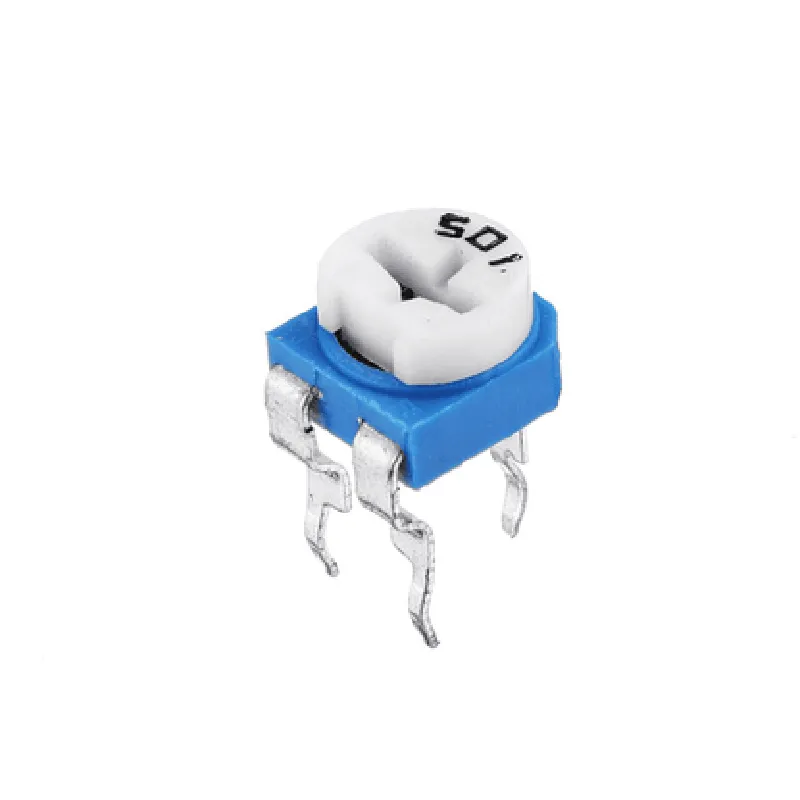

500E Cermet (Pack of 5)
The 500E Cermet is a high-quality, compact thermistor-based temperature sensor designed for accurate and reliable temperature measurement in various IoT applications. This pack of 5 sensors offers a cost-effective solution for implementing multiple temperature sensing points in a single device or across multiple devices.
The 500E Cermet thermistor is a passive temperature sensor that changes its electrical resistance in response to changes in temperature. It operates on the principle of thermal resistance, where an increase in temperature causes a decrease in resistance, and vice versa. The sensor is typically connected to a microcontroller or other electronic device, which measures the resistance change to calculate the corresponding temperature value.
The 500E Cermet thermistor is a NTC (Negative Temperature Coefficient) type thermistor, meaning its resistance decreases as the temperature increases.
The sensor is typically connected to a voltage source and a pull-up resistor to form a voltage divider circuit, which allows the connected device to measure the resistance change and calculate the temperature.
The 500E Cermet thermistor is RoHS and REACH compliant, making it suitable for use in a wide range of applications.
| The 500E Cermet thermistor is supplied in a pack of 5, with each sensor carefully packaged to prevent damage during shipping and storage. The package includes |
5 x 500E Cermet thermistors
Datasheet and application notes
| The 500E Cermet thermistor is suitable for various IoT applications, including |
Temperature monitoring and control systems
Industrial automation and process control
HVAC and building automation
Medical devices and equipment
Automotive and aerospace applications
Consumer electronics and appliances
For detailed specifications, please refer to the datasheet and application notes provided with the product.
500E Cermet (Pack of 5) Component DocumentationOverviewThe 500E Cermet is a thermistor-type temperature sensor that measures temperature ranges from -50C to 500C with high accuracy and reliability. This component is suitable for various applications, including industrial automation, automotive, aerospace, and HVAC systems. The pack of 5 includes five individual thermistor sensors.Technical SpecificationsTemperature range: -50C to 500C
Accuracy: 1% (typical) 2% (maximum)
Response time: 10 seconds (typical)
Operating voltage: 5V to 24V
Current consumption: 10mA (typical)
Resistance vs. temperature characteristics: See datasheet for detailed curveConnecting the 500E CermetThe 500E Cermet thermistor sensor has three leads:Lead 1: VCC (power supply)
Lead 2: GND (ground)
Lead 3: SIGNAL (temperature output)Example 1: Basic Temperature Measurement with ArduinoConnect the 500E Cermet to an Arduino board as follows:Lead 1 (VCC) to Arduino 5V
Lead 2 (GND) to Arduino GND
Lead 3 (SIGNAL) to Arduino Analog Input (e.g., A0)```c
const int thermistorPin = A0; // Pin connected to 500E Cermet SIGNAL lead
int temperature = 0; // Variable to store temperature readingvoid setup() {
Serial.begin(9600);
}void loop() {
int sensorValue = analogRead(thermistorPin);
float voltage = sensorValue (5.0 / 1023.0);
temperature = (voltage - 0.5) 100; // Linear approximation, adjust according to datasheet
Serial.print("Temperature: ");
Serial.print(temperature);
Serial.println(" C");
delay(1000);
}
```Example 2: Temperature Monitoring with Raspberry Pi (Python)Connect the 500E Cermet to a Raspberry Pi as follows:Lead 1 (VCC) to Raspberry Pi 3.3V
Lead 2 (GND) to Raspberry Pi GND
Lead 3 (SIGNAL) to Raspberry Pi Analog Input (e.g., GPIO 17)```python
import RPi.GPIO as GPIO
import timeGPIO.setmode(GPIO.BCM)
GPIO.setup(17, GPIO.IN) # Set up GPIO 17 as inputdef read_temperature():
sensor_value = GPIO.input(17)
voltage = sensor_value (3.3 / 1023.0)
temperature = (voltage - 0.5) 100 # Linear approximation, adjust according to datasheet
return temperaturewhile True:
temperature = read_temperature()
print("Temperature: {:.2f} C".format(temperature))
time.sleep(1)
```Example 3: Using the 500E Cermet with a Microcontroller (C)This example demonstrates how to use the 500E Cermet with a microcontroller, such as the STM32F4 Discovery Board.```c
#include <stdint.h>
#include <stdbool.h>
#include "stm32f4xx_hal.h"#define THERMISTOR_PIN GPIO_PIN_0 // Pin connected to 500E Cermet SIGNAL leadint main(void) {
HAL_Init(); // Initialize HAL library__HAL_RCC_GPIOA_CLK_ENABLE(); // Enable GPIOA clock
GPIO_InitTypeDef gpio_init;
gpio_init.Pin = THERMISTOR_PIN;
gpio_init.Mode = GPIO_MODE_ANALOG;
gpio_init.Pull = GPIO_NOPULL;
HAL_GPIO_Init(GPIOA, &gpio_init);while (1) {
uint16_t sensor_value = HAL_ADC_GetValue(&hadc1); // Read ADC value
float voltage = sensor_value (3.3 / 4095.0);
int temperature = (voltage - 0.5) 100; // Linear approximation, adjust according to datasheet
// Process temperature reading
}
}
```These examples demonstrate how to connect and use the 500E Cermet thermistor sensor with various microcontrollers and development boards. Please consult the datasheet for more detailed information on the component's specifications and characteristics.