ESD S-150 Anti Static Magnetic Heat Insulation Workbench Mat



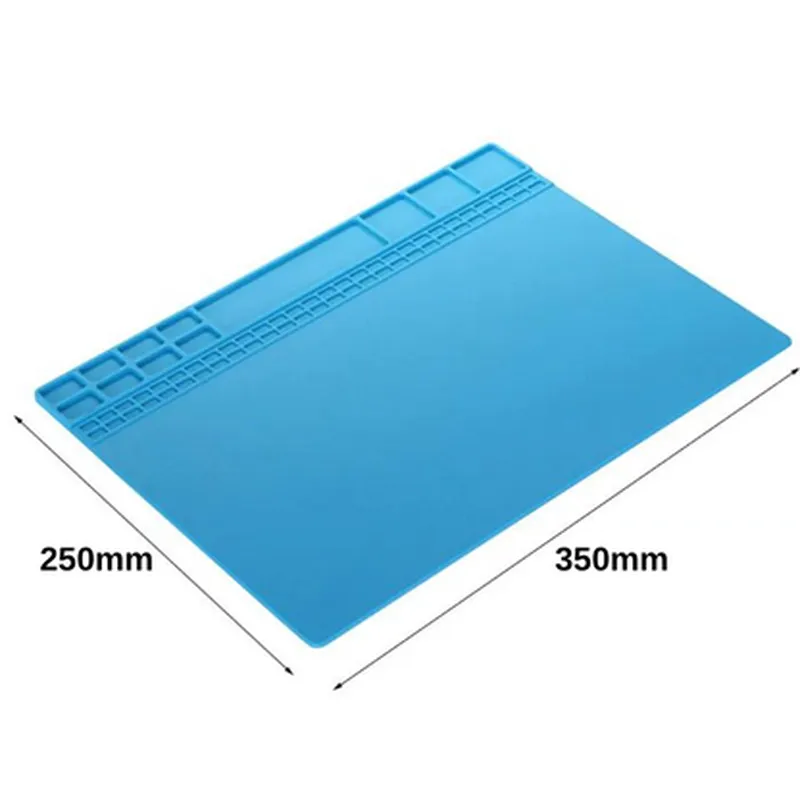
ESD S-150 Anti Static Magnetic Heat Insulation Workbench Mat
The ESD S-150 Anti Static Magnetic Heat Insulation Workbench Mat is a high-performance, anti-static work surface designed for professionals and enthusiasts working with sensitive electronic components. This advanced workbench mat provides a safe and efficient environment for handling and assembling electronic devices, protecting both the devices and the user from electrostatic discharge (ESD) damage.
| The ESD S-150 Anti Static Magnetic Heat Insulation Workbench Mat serves multiple purposes |
| The ESD S-150 Anti Static Magnetic Heat Insulation Workbench Mat is ideal for |
-20C to 40C (-4F to 104F)
30% to 80% RH
Store the mat in a dry, cool place, away from direct sunlight.
| The ESD S-150 Anti Static Magnetic Heat Insulation Workbench Mat meets the following standards and certifications |
ANSI/ESD S20.20
CE
RoHS
REACH
The mat comes with a 1-year limited warranty. For technical support, product information, and FAQs, please visit the manufacturer's website or contact their support team.
By providing a safe, efficient, and comfortable working environment, the ESD S-150 Anti Static Magnetic Heat Insulation Workbench Mat is an essential tool for any electronics enthusiast or professional.
ESD S-150 Anti Static Magnetic Heat Insulation Workbench Mat DocumentationOverviewThe ESD S-150 Anti Static Magnetic Heat Insulation Workbench Mat is a versatile and essential component for any electronics workshop or lab. This mat provides a safe and organized working surface for handling sensitive electronic components, protecting them from electrostatic discharge (ESD) and magnetic interference. The mat also features heat insulation properties, making it an ideal choice for working with heat-sensitive components or equipment.FeaturesAnti-static properties to prevent ESD damage to sensitive electronic components
Magnetic shielding to reduce electromagnetic interference (EMI)
Heat insulation to protect components and equipment from thermal damage
Durable and easy-to-clean design
Suitable for a wide range of applications, including electronics assembly, repair, and prototypingTechnical SpecificationsMaterial: High-quality, static-dissipative rubber
Size: 150 x 150 mm (6 x 6 inches)
Thickness: 3 mm (0.12 inches)
Magnetic shielding effectiveness: Up to 95% reduction in EMI
Heat insulation rating: Up to 200C (392F)
Surface resistivity: 10^6 - 10^9 ohms/squareCode Examples### Example 1: Using the ESD S-150 Mat with an Arduino ProjectIn this example, we'll demonstrate how to use the ESD S-150 Mat with an Arduino project to assemble a simple robotics kit.Hardware RequirementsESD S-150 Anti Static Magnetic Heat Insulation Workbench Mat
Arduino Uno board
Robotics kit components (e.g., motors, sensors, chassis)Code Snippet
```c
// Define the motor pins
const int leftMotorForward = 2;
const int leftMotorBackward = 3;
const int rightMotorForward = 4;
const int rightMotorBackward = 5;void setup() {
// Initialize motor pins as outputs
pinMode(leftMotorForward, OUTPUT);
pinMode(leftMotorBackward, OUTPUT);
pinMode(rightMotorForward, OUTPUT);
pinMode(rightMotorBackward, OUTPUT);
}void loop() {
// Drive the motors
digitalWrite(leftMotorForward, HIGH);
digitalWrite(rightMotorForward, HIGH);
delay(1000);
digitalWrite(leftMotorForward, LOW);
digitalWrite(rightMotorForward, LOW);
delay(1000);
}
```Assemble the robotics kit components on the ESD S-150 Mat, connecting the motors, sensors, and other components to the Arduino Uno board. Upload the code to the board and observe the robot's movement.### Example 2: Using the ESD S-150 Mat with a Raspberry Pi ProjectIn this example, we'll demonstrate how to use the ESD S-150 Mat with a Raspberry Pi project to build a home automation system.Hardware RequirementsESD S-150 Anti Static Magnetic Heat Insulation Workbench Mat
Raspberry Pi 4 Model B
Home automation components (e.g., relays, sensors, LED indicators)Code Snippet
```python
import RPi.GPIO as GPIO
import time# Set up GPIO modes
GPIO.setmode(GPIO.BCM)# Define pin assignments
relay_pin = 17
sensor_pin = 23
led_pin = 24# Set up pin modes
GPIO.setup(relay_pin, GPIO.OUT)
GPIO.setup(sensor_pin, GPIO.IN)
GPIO.setup(led_pin, GPIO.OUT)while True:
# Read sensor value
sensor_value = GPIO.input(sensor_pin)
# Control relay and LED based on sensor value
if sensor_value:
GPIO.output(relay_pin, GPIO.HIGH)
GPIO.output(led_pin, GPIO.HIGH)
else:
GPIO.output(relay_pin, GPIO.LOW)
GPIO.output(led_pin, GPIO.LOW)
# Wait for 1 second
time.sleep(1)
```Assemble the home automation components on the ESD S-150 Mat, connecting the relays, sensors, and LED indicators to the Raspberry Pi. Upload the code to the Pi and observe the system's operation.Note: These code examples are for illustration purposes only and may require additional libraries, setup, or modifications to work with specific hardware configurations.