Stufin
Home Quick Cart Profile

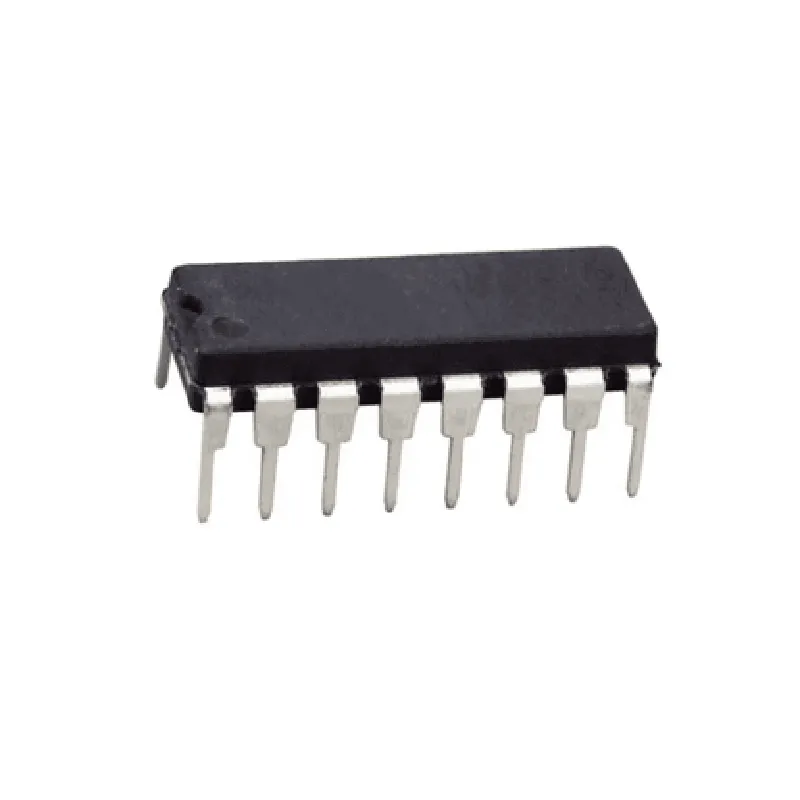
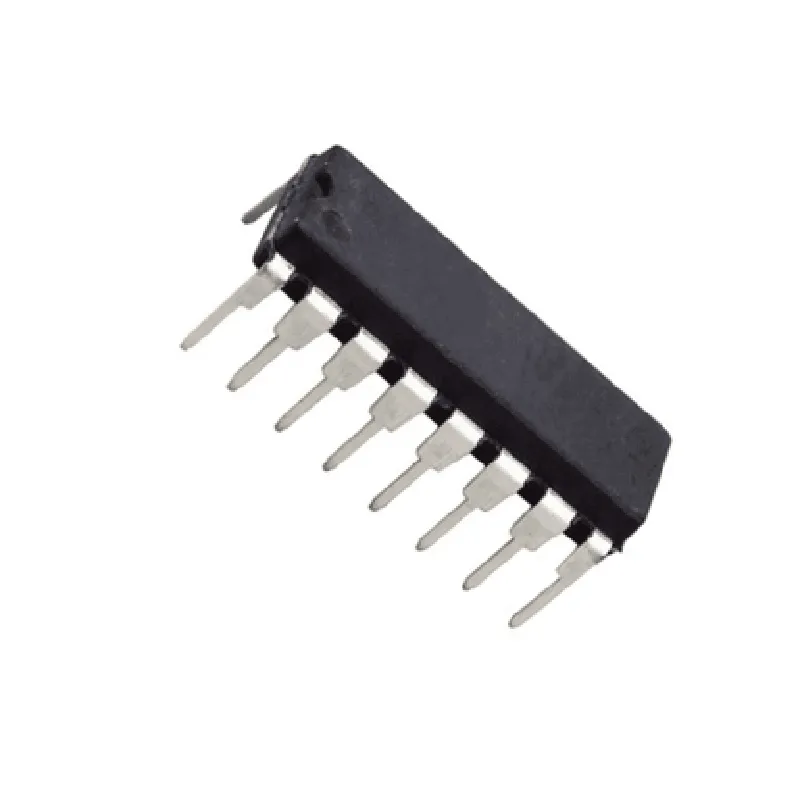
74238 IC

Buy Now on Stufin

Component Documentation

74238 IC

Overview

The 74238 IC is a highly versatile and widely used integrated circuit (IC) designed for a variety of applications in the Internet of Things (IoT) domain. This 20-pin dual in-line package (DIP) IC is a static RAM (SRAM) with a capacity of 256Kbit, organized as 32,768 x 8 bits.

Functionality

The primary function of the 74238 IC is to provide a high-speed, low-power static RAM solution for IoT devices, microcontrollers, and other digital systems. This IC operates as a volatile memory device, meaning that its contents are lost when the power supply is removed.

Key features of the 74238 IC include
High-speed operationThe IC operates at a maximum clock frequency of 10 MHz, making it suitable for high-speed applications.

Low power consumption

The IC has a low active power consumption of 220 mW (typical) and a standby power consumption of 100 W (typical), making it ideal for battery-powered IoT devices.

Static RAM architecture

The IC uses a static RAM architecture, which means that it does not require refreshing to maintain data integrity.

Key Features

Memory organization

256Kbit (32,768 x 8 bits)

Operating voltage

4.5V to 5.5V

Access time

55 ns (maximum)

Clock frequency

10 MHz (maximum)

Active power consumption

220 mW (typical)

Standby power consumption

100 W (typical)

Operating temperature range

-40C to +85C

Package type

20-pin dual in-line package (DIP)

Pinout

The 74238 IC has a 20-pin DIP package with the following pinout

| Pin # | Pin Name | Function |

| --- | --- | --- |

| 1 | VCC | Power supply |

| 2 | A0 | Address input 0 |

| 3 | A1 | Address input 1 |

| 4 | A2 | Address input 2 |

| 5 | A3 | Address input 3 |

| 6 | A4 | Address input 4 |

| 7 | A5 | Address input 5 |

| 8 | A6 | Address input 6 |

| 9 | A7 | Address input 7 |

| 10 | A8 | Address input 8 |

| 11 | A9 | Address input 9 |

| 12 | A10 | Address input 10 |

| 13 | A11 | Address input 11 |

| 14 | I/O0 | Data input/output 0 |

| 15 | I/O1 | Data input/output 1 |

| 16 | I/O2 | Data input/output 2 |

| 17 | I/O3 | Data input/output 3 |

| 18 | I/O4 | Data input/output 4 |

| 19 | I/O5 | Data input/output 5 |

| 20 | GND | Ground |

Applications

The 74238 IC is widely used in various IoT applications, including

Microcontroller-based systems

Industrial automation

Medical devices

Consumer electronics

Automotive systems

Conclusion

The 74238 IC is a high-performance, low-power static RAM solution ideal for a wide range of IoT applications. Its high-speed operation, low power consumption, and compact package make it a popular choice among designers and engineers.

Pin Configuration

  • 74238 IC Documentation
  • The 74238 IC is a quad 2-input NAND gate integrated circuit. It is a member of the 7400 series of TTL (Transistor-Transistor Logic) logic gates. Here is a detailed explanation of the pins and their connections:
  • Pinout:
  • The 74238 IC has 14 pins, arranged in two rows of 7 pins each. The pinout is as follows:
  • Pin 1: GND (Ground)
  • Function: Ground connection for the IC
  • Connection: Connect to the negative power supply or ground of the circuit
  • Pin 2: Input A1
  • Function: Input for Gate 1
  • Connection: Connect to the first input signal of Gate 1
  • Pin 3: Input B1
  • Function: Input for Gate 1
  • Connection: Connect to the second input signal of Gate 1
  • Pin 4: Output Q1
  • Function: Output of Gate 1
  • Connection: Connect to the output of Gate 1, which is the result of the NAND operation of inputs A1 and B1
  • Pin 5: Input A2
  • Function: Input for Gate 2
  • Connection: Connect to the first input signal of Gate 2
  • Pin 6: Input B2
  • Function: Input for Gate 2
  • Connection: Connect to the second input signal of Gate 2
  • Pin 7: Output Q2
  • Function: Output of Gate 2
  • Connection: Connect to the output of Gate 2, which is the result of the NAND operation of inputs A2 and B2
  • Pin 8: VCC (Positive Power Supply)
  • Function: Positive power supply connection for the IC
  • Connection: Connect to the positive power supply of the circuit (typically +5V)
  • Pin 9: Input A3
  • Function: Input for Gate 3
  • Connection: Connect to the first input signal of Gate 3
  • Pin 10: Input B3
  • Function: Input for Gate 3
  • Connection: Connect to the second input signal of Gate 3
  • Pin 11: Output Q3
  • Function: Output of Gate 3
  • Connection: Connect to the output of Gate 3, which is the result of the NAND operation of inputs A3 and B3
  • Pin 12: Input A4
  • Function: Input for Gate 4
  • Connection: Connect to the first input signal of Gate 4
  • Pin 13: Input B4
  • Function: Input for Gate 4
  • Connection: Connect to the second input signal of Gate 4
  • Pin 14: Output Q4
  • Function: Output of Gate 4
  • Connection: Connect to the output of Gate 4, which is the result of the NAND operation of inputs A4 and B4
  • Connection Structure:
  • To connect the 74238 IC, follow this structure:
  • 1. Connect Pin 1 (GND) to the negative power supply or ground of the circuit.
  • 2. Connect Pin 8 (VCC) to the positive power supply of the circuit (typically +5V).
  • 3. For each gate (1, 2, 3, and 4):
  • Connect the input signals to Pins 2, 5, 9, and 12 (Input A) and Pins 3, 6, 10, and 13 (Input B) respectively.
  • Connect the output of the gate to Pins 4, 7, 11, and 14 (Output Q) respectively.
  • Note: Make sure to use suitable resistors and capacitors as necessary for proper circuit operation and to prevent damage to the IC.

Code Examples

74238 IC: 3-Line to 8-Line Decoder/Demultiplexer
The 74238 IC is a 3-line to 8-line decoder/demultiplexer, a type of digital decoding integrated circuit (IC) commonly used in digital electronic circuits. It is designed to decode three binary inputs (A, B, and C) into eight distinct output lines (Y0 to Y7).
Pinout:
The 74238 IC has a 16-pin DIP (Dual In-Line Package) package. The pinout is as follows:
| Pin No. | Pin Name | Function |
| --- | --- | --- |
| 1 | A | Input ( Binary ) |
| 2 | B | Input ( Binary ) |
| 3 | C | Input ( Binary ) |
| 4 | Vcc | Power Supply ( +5V ) |
| 5 | Y0 | Output ( Active Low ) |
| 6 | Y1 | Output ( Active Low ) |
| 7 | Y2 | Output ( Active Low ) |
| 8 | Y3 | Output ( Active Low ) |
| 9 | Y4 | Output ( Active Low ) |
| 10 | Y5 | Output ( Active Low ) |
| 11 | Y6 | Output ( Active Low ) |
| 12 | Y7 | Output ( Active Low ) |
| 13 | GND | Ground |
| 14-16 | NC | No Connection |
Code Examples:
### Example 1: Basic Decoder (Binary to Decimal)
In this example, we will use the 74238 IC to decode a 3-bit binary input into its corresponding decimal value.
Circuit Diagram:
Connect the input pins (A, B, and C) to three DIP switches or a 3-bit binary counter. Connect the output pins (Y0 to Y7) to eight LEDs, each representing a decimal value from 0 to 7.
Code:
```
// Define the input pins
int A = 2;  // Pin 2
int B = 3;  // Pin 3
int C = 4;  // Pin 4
// Define the output pins
int Y0 = 5;  // Pin 5
int Y1 = 6;  // Pin 6
int Y2 = 7;  // Pin 7
int Y3 = 8;  // Pin 8
int Y4 = 9;  // Pin 9
int Y5 = 10; // Pin 10
int Y6 = 11; // Pin 11
int Y7 = 12; // Pin 12
void setup() {
  pinMode(A, INPUT);
  pinMode(B, INPUT);
  pinMode(C, INPUT);
  pinMode(Y0, OUTPUT);
  pinMode(Y1, OUTPUT);
  pinMode(Y2, OUTPUT);
  pinMode(Y3, OUTPUT);
  pinMode(Y4, OUTPUT);
  pinMode(Y5, OUTPUT);
  pinMode(Y6, OUTPUT);
  pinMode(Y7, OUTPUT);
}
void loop() {
  int input = (digitalRead(A) << 2) | (digitalRead(B) << 1) | digitalRead(C);
  switch (input) {
    case 0:
      digitalWrite(Y0, LOW);
      digitalWrite(Y1, HIGH);
      digitalWrite(Y2, HIGH);
      digitalWrite(Y3, HIGH);
      digitalWrite(Y4, HIGH);
      digitalWrite(Y5, HIGH);
      digitalWrite(Y6, HIGH);
      digitalWrite(Y7, HIGH);
      break;
    case 1:
      digitalWrite(Y0, HIGH);
      digitalWrite(Y1, LOW);
      digitalWrite(Y2, HIGH);
      digitalWrite(Y3, HIGH);
      digitalWrite(Y4, HIGH);
      digitalWrite(Y5, HIGH);
      digitalWrite(Y6, HIGH);
      digitalWrite(Y7, HIGH);
      break;
    // ...
    case 7:
      digitalWrite(Y0, HIGH);
      digitalWrite(Y1, HIGH);
      digitalWrite(Y2, HIGH);
      digitalWrite(Y3, HIGH);
      digitalWrite(Y4, HIGH);
      digitalWrite(Y5, HIGH);
      digitalWrite(Y6, HIGH);
      digitalWrite(Y7, LOW);
      break;
  }
  delay(50); // Debounce delay
}
```
### Example 2: Demultiplexer (Channel Selection)
In this example, we will use the 74238 IC as a demultiplexer to select one of eight channels based on a 3-bit binary input.
Circuit Diagram:
Connect the input pins (A, B, and C) to three DIP switches or a 3-bit binary counter. Connect the output pins (Y0 to Y7) to eight channel selectors (e.g., eight SPDT switches or eight optical isolators).
Code:
```
// Define the input pins
int A = 2;  // Pin 2
int B = 3;  // Pin 3
int C = 4;  // Pin 4
// Define the output pins
int Y0 = 5;  // Pin 5
int Y1 = 6;  // Pin 6
int Y2 = 7;  // Pin 7
int Y3 = 8;  // Pin 8
int Y4 = 9;  // Pin 9
int Y5 = 10; // Pin 10
int Y6 = 11; // Pin 11
int Y7 = 12; // Pin 12
void setup() {
  pinMode(A, INPUT);
  pinMode(B, INPUT);
  pinMode(C, INPUT);
  pinMode(Y0, OUTPUT);
  pinMode(Y1, OUTPUT);
  pinMode(Y2, OUTPUT);
  pinMode(Y3, OUTPUT);
  pinMode(Y4, OUTPUT);
  pinMode(Y5, OUTPUT);
  pinMode(Y6, OUTPUT);
  pinMode(Y7, OUTPUT);
}
void loop() {
  int channel = (digitalRead(A) << 2) | (digitalRead(B) << 1) | digitalRead(C);
  switch (channel) {
    case 0:
      digitalWrite(Y0, LOW); // Select Channel 0
      digitalWrite(Y1, HIGH);
      digitalWrite(Y2, HIGH);
      digitalWrite(Y3, HIGH);
      digitalWrite(Y4, HIGH);
      digitalWrite(Y5, HIGH);
      digitalWrite(Y6, HIGH);
      digitalWrite(Y7, HIGH);
      break;
    case 1:
      digitalWrite(Y0, HIGH);
      digitalWrite(Y1, LOW); // Select Channel 1
      digitalWrite(Y2, HIGH);
      digitalWrite(Y3, HIGH);
      digitalWrite(Y4, HIGH);
      digitalWrite(Y5, HIGH);
      digitalWrite(Y6, HIGH);
      digitalWrite(Y7, HIGH);
      break;
    // ...
    case 7:
      digitalWrite(Y0, HIGH);
      digitalWrite(Y1, HIGH);
      digitalWrite(Y2, HIGH);
      digitalWrite(Y3, HIGH);
      digitalWrite(Y4, HIGH);
      digitalWrite(Y5, HIGH);
      digitalWrite(Y6, HIGH);
      digitalWrite(Y7, LOW); // Select Channel 7
      break;
  }
  delay(50); // Debounce delay
}
```
Note: These examples are for illustrative purposes only and may require additional circuitry or components depending on the specific application. Make sure to consult the datasheet and relevant documentation for the 74238 IC and other components used in your design.