11.1 V
+ The nominal voltage of the battery is 11.1 V, which is the voltage at which the battery is designed to operate.


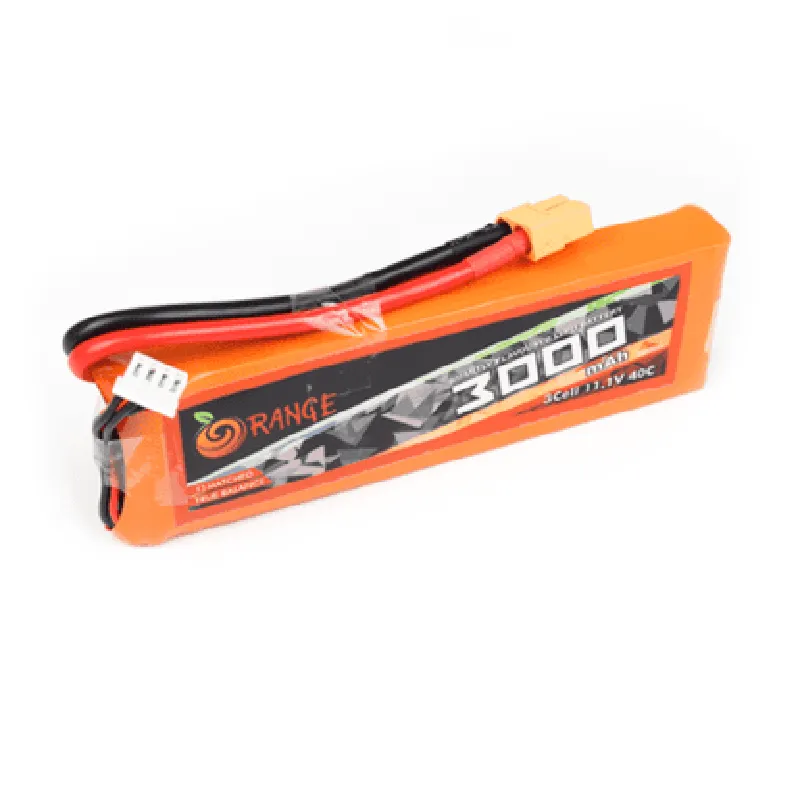
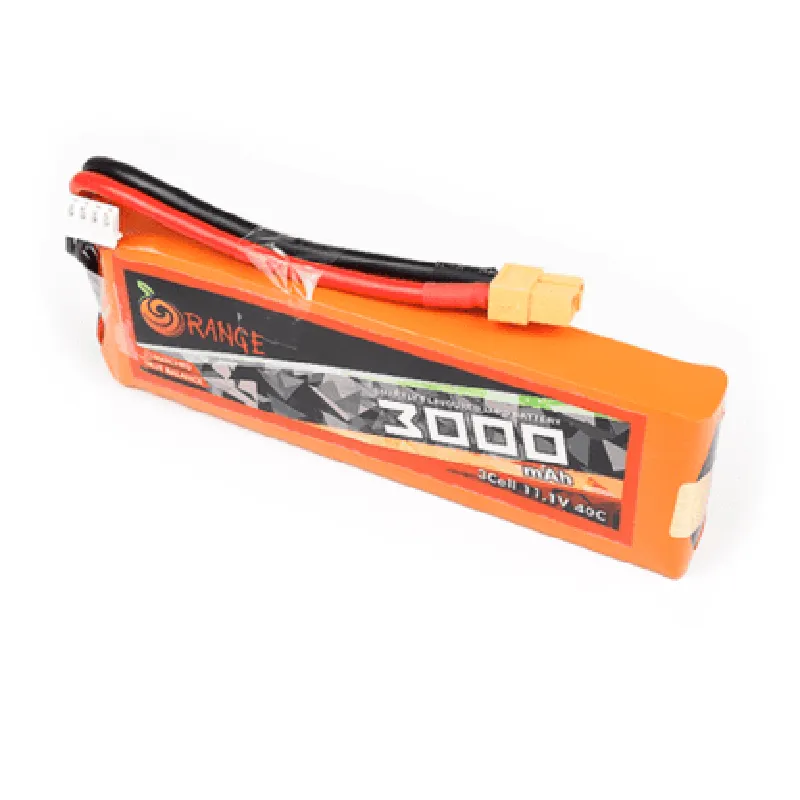
11.1 V
+ The nominal voltage of the battery is 11.1 V, which is the voltage at which the battery is designed to operate.
3000 mAh
+ The battery has a capacity of 3000 mAh, which means it can supply 3000 milliamps of current for 1 hour.
3S
+ The battery is configured as a 3S (3 cells in series) pack, which means it has three individual LiPo cells connected in series to achieve the nominal voltage of 11.1 V.
40C-80C
+ The discharge rate of the battery is rated at 40C-80C, which means it can supply a maximum of 120 A (40 x 3000 mAh) to 240 A (80 x 3000 mAh) of current.
-20C to 40C
+ The battery is designed to operate within a temperature range of -20C to 40C.
300-500 cycles
+ The battery is rated for 300-500 charge/discharge cycles, which means it can be charged and discharged 300-500 times before its capacity starts to degrade.
Built-in protection circuitry
+ The battery has built-in protection circuitry to prevent overcharge, over-discharge, and short-circuiting.
Physical Characteristics
105 x 35 x 25 mm
+ The battery has dimensions of 105 mm in length, 35 mm in width, and 25 mm in height.
250 g
+ The battery weighs approximately 250 grams.
Safety Precautions
Avoid short-circuiting, piercing, or damaging the battery.
Charge the battery only with a compatible charger, and avoid overcharging.
Store the battery in a cool, dry place away from flammable materials.
Applications
| The 11.1 V 3000mah 3S 40C-80C Lithium Polymer Battery is suitable for use in a variety of IoT applications, including |
Robotics
Drones
Electric vehicles
Medical devices
Industrial control systems
Warranty and Support
The battery comes with a 1-year warranty against manufacturing defects. For further information, please contact the manufacturer's support team.
Component Documentation: 11.1 V 3000mah 3S 40C-80C Lithium Polymer BatteryOverviewThe 11.1 V 3000mah 3S 40C-80C Lithium Polymer Battery is a high-performance rechargeable battery designed for use in various Internet of Things (IoT) applications, robotics, and drone systems. This battery features a nominal voltage of 11.1V, a capacity of 3000mAh, and a discharge rate of 40C-80C.Technical SpecificationsNominal Voltage: 11.1V
Capacity: 3000mAh
Discharge Rate: 40C-80C
Cell Configuration: 3S (3 cells in series)
Weight: Approximately 250g
Dimensions: 103 x 43 x 35mmPinout and ConnectionThe battery has a standard JST-XH connector with three pins:Positive (+): Red wire
Negative (-): Black wire
Balance: White wire (for balancing the 3S cell configuration)Code ExamplesHere are two examples demonstrating how to use this battery in different contexts:Example 1: Arduino-based Robotics ApplicationIn this example, we'll use the 11.1 V 3000mah 3S 40C-80C Lithium Polymer Battery to power an Arduino-based robotics system.
```c
const int batteryVoltagePin = A0; // Analog input pin to measure battery voltage
const int motorPin1 = 2; // Digital output pin to control motor 1
const int motorPin2 = 3; // Digital output pin to control motor 2void setup() {
// Initialize motor pins as outputs
pinMode(motorPin1, OUTPUT);
pinMode(motorPin2, OUTPUT);
}void loop() {
// Read battery voltage
int batteryVoltage = analogRead(batteryVoltagePin);
float voltage = batteryVoltage 0.004882814; // Convert to voltage value (11.1V max)// Check if battery voltage is below 10.5V (recommended minimum for this battery)
if (voltage < 10.5) {
// Alert user to recharge battery
Serial.println("Low battery voltage! Please recharge.");
} else {
// Control motors based on battery voltage
if (voltage > 10.8) {
// Full speed
digitalWrite(motorPin1, HIGH);
digitalWrite(motorPin2, HIGH);
} else {
// Reduced speed
digitalWrite(motorPin1, LOW);
digitalWrite(motorPin2, LOW);
}
}delay(1000); // Wait 1 second before checking again
}
```
Example 2: Drone System with PX4 AutopilotIn this example, we'll use the 11.1 V 3000mah 3S 40C-80C Lithium Polymer Battery to power a drone system running PX4 Autopilot.
```c
// PX4 Autopilot code snippet (C++)#include <px4_platform_common/px4_platform_common.h>void DroneSystem::init() {
// Initialize drone system components
// ...// Initialize battery monitor
battery_monitor_.init();// Set battery voltage and capacity
battery_monitor_.set_voltage(11.1); // 11.1V nominal voltage
battery_monitor_.set_capacity(3000); // 3000mAh capacity
}void DroneSystem::update() {
// Update drone system components
// ...// Check battery voltage and state of charge
float battery_voltage = battery_monitor_.get_voltage();
float state_of_charge = battery_monitor_.get_state_of_charge();// Take action based on battery state (e.g., land or return to base)
if (state_of_charge < 20.0 || battery_voltage < 10.5) {
// Land or return to base
// ...
}
}
```
Safety PrecautionsWhen working with Lithium Polymer batteries, it's essential to take safety precautions to avoid damage, injury, or fire:Handle batteries with care to avoid short circuits or damage to the cells.
Ensure proper charging and discharging procedures to prevent overcharging or undercharging.
Monitor battery voltage and state of charge to prevent over-discharge, which can cause permanent damage.By following proper safety guidelines and using the provided code examples, you can effectively integrate the 11.1 V 3000mah 3S 40C-80C Lithium Polymer Battery into your IoT, robotics, or drone projects.