Stufin
Home Quick Cart Profile

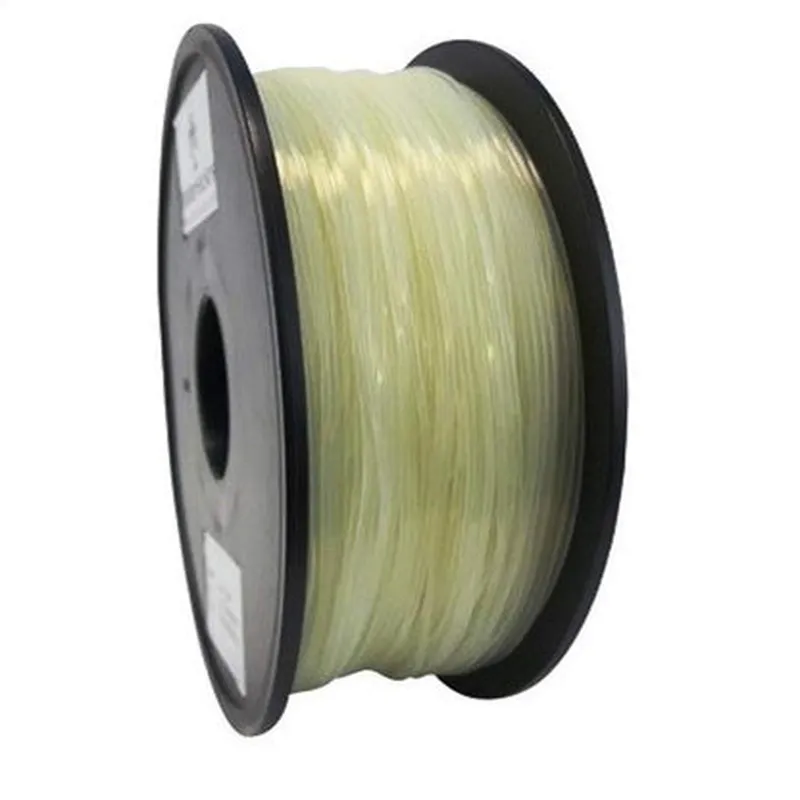
1.75mm Natural ABS Filament -1Kg

Buy Now on Stufin

Component Name

1.75mm Natural ABS Filament - 1Kg


Description

The 1.75mm Natural ABS Filament - 1Kg is a type of thermoplastic filament used in 3D printing technology. It is a versatile and widely used material in the Internet of Things (IoT) and robotics applications that require rapid prototyping, model making, and production of end-use parts.
Functionality

The primary function of this filament is to be used as a feedstock material in Fused Deposition Modeling (FDM) 3D printing technology. The filament is fed through a heated extruder, which melts and deposits the material onto a build platform, layer by layer, to create a three-dimensional object.

Key Features

  • Diameter: 1.75mm, which is a standard diameter for most FDM 3D printers.
  • Material: Acrylonitrile Butadiene Styrene (ABS), a strong, impact-resistant, and heat-resistant thermoplastic polymer.
  • Color: Natural, which is a translucent, beige-like color.
  • Weight: 1 Kilogram (1000 grams), which is sufficient for printing multiple objects or prototypes.
  • Printing Temperature: The recommended printing temperature for this filament is between 220C to 250C.
  • Bed Adhesion: The filament exhibits good adhesion to the print bed, reducing warping and ensuring a smooth printing process.
  • Layer Adhesion: The filament's layer adhesion is excellent, resulting in strong bonds between layers and a robust final product.
  • Tensile Strength: ABS is known for its high tensile strength, making it suitable for applications that require durability and resistance to deformation.
  • Chemical Resistance: The filament exhibits moderate resistance to chemicals, including some acids and bases, but may be affected by strong solvents.
  • Moisture Absorption: ABS is hygroscopic, meaning it can absorb moisture from the air, which can affect its printing performance and final product quality. It is recommended to store the filament in a dry environment.

Applications

  • Prototyping: The 1.75mm Natural ABS Filament - 1Kg is ideal for rapid prototyping, allowing designers and engineers to test and refine their designs quickly and efficiently.
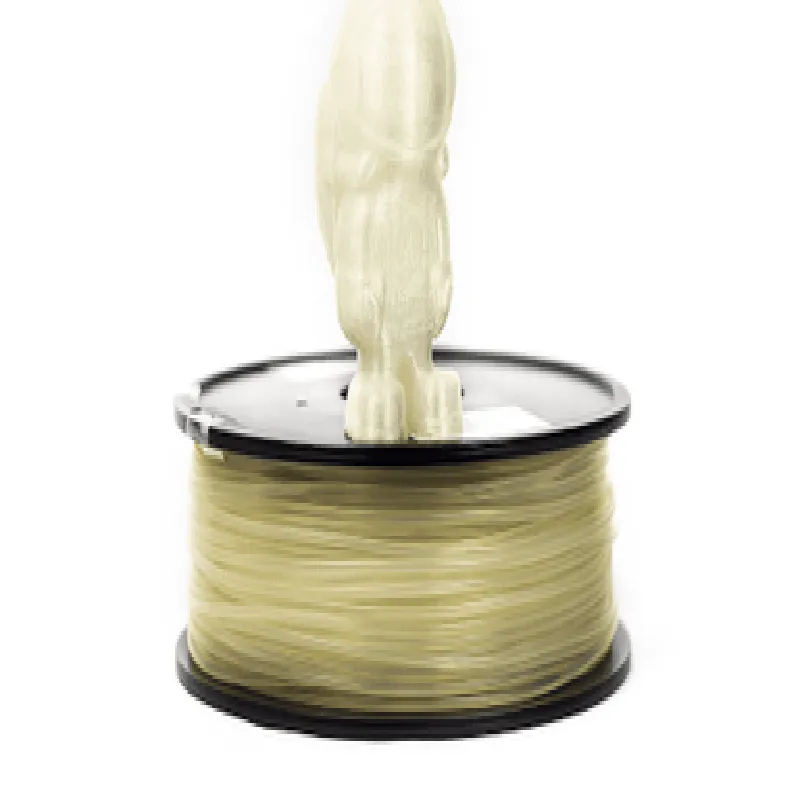
  • Model Making: The filament's natural color and smooth finish make it suitable for creating scale models, architectural models, and other display models.
  • Production Parts: ABS is a commonly used material in production applications, such as creating functional parts, tools, and fixtures.
  • IoT and Robotics: The filament's durability and heat resistance make it suitable for use in IoT and robotics projects that require custom components or housings.

Precautions and Safety Information

  • Handling: Handle the filament with care to avoid kinking or tangling, which can affect its printing performance.
  • Storage: Store the filament in a dry, cool environment to prevent moisture absorption and degradation.
  • Printing: Follow recommended printing temperatures and settings to ensure optimal results and prevent damage to the printer.

By understanding the characteristics and features of the 1.75mm Natural ABS Filament - 1Kg, users can optimize their 3D printing experience and create high-quality objects with precise control and reliability.

Pin Configuration

  • I think there may be some confusion here.
  • The "1.75mm Natural ABS Filament -1Kg" is not an electronic component with pins, but rather a type of 3D printing material, specifically a spool of filament made from Acrylonitrile Butadiene Styrene (ABS) plastic.
  • As such, it doesn't have pins that need to be connected. Instead, it's a raw material used to fabricate objects through Fused Deposition Modeling (FDM) or Fused Filament Fabrication (FFF) 3D printing processes.
  • If you're looking for documentation on how to use this filament with a 3D printer, I'd be happy to provide some general guidance. Here's a brief overview:
  • Using the 1.75mm Natural ABS Filament -1Kg
  • compatiblility
  • Compatible with most FDM/FFF 3D printers that use 1.75mm ABS filament
  • Check your 3D printer's specifications to ensure compatibility
  • preparation
  • Before use, ensure the filament is stored in a dry, cool place to prevent moisture absorption
  • Check the filament for any tangles or kinks; gently straighten or rewind the filament if necessary
  • loading the filament
  • Feed the filament through the printer's extruder assembly, following the manufacturer's instructions
  • Make sure the filament is properly seated and secured in the extruder
  • printing settings
  • Consult the printer's manual or online resources for recommended printing settings for ABS filament, including temperature, layer height, and infill density
  • Optimize printing settings for your specific printer and project requirements
  • If you have any specific questions about using this filament or would like more detailed information, feel free to ask!

Code Examples

Component Documentation: 1.75mm Natural ABS Filament - 1Kg
Overview
The 1.75mm Natural ABS Filament - 1Kg is a type of 3D printing material used in Fused Deposition Modeling (FDM) printers. It is a popular choice among makers and prototypers due to its durability, impact resistance, and smooth finish. This filament is suitable for a wide range of applications, from rapid prototyping to production-grade parts.
Technical Specifications
Diameter: 1.75mm  0.05mm
 Material: Acrylonitrile Butadiene Styrene (ABS)
 Weight: 1 Kilogram
 Color: Natural (off-white)
 Melting Temperature: 230C - 240C
 Printing Temperature: 210C - 240C
 Bed Temperature: 90C - 110C
Code Examples
Example 1: 3D Printing with Marlin Firmware (Arduino-based 3D Printers)
In this example, we will demonstrate how to use the 1.75mm Natural ABS Filament with a Marlin-based 3D printer. We will configure the printer to print a simple cube using the filament.
```c++
// Marlin Firmware Example (Arduino-based 3D Printers)
// Set the extruder temperature to 220C
M104 S220
// Set the bed temperature to 100C
M140 S100
// Home the printer
G28
// Print a simple cube (10mm x 10mm x 10mm)
G1 F3000
G1 X10 Y10 Z0.2 F3000
G1 X10 Y-10 Z0.2 F3000
G1 X-10 Y-10 Z0.2 F3000
G1 X-10 Y10 Z0.2 F3000
G1 Z0.4 F3000
G1 X10 Y10 Z0.4 F3000
G1 X10 Y-10 Z0.4 F3000
G1 X-10 Y-10 Z0.4 F3000
G1 X-10 Y10 Z0.4 F3000
```
Example 2: Slicing with Slic3r (for stand-alone 3D printing applications)
In this example, we will demonstrate how to use the 1.75mm Natural ABS Filament with Slic3r, a popular 3D printing slicer. We will configure Slic3r to generate G-code for a simple cube model.
```python
# Slic3r Example (for stand-alone 3D printing applications)
# Import the cube STL model
model = 'cube.stl'
# Set the filament diameter and extrusion width
filament_diameter = 1.75
extrusion_width = 0.4
# Set the layer height and infill density
layer_height = 0.2
infill_density = 20
# Generate G-code using Slic3r
gcode = slic3r_prepare(model, filament_diameter, extrusion_width, layer_height, infill_density)
# Print the G-code to the console
print(gcode)
```
Note: These examples are meant to demonstrate the usage of the 1.75mm Natural ABS Filament in different contexts. The actual code may vary depending on the specific 3D printer, firmware, or slicing software being used.
Additional Resources
For more information on working with ABS filament, refer to the [ABS Filament Guide](https://www.3dhubs.com/tutorials/abs-3d-printing-guide).
 For detailed instructions on configuring Marlin firmware, refer to the [Marlin Firmware Documentation](https://marlinfw.org/docs/configuration/configuration.html).
 For Slic3r documentation and tutorials, refer to the [Slic3r Documentation](https://slic3r.org/documentation).