Enables voice calls, SMS, and data transmission using the Global System for Mobile Communications (GSM) standard.


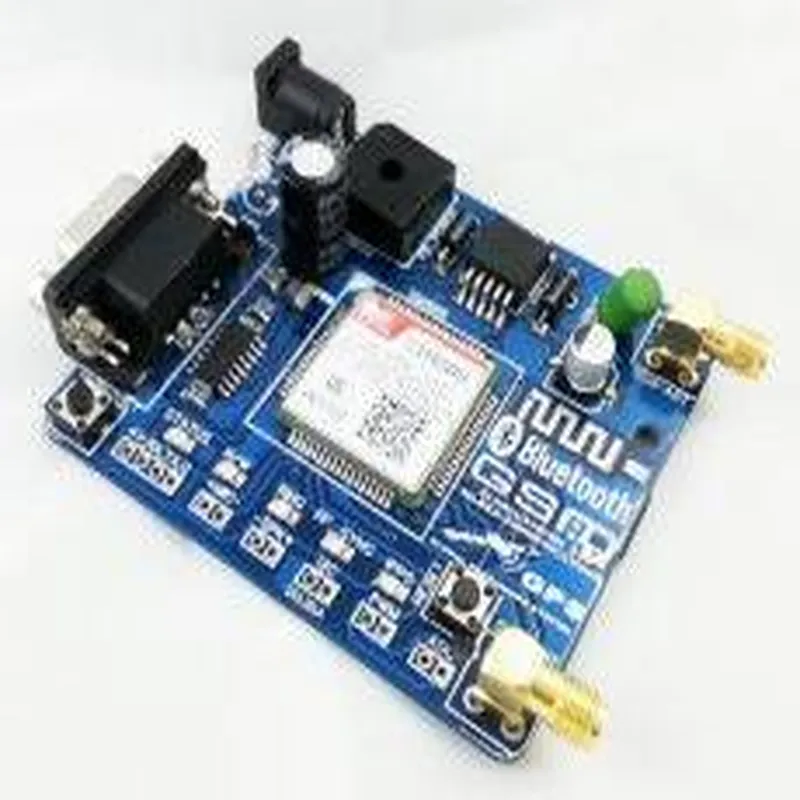
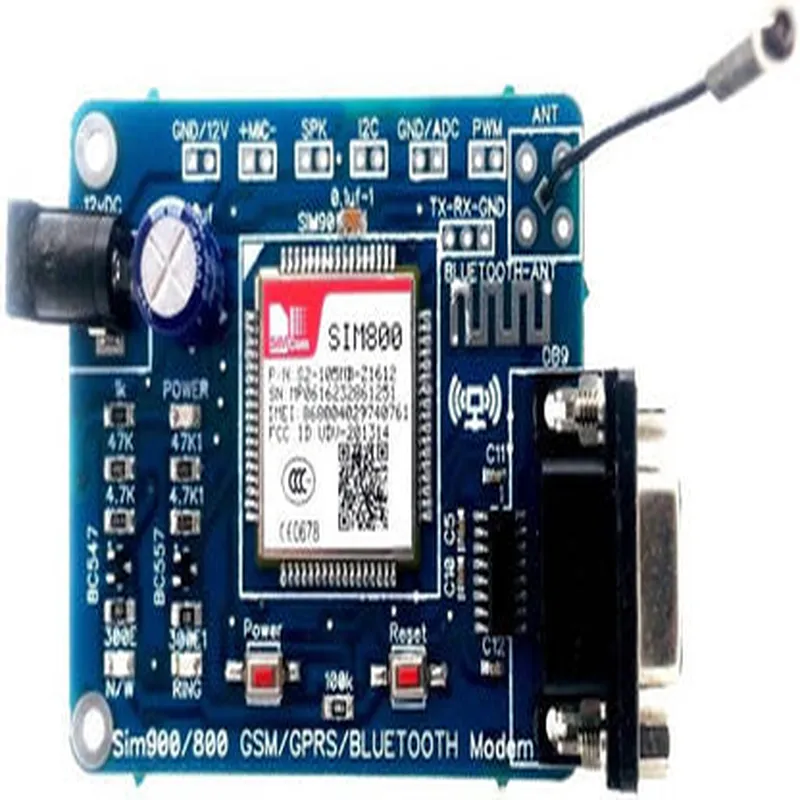
Enables voice calls, SMS, and data transmission using the Global System for Mobile Communications (GSM) standard.
Supports General Packet Radio Service (GPRS) for high-speed data transmission, suitable for internet connectivity, M2M communication, and IoT applications.
Provides wireless personal area network (PAN) connectivity using the Bluetooth 2.0 protocol, enabling device-to-device communication.
Key Features
Applications
| The Sim800 GSM-GPRS-Bluetooth Modem is suitable for a wide range of IoT applications, including |
Remote monitoring and control systems
M2M communication
Wearable devices
Industrial automation
Smart home appliances
Vehicle tracking systems
Mobile payment systems
Technical Specifications
3.4V to 4.4V
| GSM | 850/900/1800/1900 MHz, GPRS: 850/900 MHz |
| GPRS | up to 85.6 kbps, Bluetooth: up to 3 Mbps |
UART, 3.3V logic level
up to 10 meters
Compatible with Windows, Linux, and Android
Conclusion
The Sim800 GSM-GPRS-Bluetooth Modem is a highly versatile and adaptable wireless communication module, offering a unique combination of GSM, GPRS, and Bluetooth capabilities. Its compact design, low power consumption, and ease of integration make it an ideal solution for a wide range of IoT applications.
Sim800 GSM-GPRS-Bluetooth Modem DocumentationOverviewThe Sim800 GSM-GPRS-Bluetooth Modem is a versatile wireless communication module that integrates GSM, GPRS, and Bluetooth capabilities. It is a quad-band GSM/GPRS module that supports 850/900/1800/1900 MHz frequencies, allowing it to work globally. This module is ideal for IoT applications that require wireless connectivity, such as remote monitoring, tracking, and automation systems.Key FeaturesQuad-band GSM/GPRS support (850/900/1800/1900 MHz)
Bluetooth 3.0 with SPP (Serial Port Profile) protocol
Supports SMS, USSD, and TCP/UDP protocols
Operates at 3.4V to 4.5V power supply
Compact size (24mm x 24mm x 3mm)Hardware ConnectionTo use the Sim800 module, you need to connect it to a microcontroller or a single-board computer. The module has a 1x10 pin header that can be connected to a breadboard or a custom PCB. The pinouts are as follows:| Pin | Function |
| --- | --- |
| 1 | VCC (3.4V to 4.5V) |
| 2 | GND |
| 3 | TXD (Transmit) |
| 4 | RXD (Receive) |
| 5 | RTS (Request to Send) |
| 6 | CTS (Clear to Send) |
| 7 | DTR (Data Terminal Ready) |
| 8 | DSR (Data Set Ready) |
| 9 | RI (Ring Indicator) |
| 10 | NC (Not Connected) |Code Examples### Example 1: Sending SMS using ArduinoIn this example, we will use the Sim800 module to send an SMS using an Arduino board.Hardware Requirements:Arduino Uno or compatible board
Sim800 GSM-GPRS-Bluetooth Modem
Breadboard and jumper wiresSoftware Requirements:Arduino IDE (version 1.8.x or later)Code:
```cpp
#include <SoftwareSerial.h>#define SIM800_TX_PIN 10
#define SIM800_RX_PIN 11SoftwareSerial sim800Serial(SIM800_TX_PIN, SIM800_RX_PIN);void setup() {
sim800Serial.begin(9600);
Serial.begin(9600);// Initialize the Sim800 module
sim800Serial.println("AT");
delay(1000);// Set the SMS mode to text mode
sim800Serial.println("AT+CMGF=1");
delay(1000);
}void loop() {
// Set the recipient's phone number
String phoneNumber = "1234567890";// Set the SMS message
String message = "Hello from Arduino!";// Send the SMS
sim800Serial.print("AT+CMGS=""" + phoneNumber + """");
delay(1000);
sim800Serial.println(message);
delay(1000);
sim800Serial.println((char)26); // Send the SMSdelay(5000);
}
```
### Example 2: Establishing a GPRS Connection using PythonIn this example, we will use the Sim800 module to establish a GPRS connection using a Raspberry Pi.Hardware Requirements:Raspberry Pi (any model)
Sim800 GSM-GPRS-Bluetooth Modem
Breadboard and jumper wiresSoftware Requirements:Python 3.x (with pyserial library)Code:
```python
import serial# Initialize the serial connection
ser = serial.Serial('/dev/ttyUSB0', 9600, timeout=5)# Initialize the Sim800 module
ser.write(b'AT
')
response = ser.readline()
print(response.decode())# Set the GPRS APN
ser.write(b'AT+SAPBR=3,""CONTYPE"