18650 2 Cell Holder


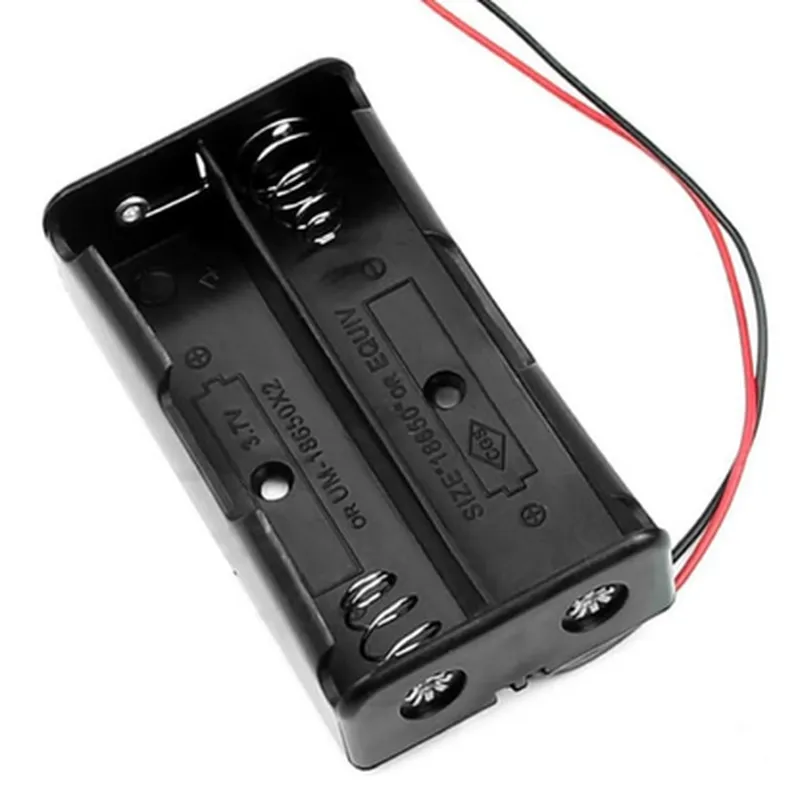
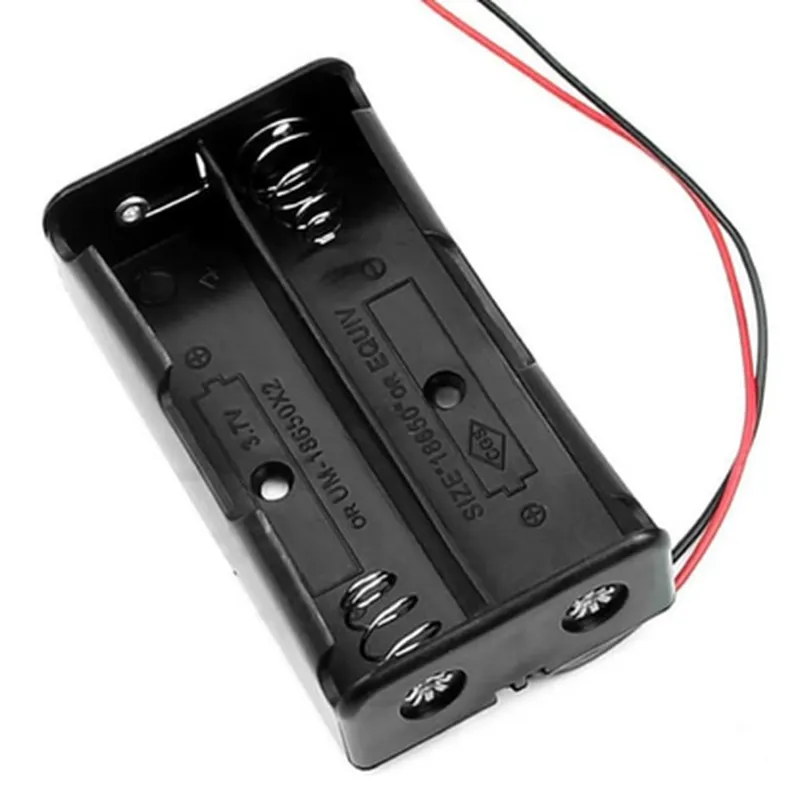
18650 2 Cell Holder
The 18650 2 Cell Holder is a compact, rectangular-shaped component designed to securely hold and connect two 18650 lithium-ion batteries in a series configuration. This holder is an essential component in various IoT projects, enabling the creation of reliable and efficient power sources for devices and systems.
The primary function of the 18650 2 Cell Holder is to provide a safe and convenient way to connect two 18650 batteries in series, allowing them to be used as a single power source. The holder ensures proper electrical connection between the batteries, protecting them from damage and misuse.
[Insert dimension]
[Insert dimension]
[Insert dimension]
[Insert temperature range]
[Insert temperature range]
| The 18650 2 Cell Holder is suitable for a wide range of IoT applications, including |
Wearable devices
Robotics
Portable electronics
IoT sensor nodes
Remote monitoring systems
Battery-powered systems
[Insert relevant certifications and compliance standards, e.g., CE, RoHS, UL]
By providing a reliable and efficient way to connect two 18650 batteries in series, the 18650 2 Cell Holder is an essential component in many IoT projects, enabling the creation of robust and efficient power sources.
Component Documentation: 18650 2 Cell HolderOverviewThe 18650 2 Cell Holder is a battery holder designed to accommodate two 18650 lithium-ion batteries, commonly used in various IoT applications, such as robotics, drones, and other battery-powered devices. This holder provides a convenient and secure way to connect and manage the batteries, ensuring reliable power supply to your projects.FeaturesHolds two 18650 lithium-ion batteries
Spring-loaded contacts for secure battery connection
PCB mounting holes for easy integration
Compatible with various IoT boards and modulesSpecificationsBattery type: 18650 lithium-ion
Battery quantity: 2
Operating temperature: -20C to 80C
Dimensions: 60 x 30 x 15 mm (L x W x H)
Material: PlasticUsage Examples### Example 1: Arduino-Based Robot Power SupplyIn this example, we'll demonstrate how to use the 18650 2 Cell Holder to power an Arduino-based robot.Components1 x 18650 2 Cell Holder
2 x 18650 lithium-ion batteries
1 x Arduino Board (e.g., Arduino Uno)
1 x Robot chassis and motor driversCode
```c
// Define the battery voltage and capacity
#define BATTERY_VOLTAGE 7.4
#define BATTERY_CAPACITY 2600 // mAhvoid setup() {
// Initialize the Arduino board
Serial.begin(9600);
}void loop() {
// Read the battery voltage
float batteryVoltage = (analogRead(A0) 5.0) / 1023.0;
// Check if the battery voltage is below the threshold
if (batteryVoltage < BATTERY_VOLTAGE 0.7) {
Serial.println("Low battery warning!");
}
// Continue running the robot code
// ...
}
```
Connect the 18650 2 Cell Holder to the Arduino board, and use the analog input pin (A0) to monitor the battery voltage. The code above demonstrates how to read the battery voltage and trigger a low battery warning when necessary.### Example 2: ESP32-Based IoT Sensor NodeIn this example, we'll show how to use the 18650 2 Cell Holder to power an ESP32-based IoT sensor node.Components1 x 18650 2 Cell Holder
2 x 18650 lithium-ion batteries
1 x ESP32 Development Board
1 x IoT sensor module (e.g., temperature and humidity sensor)Code
```c
#include <WiFi.h>
#include <PubSubClient.h>// Define the battery voltage and capacity
#define BATTERY_VOLTAGE 7.4
#define BATTERY_CAPACITY 2600 // mAhWiFiClient espClient;
PubSubClient client(espClient);void setup() {
// Initialize the ESP32 board
Serial.begin(115200);
WiFi.begin("your_wifi_ssid", "your_wifi_password");
while (WiFi.status() != WL_CONNECTED) {
delay(1000);
Serial.println("Connecting to WiFi...");
}
Serial.println("Connected to WiFi");
// Initialize the IoT sensor module
// ...
}void loop() {
// Read the battery voltage
float batteryVoltage = (analogRead(A0) 5.0) / 1023.0;
// Check if the battery voltage is below the threshold
if (batteryVoltage < BATTERY_VOLTAGE 0.7) {
Serial.println("Low battery warning!");
client.publish("iot/sensors/battery", "Low");
} else {
client.publish("iot/sensors/battery", "OK");
}
// Continue running the IoT sensor node code
// ...
}
```
Connect the 18650 2 Cell Holder to the ESP32 board, and use the analog input pin (A0) to monitor the battery voltage. The code above demonstrates how to read the battery voltage and publish the status to an MQTT broker using the PubSubClient library.Remember to adjust the code according to your specific IoT application and requirements.