

Stufin
Home Quick Cart Profile

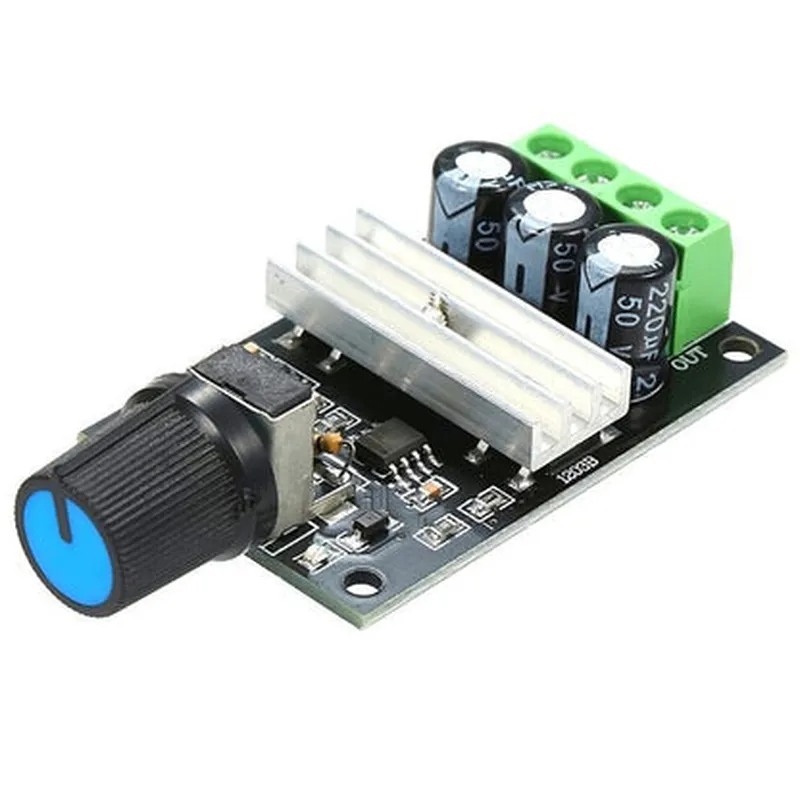
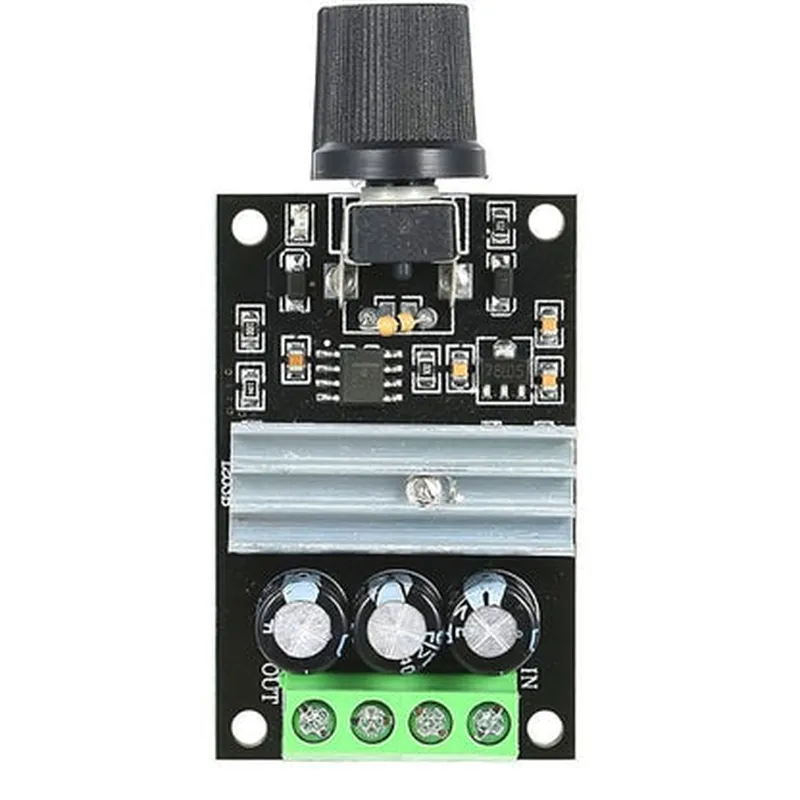
1203B PWM DC Motor Speed Controller Module

Buy Now on Stufin

Component Name

1203B PWM DC Motor Speed Controller Module

Overview

The 1203B PWM DC Motor Speed Controller Module is a compact and efficient device designed to control the speed of DC motors using Pulse Width Modulation (PWM) technology. This module is ideal for various applications, including robotics, industrial automation, and DIY projects, where precise motor speed control is required.

Functionality

The 1203B PWM DC Motor Speed Controller Module is capable of regulating the speed of DC motors with a voltage range of 6-30V and a maximum current of 3A. The module uses PWM to control the motor speed, allowing for smooth and efficient acceleration and deceleration. The PWM frequency is adjustable, enabling users to optimize the motor performance for their specific application.

Key Features

  • PWM Control: The module uses PWM to control the motor speed, providing a high degree of precision and flexibility.
  • 6-30V Voltage Range: The module can operate with DC motors with a voltage range of 6-30V, making it suitable for a wide range of applications.
  • Maximum Current of 3A: The module can handle a maximum current of 3A, making it suitable for small to medium-sized DC motors.
  • Adjustable PWM Frequency: The PWM frequency can be adjusted to optimize motor performance and reduce electromagnetic interference (EMI).
  • Enable Function: The module features an enable function, which allows users to enable or disable the motor control circuit.
  • Fault Protection: The module provides overcurrent and short-circuit protection, ensuring safe operation and preventing damage to the motor or controller.
  • Compact Design: The module is compact and lightweight, making it easy to integrate into various applications.
  • Easy Installation: The module features a simple and intuitive interface, making it easy to install and use.

Technical Specifications

Input Voltage

6-30V DC

Maximum Current

3A

PWM Frequency

Adjustable (up to 20kHz)

Motor Voltage Range

6-30V DC

Motor Current Range

Up to 3A

Operating Temperature

-20C to +85C

Dimensions

34x24x12mm (1.34x0.94x0.47in)

Applications

The 1203B PWM DC Motor Speed Controller Module is suitable for a wide range of applications, including

Robotics and robotic arms

Industrial automation and control systems

DIY projects and prototyping

Motorized systems and mechanisms

Battery-powered devices and applications

Conclusion

The 1203B PWM DC Motor Speed Controller Module is a reliable and efficient device for controlling the speed of DC motors. Its compact design, adjustable PWM frequency, and fault protection features make it an ideal solution for various applications. Whether you're a professional engineer or a DIY enthusiast, this module is a great choice for your motor control needs.

Pin Configuration

  • 1203B PWM DC Motor Speed Controller Module Pinout Explanation
  • The 1203B PWM DC Motor Speed Controller Module is a compact and efficient module designed to control the speed of DC motors using Pulse Width Modulation (PWM) signals. The module has 6 pins, which are explained below:
  • Pinout Structure:
  • 1. VCC (Power Supply Pin)
  • Description: This pin connects to the positive terminal of the power supply (typically 5V or 12V).
  • Function: Provides power to the module.
  • 2. GND (Ground Pin)
  • Description: This pin connects to the negative terminal of the power supply (GND).
  • Function: Grounds the module and completes the power supply circuit.
  • 3. SIG (Signal Pin)
  • Description: This pin connects to the microcontroller's PWM output pin (e.g., Arduino's Timer pin).
  • Function: Receives the PWM signal from the microcontroller to control the motor speed.
  • 4. EN (Enable Pin)
  • Description: This pin connects to a digital output pin on the microcontroller (e.g., Arduino's digital pin).
  • Function: Enables or disables the motor control. When set HIGH, the motor is enabled; when set LOW, the motor is disabled.
  • 5. OUT+ (Motor Positive Terminal)
  • Description: This pin connects to the positive terminal of the DC motor.
  • Function: Supplies power to the motor based on the PWM signal.
  • 6. OUT- (Motor Negative Terminal)
  • Description: This pin connects to the negative terminal of the DC motor.
  • Function: Completes the motor circuit and provides a return path for the motor current.
  • Connection Guide:
  • To connect the 1203B PWM DC Motor Speed Controller Module:
  • 1. Connect the VCC pin to the positive terminal of the power supply (5V or 12V).
  • 2. Connect the GND pin to the negative terminal of the power supply (GND).
  • 3. Connect the SIG pin to the microcontroller's PWM output pin (e.g., Arduino's Timer pin).
  • 4. Connect the EN pin to a digital output pin on the microcontroller (e.g., Arduino's digital pin).
  • 5. Connect the OUT+ pin to the positive terminal of the DC motor.
  • 6. Connect the OUT- pin to the negative terminal of the DC motor.
  • Important Notes:
  • Make sure to use a suitable power supply that meets the voltage and current requirements of the DC motor.
  • Use a breadboard or PCB to connect the module and motor to ensure reliable connections.
  • Adjust the PWM signal frequency and duty cycle according to the motor's specifications and your application's requirements.
  • Always follow proper safety precautions when working with electrical circuits and motors.

Code Examples

1203B PWM DC Motor Speed Controller Module Documentation
Overview
The 1203B PWM DC Motor Speed Controller Module is a versatile and compact component designed to control the speed of DC motors. It uses Pulse Width Modulation (PWM) to regulate the motor speed, allowing for efficient and precise control. This module is suitable for a wide range of applications, including robotics, automation, and DIY projects.
Features
PWM frequency: 20 kHz
 Motor voltage: 5-35V
 Motor current: up to 3A
 Support for both forward and reverse motor rotation
 Adjustable potentiometer for speed control
 Enable/disable input for motor control
 Built-in overcurrent protection
Pinout
VCC: Power supply input (5-35V)
 GND: Ground
 IN1: Enable/disable input (high = enable, low = disable)
 IN2: Forward/reverse input (high = forward, low = reverse)
 PWM: PWM signal input
 OUT+: Motor output (+)
 OUT-: Motor output (-)
Code Examples
### Example 1: Basic Motor Control using Arduino
In this example, we will demonstrate how to use the 1203B module to control a DC motor using an Arduino board.
```cpp
const int enablePin = 2;  // Connect to IN1
const int directionPin = 3;  // Connect to IN2
const int pwmPin = 9;  // Connect to PWM
void setup() {
  pinMode(enablePin, OUTPUT);
  pinMode(directionPin, OUTPUT);
  pinMode(pwmPin, OUTPUT);
}
void loop() {
  // Enable the motor
  digitalWrite(enablePin, HIGH);
  
  // Set the motor direction (forward)
  digitalWrite(directionPin, HIGH);
  
  // Set the motor speed to 50% using PWM
  analogWrite(pwmPin, 128);
  
  delay(2000);
  
  // Change the motor speed to 75%
  analogWrite(pwmPin, 192);
  
  delay(2000);
  
  // Disable the motor
  digitalWrite(enablePin, LOW);
  
  delay(1000);
}
```
### Example 2: Motor Speed Control using Raspberry Pi (Python)
In this example, we will demonstrate how to use the 1203B module to control a DC motor using a Raspberry Pi and Python.
```python
import RPi.GPIO as GPIO
import time
GPIO.setmode(GPIO.BCM)
enable_pin = 17  # Connect to IN1
direction_pin = 23  # Connect to IN2
pwm_pin = 18  # Connect to PWM
GPIO.setup(enable_pin, GPIO.OUT)
GPIO.setup(direction_pin, GPIO.OUT)
GPIO.setup(pwm_pin, GPIO.OUT)
pwm = GPIO.PWM(pwm_pin, 20)  # 20 kHz PWM frequency
try:
    while True:
        # Enable the motor
        GPIO.output(enable_pin, GPIO.HIGH)
        
        # Set the motor direction (forward)
        GPIO.output(direction_pin, GPIO.HIGH)
        
        # Set the motor speed to 50%
        pwm.start(50)
        
        time.sleep(2)
        
        # Change the motor speed to 75%
        pwm.ChangeDutyCycle(75)
        
        time.sleep(2)
        
        # Disable the motor
        GPIO.output(enable_pin, GPIO.LOW)
        
        time.sleep(1)
except KeyboardInterrupt:
    pwm.stop()
    GPIO.cleanup()
```
Note: In both examples, ensure that the motor voltage and current ratings are within the specifications of the 1203B module. Additionally, use appropriate voltage regulators and capacitors to prevent voltage spikes and noise in the circuit.