28BYJ-48 5V DC Stepper Motor


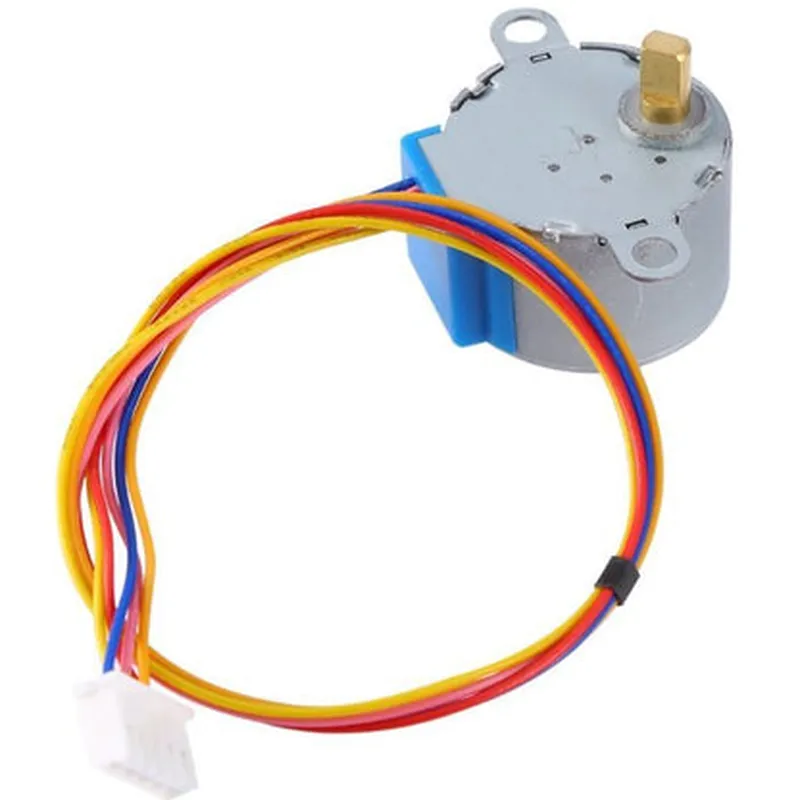
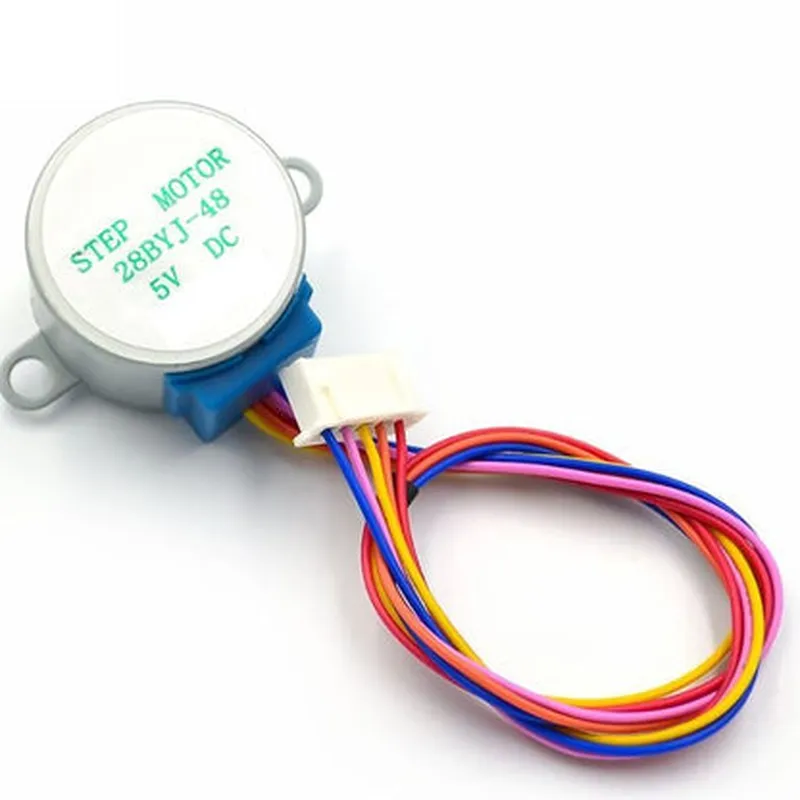
28BYJ-48 5V DC Stepper Motor
Bipolar Stepper Motor
The 28BYJ-48 5V DC Stepper Motor is a small, compact, and affordable bipolar stepper motor widely used in various IoT projects, robots, and automation systems. It is a 5-pin motor that operates on a 5V DC power supply, making it suitable for a broad range of applications.
The 28BYJ-48 5V DC Stepper Motor is designed to convert electrical pulses into precise mechanical movements. It accomplishes this by dividing a full rotation into a sequence of small, discrete steps. The motor's shaft rotates in small increments, allowing for precise control over the motor's position and velocity.
-20C to 40C
-30C to 60C
10M (at 500V DC)
500V AC (for 1 minute)
| The 28BYJ-48 5V DC Stepper Motor is suitable for various IoT projects, including |
Robotics and robotic arms
CNC machines and 3D printers
Automated systems and control systems
Medical devices and equipment
Home automation and security systems
The 28BYJ-48 5V DC Stepper Motor is a compact, reliable, and affordable bipolar stepper motor ideal for a wide range of applications. Its precise control and high torque make it an excellent choice for IoT projects requiring accurate positioning and movement.
28BYJ-48 5V DC Stepper Motor DocumentationOverviewThe 28BYJ-48 is a 5V DC stepper motor that is commonly used in various IoT projects, robotics, and automation systems. It is a unipolar stepper motor, meaning it has 5 wires: 4 coil wires and 1 power wire. This documentation provides an overview of the motor's specifications, pinouts, and code examples for using it with popular microcontrollers.SpecificationsVoltage: 5V DC
Current: 0.1A per phase
Steps per Revolution: 48
Step Angle: 7.5
Holding Torque: 34 oz-in (240 mN-m)
Rotor Inertia: 25 oz-in-s (180 kg-mm)
Coil Resistance: 50 ohms per phase
Coil Inductance: 10 mH per phasePinoutThe 28BYJ-48 stepper motor has 5 wires:Red (VCC): Power wire, connected to 5V DC
Yellow: Coil 1A wire
Pink: Coil 1B wire
Orange: Coil 2A wire
Blue: Coil 2B wireCode Examples### Example 1: Using 28BYJ-48 with ArduinoThis example demonstrates how to use the 28BYJ-48 stepper motor with an Arduino board to rotate the motor clockwise and counterclockwise.```c
#include <Stepper.h>// Define the stepper motor pins
#define IN1 2
#define IN2 3
#define IN3 4
#define IN4 5// Create a Stepper instance
Stepper stepper(200, IN1, IN3, IN2, IN4);void setup() {
// Set the motor speed (RPM)
stepper.setSpeed(60);
}void loop() {
// Rotate the motor clockwise
stepper.step(200);
delay(500);// Rotate the motor counterclockwise
stepper.step(-200);
delay(500);
}
```### Example 2: Using 28BYJ-48 with Raspberry Pi (Python)This example demonstrates how to use the 28BYJ-48 stepper motor with a Raspberry Pi board to rotate the motor using Python.```python
import RPi.GPIO as GPIO
import time# Define the stepper motor pins
IN1 = 17
IN2 = 23
IN3 = 24
IN4 = 25# Set up GPIO mode
GPIO.setmode(GPIO.BCM)# Set up the motor pins as outputs
GPIO.setup(IN1, GPIO.OUT)
GPIO.setup(IN2, GPIO.OUT)
GPIO.setup(IN3, GPIO.OUT)
GPIO.setup(IN4, GPIO.OUT)# Define the sequence of motor steps
sequence = [[1, 0, 0, 0],
[0, 1, 0, 0],
[0, 0, 1, 0],
[0, 0, 0, 1]]try:
while True:
# Rotate the motor clockwise
for i in range(200):
for step in sequence:
GPIO.output(IN1, step[0])
GPIO.output(IN2, step[1])
GPIO.output(IN3, step[2])
GPIO.output(IN4, step[3])
time.sleep(0.01)# Rotate the motor counterclockwise
for i in range(200):
for step in reversed(sequence):
GPIO.output(IN1, step[0])
GPIO.output(IN2, step[1])
GPIO.output(IN3, step[2])
GPIO.output(IN4, step[3])
time.sleep(0.01)except KeyboardInterrupt:
# Clean up GPIOs on exit
GPIO.cleanup()
```Note: These code examples are for illustration purposes only and may require modifications to work with specific microcontrollers, power supplies, and other components in your project. Always ensure proper voltage and current supply to the motor, and handle motor control carefully to avoid damage or injury.