6mm


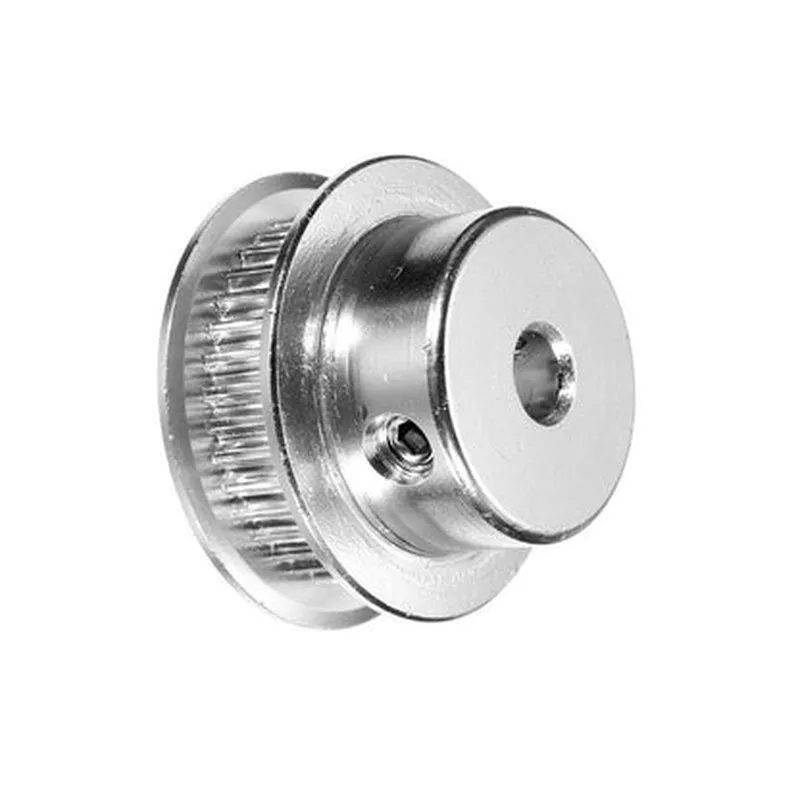
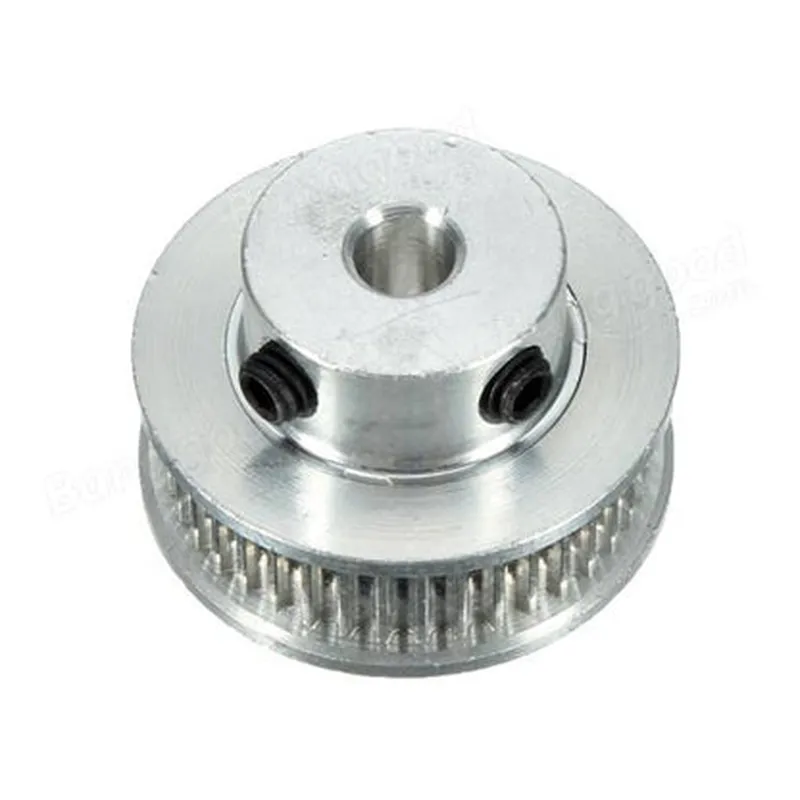
6mm
36
5mm
Aluminum or steel
Durable, corrosion-resistant coating
High-precision tooth design for smooth engagement with GT2 belt
High-torque capacity for demanding applications
Standardized component for easy replacement and compatibility
Installation and Maintenance
Proper installation and maintenance of the GT2-6mm Belt Width 36 Teeth 5mm Bore Timing Pulley are crucial to ensure optimal performance and longevity. It is essential to follow the manufacturer's instructions and guidelines for installation, alignment, and maintenance to prevent premature wear and ensure seamless operation. Regular inspection and cleaning of the pulley and belt system are also recommended to maintain optimal performance and extend the component's lifespan.
Component Documentation: GT2-6mm Belt Width 36 Teeth 5mm Bore Timing PulleyOverviewThe GT2-6mm Belt Width 36 Teeth 5mm Bore Timing Pulley is a critical component in linear motion systems, designed for precise movement and synchronization in various applications, including robotics, CNC machines, and 3D printers. This timing pulley features a 6mm wide GT2 belt, 36 teeth, and a 5mm bore diameter.Technical SpecificationsBelt Width: 6mm
Number of Teeth: 36
Bore Diameter: 5mm
Material: Aluminum or Steel (depending on the manufacturer)
Pitch: 2mm (GT2 standard)Code ExamplesIn this section, we will provide code examples demonstrating how to use the GT2-6mm Belt Width 36 Teeth 5mm Bore Timing Pulley in different contexts.Example 1: Arduino-based Linear Actuator ControlIn this example, we will use an Arduino board to control a linear actuator using the GT2 timing pulley and a stepper motor.
```c++
#include <Stepper.h>#define STEPS_PER_REVOLUTION 200
#define PULLEY_TEETH 36
#define BELT_PITCH 2Stepper stepper(STEPS_PER_REVOLUTION, 8, 9, 10, 11); // Initialize stepper motorvoid setup() {
stepper.setSpeed(500); // Set stepper motor speed
}void loop() {
// Move the linear actuator 100mm
int steps = (100 / (BELT_PITCH PULLEY_TEETH)) STEPS_PER_REVOLUTION;
stepper.step(steps);
delay(1000);
}
```
Example 2: Python-based Robotics Application (using Raspberry Pi and RPi.GPIO)In this example, we will use a Raspberry Pi with RPi.GPIO library to control a robotic arm using the GT2 timing pulley and a DC motor.
```python
import RPi.GPIO as GPIO
import timeGPIO.setmode(GPIO.BCM)# Define motor pins
MOTOR_DIR_PIN = 17
MOTOR_STEP_PIN = 23# Initialize motor pins
GPIO.setup(MOTOR_DIR_PIN, GPIO.OUT)
GPIO.setup(MOTOR_STEP_PIN, GPIO.OUT)# Set motor direction and steps
GPIO.output(MOTOR_DIR_PIN, GPIO.HIGH) # Clockwise direction
steps = 100 # Move the robotic arm 100 steps# Move the robotic arm
for i in range(steps):
GPIO.output(MOTOR_STEP_PIN, GPIO.HIGH)
time.sleep(0.01)
GPIO.output(MOTOR_STEP_PIN, GPIO.LOW)
time.sleep(0.01)GPIO.cleanup()
```
Additional ResourcesFor more information on using the GT2-6mm Belt Width 36 Teeth 5mm Bore Timing Pulley, please refer to the manufacturer's documentation and the following resources:GT2 belt specification: [https://www.misumi-ec.com/pdf/specs/ GT2_Belt_Spec.pdf](https://www.misumi-ec.com/pdf/specs/ GT2_Belt_Spec.pdf)
Arduino Stepper Library: [https://www.arduino.cc/en/Reference/Stepper](https://www.arduino.cc/en/Reference/Stepper)
RPi.GPIO Documentation: [https://gpiozero.readthedocs.io/en/stable/](https://gpiozero.readthedocs.io/en/stable/)Remember to consult the manufacturer's documentation and safety guidelines when working with the GT2-6mm Belt Width 36 Teeth 5mm Bore Timing Pulley and other IoT components.