Input power supply (5V to 15V)


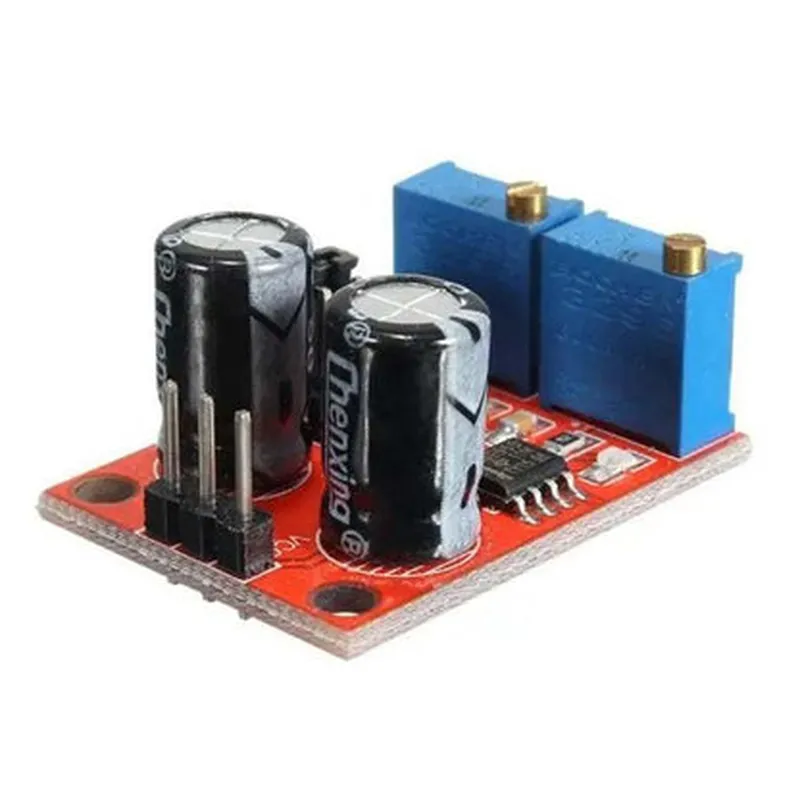
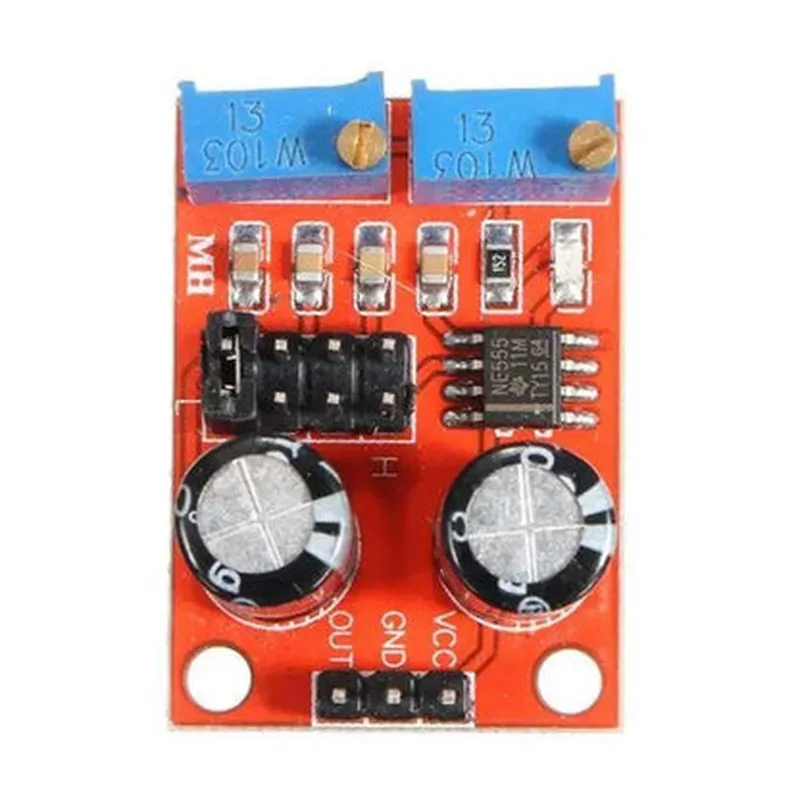
Input power supply (5V to 15V)
Ground
Output signal
| R1, R2, C | Frequency adjustment pins |
| R3 | Duty cycle adjustment pin |
| The module's dimensions are typically |
25mm
20mm
10mm
Conclusion
The NE555 Pulse Frequency Duty Cycle Adjustable Module is a versatile and highly useful component that offers a wide range of possibilities for generating adjustable pulse frequencies with variable duty cycles. Its compact design, ease of use, and high accuracy make it an ideal choice for hobbyists and professionals working on various electronic projects.
NE555 Pulse Frequency Duty Cycle Adjustable Module DocumentationOverviewThe NE555 Pulse Frequency Duty Cycle Adjustable Module is a versatile and widely used timer IC-based module that allows for adjustable pulse frequency and duty cycle output. This module is suitable for various applications, including robotics, automation, and electronic projects.FeaturesAdjustable pulse frequency (50Hz to 200kHz)
Adjustable duty cycle (0% to 100%)
Operating voltage: 5V to 15V
Output current: up to 200mA
Dimensions: 45mm x 20mm x 18mmPinoutVCC: Positive power supply (5V to 15V)
GND: Ground
OUT: Output signal
FREQ: Frequency adjustment pin (connect a potentiometer or resistor to adjust frequency)
DUTY: Duty cycle adjustment pin (connect a potentiometer or resistor to adjust duty cycle)Example 1: Basic Pulse Generation with ArduinoIn this example, we will use the NE555 module to generate a pulse signal with an adjustable frequency and duty cycle using an Arduino board.Code:
```c
const int outPin = 9; // Output pin connected to NE555 OUT
const int freqPin = A0; // Frequency adjustment pin connected to NE555 FREQ
const int dutyPin = A1; // Duty cycle adjustment pin connected to NE555 DUTYvoid setup() {
pinMode(outPin, OUTPUT);
}void loop() {
int freqValue = analogRead(freqPin); // Read frequency adjustment potentiometer value
int dutyValue = analogRead(dutyPin); // Read duty cycle adjustment potentiometer value
// Map frequency value to 50Hz to 200kHz range
float frequency = map(freqValue, 0, 1023, 50, 200000);
// Map duty cycle value to 0% to 100% range
float dutyCycle = map(dutyValue, 0, 1023, 0, 100);
// Generate pulse signal with calculated frequency and duty cycle
tone(outPin, frequency, dutyCycle);
delay(20); // Update output every 20ms
}
```
Example 2: Adjustable LED Dimming with Raspberry PiIn this example, we will use the NE555 module to control the brightness of an LED with an adjustable duty cycle using a Raspberry Pi.Code:
```python
import RPi.GPIO as GPIO
import timeGPIO.setmode(GPIO.BCM)
outPin = 18 # Output pin connected to NE555 OUT
dutyPin = 23 # Duty cycle adjustment pin connected to NE555 DUTYGPIO.setup(outPin, GPIO.OUT)while True:
dutyValue = GPIO.input(dutyPin) # Read duty cycle adjustment pin value
dutyCycle = dutyValue 10 # Map duty cycle value to 0% to 100% range
# Generate PWM signal with calculated duty cycle
GPIO.output(outPin, GPIO.HIGH)
time.sleep(dutyCycle / 1000)
GPIO.output(outPin, GPIO.LOW)
time.sleep((100 - dutyCycle) / 1000)
```
Example 3: Motor Speed Control with ESP8266In this example, we will use the NE555 module to control the speed of a DC motor with an adjustable frequency and duty cycle using an ESP8266 board.Code:
```c
#include <ESP8266WiFi.h>const int outPin = 5; // Output pin connected to NE555 OUT
const int freqPin = A0; // Frequency adjustment pin connected to NE555 FREQ
const int dutyPin = A1; // Duty cycle adjustment pin connected to NE555 DUTYvoid setup() {
pinMode(outPin, OUTPUT);
}void loop() {
int freqValue = analogRead(freqPin); // Read frequency adjustment potentiometer value
int dutyValue = analogRead(dutyPin); // Read duty cycle adjustment potentiometer value
// Map frequency value to 50Hz to 200kHz range
float frequency = map(freqValue, 0, 1023, 50, 200000);
// Map duty cycle value to 0% to 100% range
float dutyCycle = map(dutyValue, 0, 1023, 0, 100);
// Generate PWM signal with calculated frequency and duty cycle
digitalWrite(outPin, HIGH);
delayMicroseconds(frequency / (dutyCycle / 100));
digitalWrite(outPin, LOW);
delayMicroseconds(frequency / ((100 - dutyCycle) / 100));
}
```
These examples demonstrate the versatility of the NE555 Pulse Frequency Duty Cycle Adjustable Module in various applications. By adjusting the frequency and duty cycle, you can control the output signal to suit your project requirements.