12V 5000RPM Peristaltic Dosing Pump


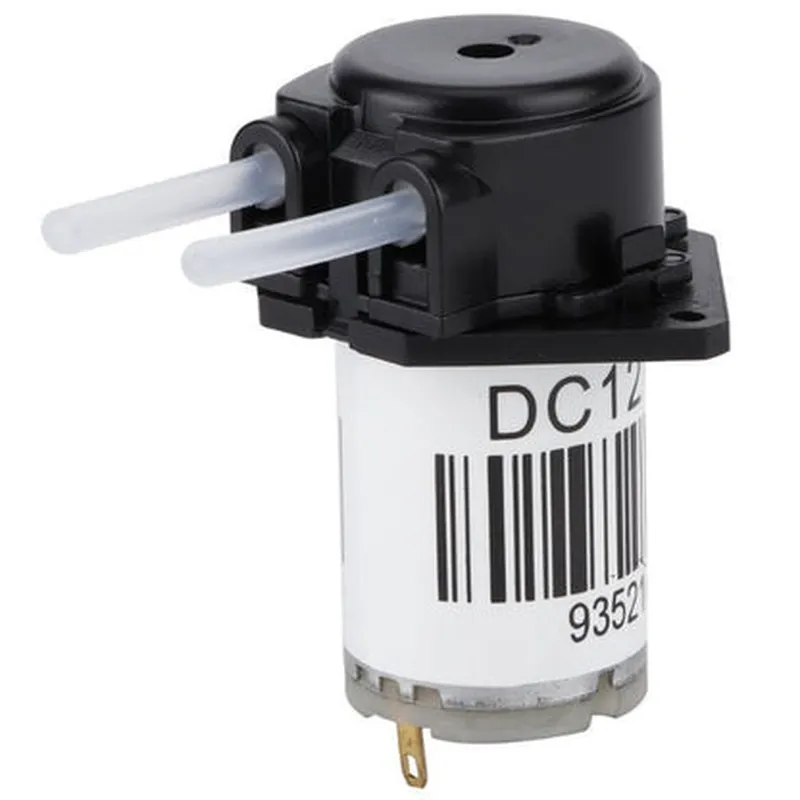
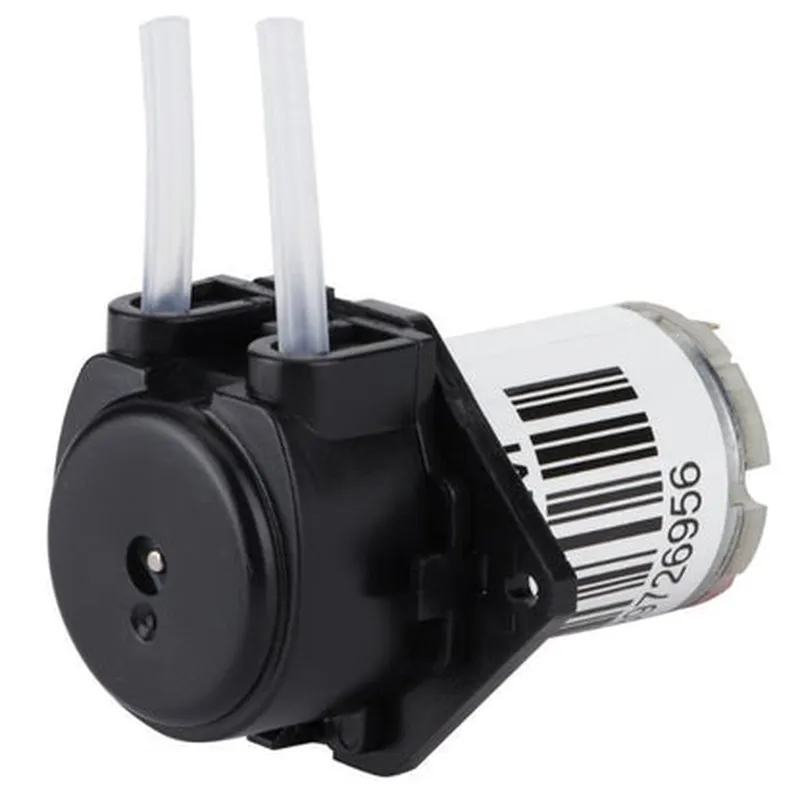
12V 5000RPM Peristaltic Dosing Pump
The 12V 5000RPM Peristaltic Dosing Pump is a high-performance, compact, and reliable fluid transfer device designed for precise dosing and dispensing applications in various industries, including industrial automation, chemical processing, and laboratory environments. This pump is a type of peristaltic pump, which operates on the principle of squeezing and releasing fluid through a flexible tube to achieve positive displacement.
The primary function of the 12V 5000RPM Peristaltic Dosing Pump is to accurately dispense specific volumes of fluid at a high flow rate, ensuring consistent and repeatable results. The pump's advanced design and high-speed motor enable it to handle a wide range of fluids, including corrosive chemicals, with precision and reliability.
12V DC
Up to 5000 RPM
Up to [insert flow rate] mL/min
Up to [insert pressure] bar
[Insert compatible fluid types, e.g., water, acids, bases, etc.]
[Insert operating temperature range]
[Insert pump dimensions]
[Insert pump weight]
| The 12V 5000RPM Peristaltic Dosing Pump is suitable for a wide range of applications, including |
Chemical processing and transfer
Laboratory research and experimentation
Industrial automation and process control
Water treatment and wastewater management
Food and beverage processing
Pharmaceuticals and biotechnology
Handle the pump with care to avoid damage to the motor or electrical components.
Ensure proper grounding and electrical connections to prevent electrical shock or fire hazards.
Use the pump in a well-ventilated area to prevent accumulation of fumes or volatile substances.
Follow proper installation, operation, and maintenance procedures to ensure safe and reliable pump operation.
By combining high-performance capabilities with compact design and advanced features, the 12V 5000RPM Peristaltic Dosing Pump is an ideal solution for various fluid transfer and dosing applications.
12V 5000RPM Peristaltic Dosing Pump DocumentationOverviewThe 12V 5000RPM Peristaltic Dosing Pump is a high-precision, compact, and reliable pumping solution designed for accurate dosing and fluid handling applications. This pump is ideal for use in IoT projects requiring precise control over fluid flow rates, such as chemical dosing, medical dispensing, and food processing.Technical SpecificationsOperating Voltage: 12V DC
Motor Speed: 5000 RPM
Flow Rate: up to 120 mL/min
Pressure: up to 2 bar
Accuracy: 1% of set point
Repeatability: 0.5% of set point
Tubing Compatibility: phosphorylation, silicone, or FEP tubingPinout and ConnectionsThe pump has a simple 2-wire connection:VCC (Red Wire): 12V DC power supply
GND (Black Wire): Ground connectionExample 1: Basic Pump Control using ArduinoIn this example, we'll demonstrate how to control the pump using an Arduino board.Hardware RequirementsArduino Board (e.g., Arduino Uno)
12V 5000RPM Peristaltic Dosing Pump
Power Supply (12V, 1A)
Breadboard and jumper wiresSoftware
```cpp
const int pumpPin = 9; // Pin 9 for pump controlvoid setup() {
pinMode(pumpPin, OUTPUT);
}void loop() {
// Pump on for 5 seconds
digitalWrite(pumpPin, HIGH);
delay(5000);// Pump off for 5 seconds
digitalWrite(pumpPin, LOW);
delay(5000);
}
```
Example 2: Flow Rate Control using Raspberry Pi and PythonIn this example, we'll demonstrate how to control the pump's flow rate using a Raspberry Pi and Python.Hardware RequirementsRaspberry Pi (e.g., Raspberry Pi 4)
12V 5000RPM Peristaltic Dosing Pump
Power Supply (12V, 1A)
Breadboard and jumper wiresSoftware
```python
import RPi.GPIO as GPIO
import time# Set up GPIO pin for pump control
GPIO.setmode(GPIO.BCM)
pump_pin = 17
GPIO.setup(pump_pin, GPIO.OUT)def set_flow_rate(flow_rate_mL_min):
# Calcuate the PWM frequency based on the flow rate
pwm_freq = int(5000 (flow_rate_mL_min / 120))
GPIO.PWM(pump_pin, pwm_freq)
GPIO.output(pump_pin, GPIO.HIGH)try:
while True:
# Set flow rate to 60 mL/min
set_flow_rate(60)
time.sleep(5)# Set flow rate to 90 mL/min
set_flow_rate(90)
time.sleep(5)
except KeyboardInterrupt:
GPIO.cleanup()
```
Example 3: IoT Automation using ESP32 and MQTTIn this example, we'll demonstrate how to control the pump remotely using an ESP32 board and MQTT protocol.Hardware RequirementsESP32 Board (e.g., ESP32 DevKitC)
12V 5000RPM Peristaltic Dosing Pump
Power Supply (12V, 1A)
Breadboard and jumper wires
Wi-Fi RouterSoftware
```c
#include <WiFi.h>
#include <PubSubClient.h>const char mqttServer = "your_mqtt_server";
const char topic = "pump_control";WiFiClient espClient;
PubSubClient client(espClient);void setup() {
// Connect to Wi-Fi
WiFi.begin("your_wifi_ssid", "your_wifi_password");
while (WiFi.status() != WL_CONNECTED) {
delay(1000);
Serial.println("Connecting to Wi-Fi...");
}// Connect to MQTT broker
client.setServer(mqttServer, 1883);// Set up GPIO pin for pump control
pinMode(23, OUTPUT);
}void callback(char topic, byte payload, unsigned int length) {
if (strcmp(topic, "pump_control") == 0) {
if (payload[0] == '1') {
digitalWrite(23, HIGH); // Turn on the pump
} else {
digitalWrite(23, LOW); // Turn off the pump
}
}
}void loop() {
if (!client.connected()) {
client.connect("ESP32Client");
}
client.subscribe(topic);
client.loop();
delay(100);
}
```
In this example, we'll use an MQTT client library to connect to an MQTT broker and subscribe to the "pump_control" topic. When a message is received, the callback function will be called to control the pump accordingly.These examples demonstrate the basic usage of the 12V 5000RPM Peristaltic Dosing Pump in various IoT contexts. For more information and customization, please refer to the provided datasheet and technical specifications.