K Type Patch Surface End Face Thermocouple Cold Pressure Nose Probe PT100 Temperature Sensor SMD Round Hole Temperature Probe (1 Meter)


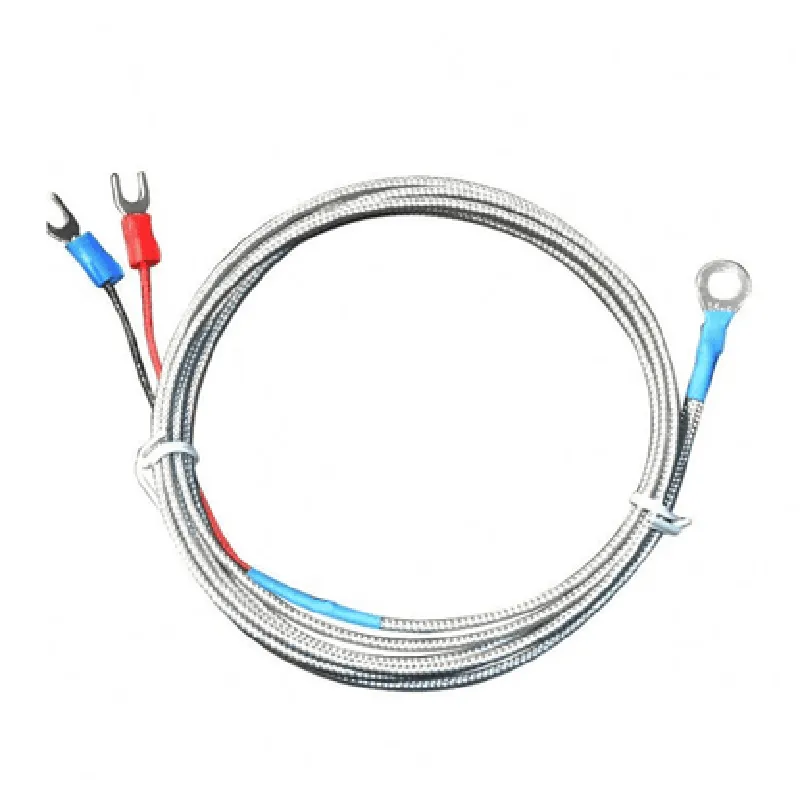
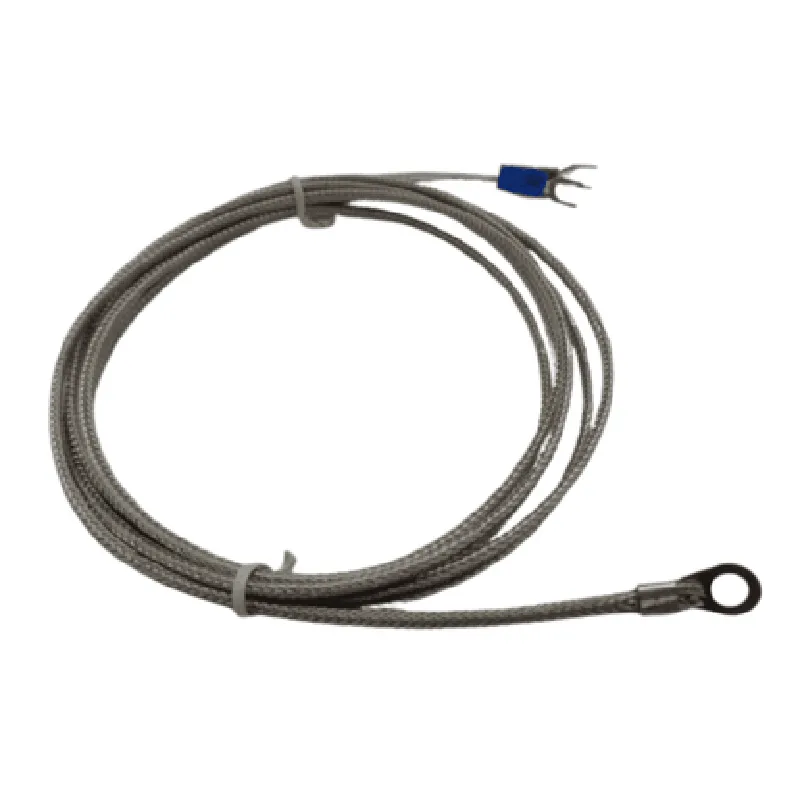
K Type Patch Surface End Face Thermocouple Cold Pressure Nose Probe PT100 Temperature Sensor SMD Round Hole Temperature Probe (1 Meter)
The K Type Patch Surface End Face Thermocouple Cold Pressure Nose Probe PT100 Temperature Sensor SMD Round Hole Temperature Probe (1 Meter) is a highly accurate and versatile temperature sensor designed for measuring temperature in various industrial and commercial applications. This component combines the characteristics of a K-type thermocouple, PT100 temperature sensor, and a cold pressure nose probe, making it an ideal choice for precision temperature measurement in a wide range of environments.
The primary function of this component is to measure temperature with high accuracy and precision. It can be used to measure surface temperatures, as well as temperatures in confined spaces, such as holes or tubes. The probe's cold pressure nose design allows for secure and reliable temperature measurement, even in applications where space is limited.
| ### 1. K-Type Thermocouple |
0.15C (0.27F) or better
-200C to 500C (-330F to 932F)
Low power consumption
Compatible with most temperature measurement instruments
| ### 3. Cold Pressure Nose Probe | |
| Durable and corrosion-resistant material | stainless steel or equivalent |
<1 second
High durability and reliability
| ### 5. Cable and Connectors |
1-meter long cable made of durable and flexible material
Insulated and shielded to prevent electromagnetic interference (EMI)
Terminated with a standard connector (e.g., mini-connector) for easy connection to measurement instruments
withstands harsh environments and rough handling
| ### 2. PT100 Temperature Sensor |
fits into small holes or spaces
Secure and reliable temperature measurement
Easy to install and remove
| ### 4. SMD Round Hole Temperature Probe |
Compact and lightweight design
Easy to integrate into existing systems
| High-temperature resistance | ceramic or equivalent material used for insulation and protection |
designed to withstand moderate mechanical stress
can be used with most temperature measurement instruments and data acquisition systems
| The K Type Patch Surface End Face Thermocouple Cold Pressure Nose Probe PT100 Temperature Sensor SMD Round Hole Temperature Probe (1 Meter) is suitable for a wide range of applications, including |
Industrial process control and monitoring
HVAC and refrigeration systems
Aerospace and defense
Automotive and transportation
Medical and laboratory equipment
Food processing and storage
| Parameter | Value |
| --- | --- |
| Temperature Range (K-Type) | -200C to 1260C (-330F to 2300F) |
| Temperature Range (PT100) | -200C to 500C (-330F to 932F) |
| Accuracy (K-Type) | 1.5C (2.7F) or better |
| Accuracy (PT100) | 0.15C (0.27F) or better |
| Response Time | <1 second |
| Cable Length | 1 meter (3.3 feet) |
| Connector Type | Standard mini-connector |
| Material | Stainless steel or equivalent |
| Insulation | Ceramic or equivalent material |
| Weight | Approximately 50 grams (1.76 oz) |
| Dimensions | 10 mm x 10 mm x 30 mm (0.39 in x 0.39 in x 1.18 in) |
| The K Type Patch Surface End Face Thermocouple Cold Pressure Nose Probe PT100 Temperature Sensor SMD Round Hole Temperature Probe (1 Meter) meets or exceeds the following standards and regulations |
RoHS compliant
CE certified
FDA compliant (for food and medical applications)
UL certified (for industrial and commercial applications)
Component Documentation: K Type Patch Surface End Face Thermocouple Cold Pressure Nose Probe PT100 Temperature Sensor SMD Round Hole Temperature Probe (1 Meter)OverviewThe K Type Patch Surface End Face Thermocouple Cold Pressure Nose Probe PT100 Temperature Sensor SMD Round Hole Temperature Probe (1 Meter) is a high-precision temperature sensor designed for measuring temperatures in various industrial and commercial applications. This thermocouple probe features a durable construction, excellent thermal response, and high accuracy, making it ideal for use in harsh environments.Technical SpecificationsSensor Type: Thermocouple (K-Type) and PT100
Temperature Range: -200C to 1260C (Thermocouple), -50C to 150C (PT100)
Accuracy: 1.5C (Thermocouple), 0.1C (PT100)
Response Time: 1-2 seconds
Cable Length: 1 meter
Connector Type: SMD Round Hole
Power Supply: Not required (passive sensor)Code ExamplesThe following code examples demonstrate how to use the K Type Patch Surface End Face Thermocouple Cold Pressure Nose Probe PT100 Temperature Sensor SMD Round Hole Temperature Probe (1 Meter) in various contexts:Example 1: Arduino Uno with Thermocouple LibraryIn this example, we'll use the Thermocouple library for Arduino to read the temperature from the K-Type thermocouple probe.```cpp
#include <Thermocouple.h>#define THERMOCOUPLE_PIN A0 // Pin for thermocouple signalThermocouple thermocouple(THERMOCOUPLE_PIN);void setup() {
Serial.begin(9600);
}void loop() {
float temperature = thermocouple.readCelsius();
Serial.print("Temperature: ");
Serial.print(temperature);
Serial.println(" C");
delay(1000);
}
```Example 2: Raspberry Pi with Python and ADC (for PT100)In this example, we'll use the RPi.GPIO and ADC0834 libraries for Python to read the temperature from the PT100 sensor using an ADC converter.```python
import time
import RPi.GPIO as GPIO
from adc0834 import ADC0834# Set up GPIO pins for ADC
GPIO.setmode(GPIO.BCM)
GPIO.setup(17, GPIO.OUT)
GPIO.setup(23, GPIO.OUT)
GPIO.setup(24, GPIO.OUT)# Create ADC object
adc = ADC0834()while True:
# Read PT100 sensor value from ADC
value = adc.read_adc_voltage(0)
# Convert value to temperature (assuming 10mV/C output)
temperature = value 100
print("Temperature: {:.2f} C".format(temperature))
time.sleep(1)
```Example 3: ESP32 with MicroPython and Analog-to-Digital Converter (for PT100)In this example, we'll use the machine module in MicroPython to read the temperature from the PT100 sensor using the ESP32's built-in ADC converter.```python
import machine
import time# Set up ADC pin for PT100 sensor
adc_pin = machine.Pin(32)
adc = machine.ADC(adc_pin)while True:
# Read PT100 sensor value from ADC
value = adc.read()
# Convert value to temperature (assuming 10mV/C output)
temperature = value 3.3 / 4095 100
print("Temperature: {:.2f} C".format(temperature))
time.sleep(1)
```These examples demonstrate the basic usage of the K Type Patch Surface End Face Thermocouple Cold Pressure Nose Probe PT100 Temperature Sensor SMD Round Hole Temperature Probe (1 Meter) in various microcontroller-based projects. Please consult the datasheets and documentation for your specific development board and libraries for more detailed information.