11.1V


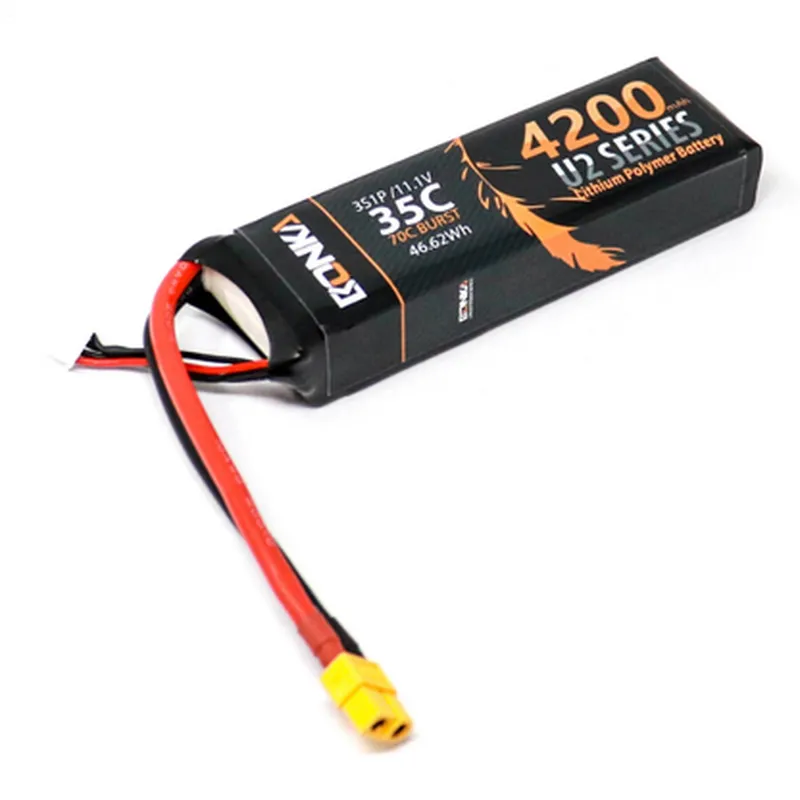
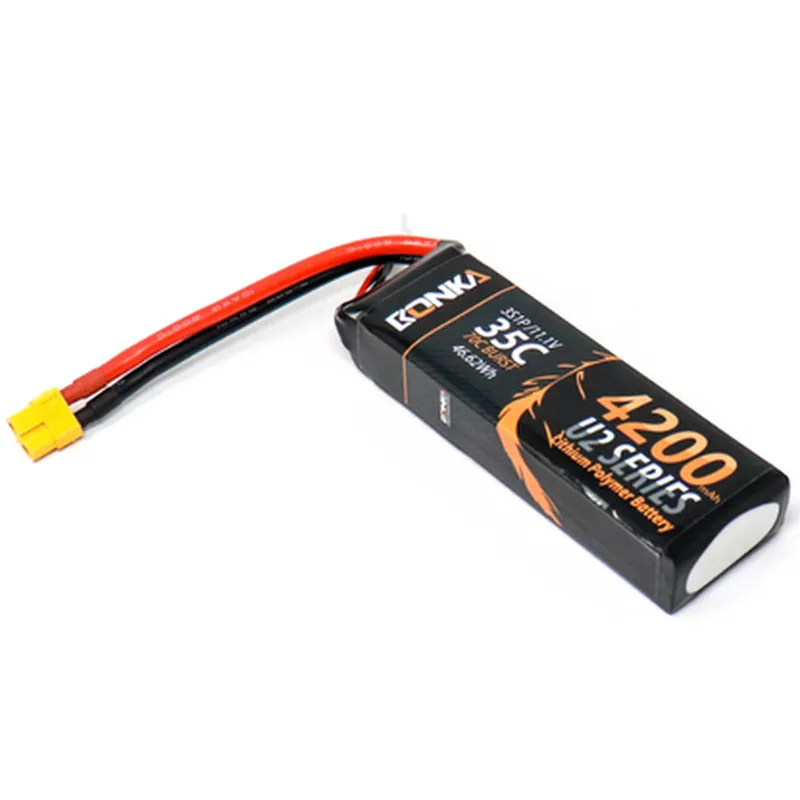
11.1V
4200mAh
Configuration
3S1P configuration, meaning 3 cells in series and 1 parallel group
Total of 3 cells, each with a capacity of 4200mAh
Discharge Rate
35C (147A)
50C (210A) for 10 seconds
Physical Characteristics
[insert dimensions, e.g., 105mm x 38mm x 25mm]
[insert weight, e.g., 270g]
High-quality lithium-polymer cells, protected by a durable PVC insulation
Protection Features
prevents damage from excessive charging
| Over-discharge protection | prevents damage from deep discharging |
| Short-circuit protection | protects against electrical shorts |
monitors and limits operating temperature to prevent overheating
Safety Certifications
Compliant with UN38.3 and IEC62133 safety standards for lithium-ion batteries
CE, ROHS, and FCC certified
Operating Conditions
-20C to 45C (-4F to 113F)
-20C to 35C (-4F to 95F)
Connectivity
Equipped with a XT60 connector for easy connection to devices and chargers
Warranty and Cycle Life
Backed by a 1-year limited warranty
300-500 charge/discharge cycles
Notes and Precautions
Handle the battery with care to avoid physical damage or electrical shock
Charge the battery in a well-ventilated area, away from flammable materials
Follow proper charging and storage guidelines to ensure safe and reliable operation
By providing a detailed description of the 11.1v 4200mAh 35C 3S1P Bonka LiPo Battery, this documentation aims to equip users with the knowledge needed to select, install, and operate this component safely and effectively in their IoT applications.
11.1v 4200mAh 35C 3S1P Bonka LiPo Battery DocumentationOverviewThe 11.1v 4200mAh 35C 3S1P Bonka LiPo Battery is a high-performance lithium-polymer battery designed for demanding applications in robotics, drones, and other IoT devices. With a high discharge rate of 35C, this battery provides reliable power and long cycle life.SpecificationsNominal Voltage: 11.1V
Capacity: 4200mAh
Discharge Rate: 35C
Configuration: 3S1P (3 cells in series, 1 parallel)
Maximum Charge Current: 4.2A
Maximum Discharge Current: 147A (35C)
Dimensions: 106 x 44 x 34 mm
Weight: 340gConnecting and Using the BatteryTo use the 11.1v 4200mAh 35C 3S1P Bonka LiPo Battery, connect it to a compatible device or charger using the XT60 connector. Ensure the device or charger is designed to handle the battery's voltage and current capabilities.Code Examples### Example 1: Arduino Robotics ProjectIn this example, we'll use the battery to power an Arduino-based robot that uses a high-torque motor. We'll monitor the battery's state of charge (SOC) using the Arduino's built-in analog-to-digital converter (ADC).```cpp
#include <Arduino.h>const int batteryPin = A0; // Analog input pin for battery voltage measurement
const float batteryVoltageFull = 12.6; // Full charge voltage (4.2V per cell)
const float batteryVoltageEmpty = 9.9; // Empty voltage (3.5V per cell)void setup() {
Serial.begin(9600);
}void loop() {
int batteryVoltageReading = analogRead(batteryPin);
float batteryVoltage = (batteryVoltageReading 5.0) / 1024.0;
float SOC = (batteryVoltage - batteryVoltageEmpty) / (batteryVoltageFull - batteryVoltageEmpty) 100;Serial.print("Battery Voltage: ");
Serial.print(batteryVoltage);
Serial.println(" V");
Serial.print("State of Charge: ");
Serial.print(SOC);
Serial.println(" %");delay(1000);
}
```### Example 2: Raspberry Pi IoT ProjectIn this example, we'll use the battery to power a Raspberry Pi-based IoT device that uses a Wi-Fi module to send sensor data to the cloud. We'll use the Raspberry Pi's GPIO pins to monitor the battery's voltage and send notifications when the SOC falls below a certain threshold.```python
import RPi.GPIO as GPIO
import time
import requestsGPIO.setmode(GPIO.BCM)batteryPin = 17 # GPIO pin for battery voltage measurement
thresholdSOC = 20 # Send notification when SOC falls below 20%def readBatteryVoltage():
GPIO.setup(batteryPin, GPIO.IN)
voltageReading = GPIO.input(batteryPin)
voltage = (voltageReading 5.0) / 1024.0
return voltagewhile True:
voltage = readBatteryVoltage()
SOC = (voltage - 9.9) / (12.6 - 9.9) 100if SOC < thresholdSOC:
requests.post("https://example.com/notify_low_battery", json={"SOC": SOC})print("Battery Voltage: {:.2f} V".format(voltage))
print("State of Charge: {:.2f} %".format(SOC))
time.sleep(60)
```Remember to adjust the code to suit your specific project requirements and ensure safe handling of the battery. Always follow proper safety precautions when working with lithium-polymer batteries.