

Stufin
Home Quick Cart Profile

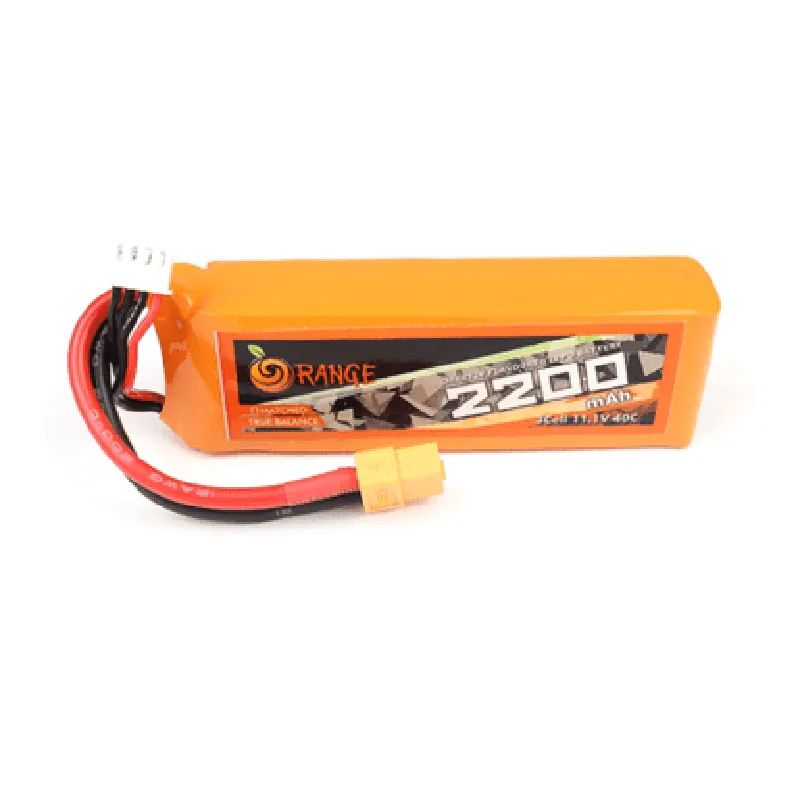
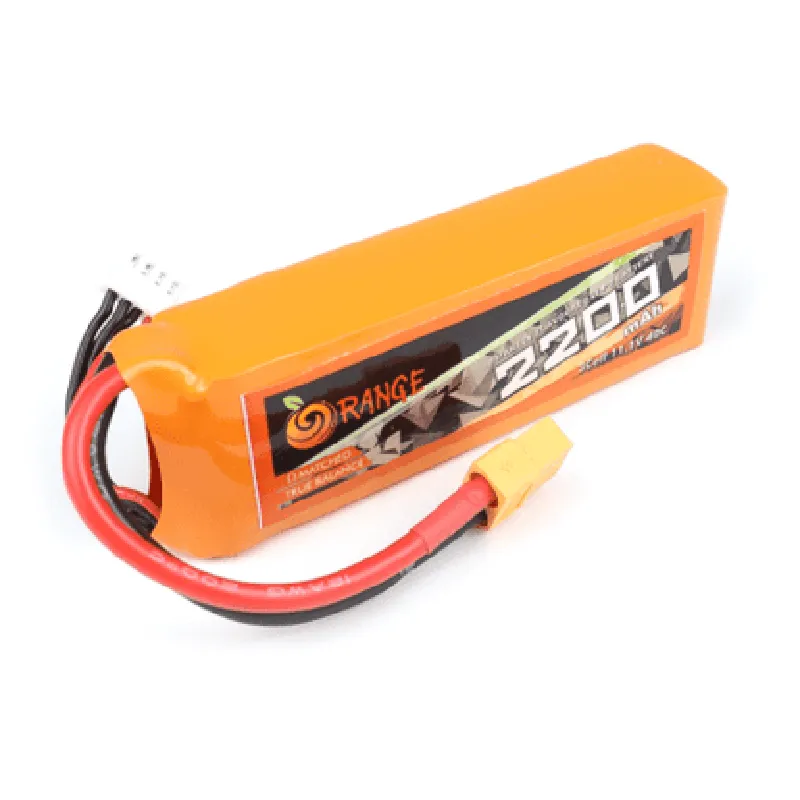
11.1V 2200mAh 3S 40C/80C Lithium polymer battery

Buy Now on Stufin

Component Description

11.1V 2200mAh 3S 40C/80C Lithium Polymer Battery

Overview

The 11.1V 2200mAh 3S 40C/80C Lithium Polymer battery is a high-performance rechargeable battery designed for use in various applications, including drones, robotics, and other IoT devices that require reliable and efficient power supply. This battery is a type of Lithium Polymer (LiPo) battery, which is known for its high energy density, long cycle life, and relatively low self-discharge rate.

Functionality

The primary function of this battery is to provide a stable and efficient power supply to devices that require a 3S (3-cell) Lithium Polymer battery configuration. It is designed to deliver a high discharge current, making it suitable for applications that require a high power-to-weight ratio.

Key Features

  • Voltage: 11.1V

The battery has a nominal voltage of 11.1V, which is typical for 3S LiPo batteries.

  • Capacity: 2200mAh

The battery has a capacity of 2200mAh, which indicates the amount of electric charge it can store.

  • Configuration: 3S (3-cell)

The battery consists of three cells connected in series, which provides a higher voltage and increased capacity compared to a single-cell configuration.

  • Discharge Rate: 40C/80C

The battery has a discharge rate of 40C, which means it can supply a maximum discharge current of 40 times its capacity (2200mAh x 40 = 88A). The 80C rating indicates the battery's burst discharge rate, which is the maximum current it can supply for a short period.

  • Chemistry: Lithium Polymer (LiPo)

The battery uses Lithium Polymer chemistry, which provides a high energy density, long cycle life, and relatively low self-discharge rate.

  • Cycle Life: Up to 300 cycles

The battery is designed to last for up to 300 charge/discharge cycles, making it a reliable choice for applications that require a long lifespan.

  • Weight and Dimensions: TBA

The weight and dimensions of the battery will depend on the specific design and packaging of the component.

Safety Features

  • Protective Circuitry: The battery may include built-in protective circuitry to prevent overcharge, over-discharge, and short-circuiting.
  • Flame-Retardant Material: The battery's casing may be made from flame-retardant material to minimize the risk of fire in the event of an internal failure.

Operating Conditions

  • Operating Temperature: -20C to 40C (-4F to 104F)

The battery is designed to operate within a temperature range of -20C to 40C (-4F to 104F).

  • Storage Temperature: -20C to 30C (-4F to 86F)

The battery should be stored within a temperature range of -20C to 30C (-4F to 86F) to maintain its performance and longevity.

Certifications and Compliance

The battery may comply with various safety and regulatory standards, such as CE, FCC, UN38.3, and RoHS. However, specific certifications and compliance information will depend on the manufacturer and the target market.

Application Notes

  • Charging: The battery should be charged using a high-quality LiPo charger, and the charger's settings should be adjusted according to the battery's specifications.
  • Monitoring: The battery's state of charge should be monitored to prevent over-discharge, which can affect its performance and lifespan.
  • Handling: The battery should be handled with care to avoid physical damage, as it contains internal components that can be damaged if the casing is compromised.

By considering the key features, safety features, operating conditions, and application notes, designers and engineers can ensure the safe and efficient operation of the 11.1V 2200mAh 3S 40C/80C Lithium Polymer battery in their IoT applications.

Pin Configuration

  • Component Documentation: 11.1V 2200mAh 3S 40C/80C Lithium Polymer Battery
  • Overview
  • This 11.1V 2200mAh 3S 40C/80C Lithium Polymer battery is a high-performance power source designed for use in various IoT applications, drones, and robotic systems. The battery features a compact design, high energy density, and reliable performance.
  • Pinout Description
  • The battery has a standard connector with multiple pins, each serving a specific purpose. Here's a detailed explanation of each pin:
  • 1. Positive Terminal (+) - Red Wire
  • Function: Supplies power to the load circuit
  • Voltage: 11.1V (nominal)
  • Current Capacity: Up to 40C continuous discharge (88A) and 80C burst discharge (176A)
  • 2. Negative Terminal (-) - Black Wire
  • Function: Returns power from the load circuit
  • Voltage: 0V (ground)
  • Current Capacity: Up to 40C continuous discharge (88A) and 80C burst discharge (176A)
  • 3. Balance Connector (JST-XH) - Smaller White Connector
  • Function: Used for cell balancing and monitoring individual cell voltages
  • Pinout:
  • + B1 (farthest from the main connector): Cell 1 positive
  • + B2: Cell 1 negative
  • + B3: Cell 2 positive
  • + B4: Cell 2 negative
  • + B5: Cell 3 positive
  • + B6: Cell 3 negative
  • Connection Guidelines
  • To ensure safe and proper connection, follow these guidelines:
  • Always connect the battery to a suitable charger and balance the cells before first use.
  • Use the correct polarized connectors to prevent damage to the battery or attached devices.
  • When connecting the battery to a load circuit:
  • + Connect the positive terminal (red wire) to the load's positive input.
  • + Connect the negative terminal (black wire) to the load's negative input or ground.
  • When using a balance charger:
  • + Connect the balance connector (JST-XH) to the charger's balance port.
  • + Ensure the charger is set to the correct battery type (3S LiPo) and parameters.
  • Important Safety Considerations
  • Always handle the battery with care, avoiding short circuits, punctures, or crushing.
  • Keep the battery away from flammable materials and avoid overheating.
  • Monitor the battery's state of charge and avoid over-discharging or over-charging.
  • Follow the manufacturer's instructions and guidelines for charging, storing, and using the battery.
  • By following these guidelines and understanding the pinout, you can safely and effectively utilize this 11.1V 2200mAh 3S 40C/80C Lithium Polymer battery in your IoT projects and applications.

Code Examples

Component Documentation: 11.1V 2200mAh 3S 40C/80C Lithium Polymer Battery
Overview
The 11.1V 2200mAh 3S 40C/80C Lithium Polymer battery is a high-performance rechargeable battery designed for use in various IoT applications, including robotics, drones, and other battery-powered devices. This battery features a 3S (3 cells in series) configuration, providing a nominal voltage of 11.1V and a capacity of 2200mAh.
Specifications
Nominal Voltage: 11.1V
 Capacity: 2200mAh
 Configuration: 3S (3 cells in series)
 Continuous Discharge Rate: 40C
 Burst Discharge Rate: 80C
 Weight: approximately 180g
 Dimensions: 105mm x 35mm x 25mm (L x W x H)
Code Examples
### Example 1: Using the battery with an Arduino Board
In this example, we'll demonstrate how to use the battery to power an Arduino board and control a DC motor.
Hardware Requirements:
Arduino Board (e.g., Arduino Uno)
 11.1V 2200mAh 3S 40C/80C Lithium Polymer battery
 DC Motor (e.g., 12V, 100mA)
 Motor Driver (e.g., L298N)
Code:
```c++
#include <Arduino.h>
#define MOTOR_PIN 9 // Pin for motor control
void setup() {
  pinMode(MOTOR_PIN, OUTPUT);
}
void loop() {
  // Set motor speed to 50% duty cycle
  analogWrite(MOTOR_PIN, 128);
  delay(1000);
}
```
Connection:
Connect the battery to the Arduino board's Vin pin.
 Connect the DC motor to the motor driver.
 Connect the motor driver to the Arduino board's digital pin 9.
### Example 2: Using the battery with a Raspberry Pi for IoT Applications
In this example, we'll demonstrate how to use the battery to power a Raspberry Pi and collect sensor data using a Python script.
Hardware Requirements:
Raspberry Pi (e.g., Raspberry Pi 4)
 11.1V 2200mAh 3S 40C/80C Lithium Polymer battery
 Sensor Module (e.g., DHT11 temperature and humidity sensor)
Code:
```python
import RPi.GPIO as GPIO
import time
import dht11
# Set up GPIO mode
GPIO.setmode(GPIO.BCM)
# Set up sensor module
dht_sensor = dht11.DHT11(pin=17)
while True:
    # Read temperature and humidity data
    temp, humid = dht_sensor.read()
    print(f"Temperature: {temp}C, Humidity: {humid}%")
    time.sleep(1)
```
Connection:
Connect the battery to the Raspberry Pi's power input (5V, 2.5A recommended).
 Connect the sensor module to the Raspberry Pi's GPIO pins.
Important Notes:
Always follow proper safety precautions when working with lithium-polymer batteries, including using protective gear and avoiding overheating or overcharging.
 Ensure the battery is compatible with your device's power requirements and follows the manufacturer's guidelines for usage and charging.
 Monitor the battery's state of charge and voltage levels to prevent damage or degradation.