14.8 V 2200mah 4S 40C-80C Lithium Polymer Battery


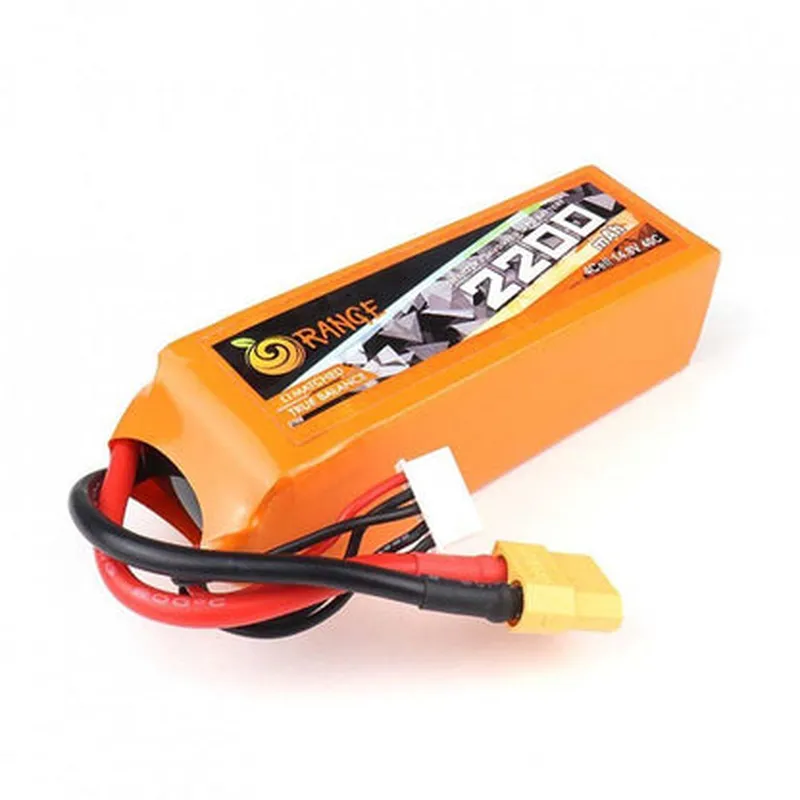
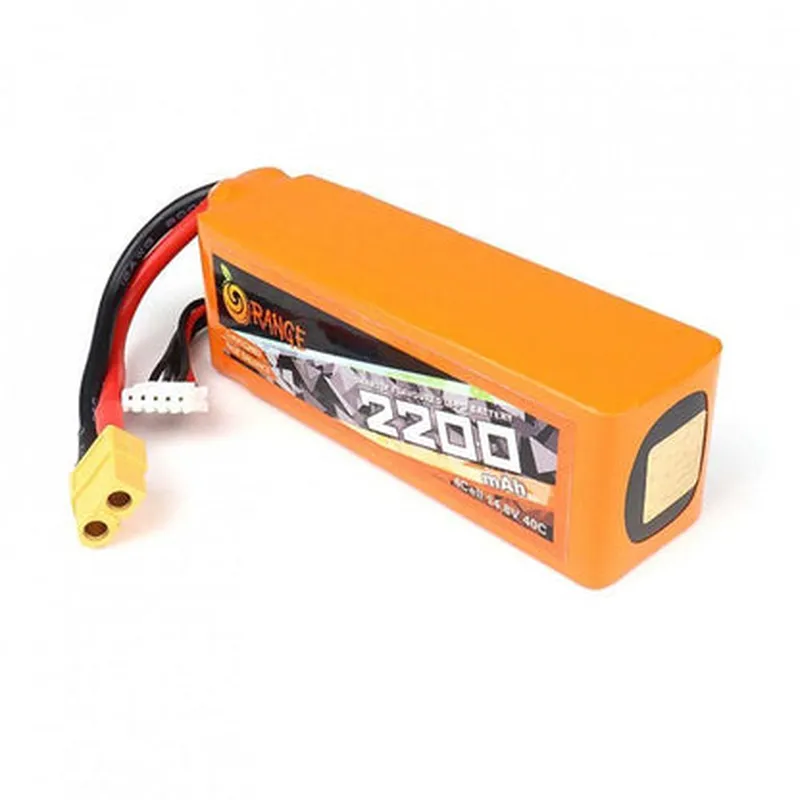
14.8 V 2200mah 4S 40C-80C Lithium Polymer Battery
Rechargeable Lithium Polymer (Li-Po) Battery
This 14.8V 2200mAh 4S 40C-80C Lithium Polymer Battery is a high-performance rechargeable battery designed for use in various Internet of Things (IoT) applications, drones, remote-controlled models, and other devices that require reliable and efficient power supply. Its primary function is to store electrical energy and supply it to the connected devices as needed.
The battery's nominal voltage is 14.8V, which is the standard voltage for 4S Li-Po batteries. This voltage rating ensures compatibility with a wide range of devices and systems.
The battery has a capacity of 2200mAh, which measures the amount of electric charge it can hold. A higher capacity means the battery can provide power for longer periods.
The 4S configuration means the battery consists of four individual cells connected in series. This configuration allows for a higher voltage and increased overall capacity.
The battery's charge/discharge rate is specified as 40C-80C, where C is the capacity of the battery in amps. This means the battery can supply a maximum of 80 amps (2200mAh x 80C) and can be charged at a maximum rate of 40 amps.
The battery uses Lithium Polymer (Li-Po) chemistry, which provides a high energy density, long cycle life, and relatively low self-discharge rate.
The battery is designed to handle high current flows, making it suitable for applications that require burst power, such as drones and remote-controlled models.
The battery is rechargeable, allowing for extended use and reducing waste.
The battery's compact design makes it easy to integrate into smaller devices and systems.
The battery is designed with built-in protection against overcharge, over-discharge, and short-circuiting to ensure safe operation and prevent damage to connected devices.
The battery's chemistry and construction are designed to reduce the risk of thermal runaway and fire.
-20C to 45C
-30C to 30C
[insert dimensions]
[insert weight]
[insert connector type]
The battery meets or exceeds relevant industry safety standards, such as UN38.3, IEC62133, and UL2271.
The battery is compliant with environmental regulations, such as RoHS and WEEE.
The battery is backed by a limited warranty against defects in materials and workmanship.
Technical support and documentation are available from the manufacturer.
Component Documentation: 14.8 V 2200mah 4S 40C-80C Lithium Polymer BatteryOverviewThe 14.8 V 2200mah 4S 40C-80C Lithium Polymer Battery is a high-performance rechargeable battery designed for demanding applications in robotics, drones, and other IoT devices. With a rating of 4S (four cells in series), this battery provides a nominal voltage of 14.8V and a capacity of 2200mAh. The 40C-80C discharge rating ensures high current capabilities, making it suitable for power-hungry devices.SpecificationsNominal Voltage: 14.8V
Capacity: 2200mAh
Configuration: 4S (four cells in series)
Discharge Rating: 40C-80C
Dimensions: [insert dimensions]
Weight: [insert weight]Example 1: Using the Battery with an Arduino RobotIn this example, we'll demonstrate how to use the 14.8 V 2200mah 4S 40C-80C Lithium Polymer Battery to power an Arduino-based robot.Hardware RequirementsArduino Board (e.g., Arduino Mega 2560)
Motor Driver (e.g., L298N)
DC Motors (2x)
Jumper Wires
14.8 V 2200mah 4S 40C-80C Lithium Polymer BatteryCode Example
```c++
#include <Arduino.h>// Motor pins
const int leftMotorForward = 2;
const int leftMotorBackward = 3;
const int rightMotorForward = 4;
const int rightMotorBackward = 5;void setup() {
// Initialize motor pins as outputs
pinMode(leftMotorForward, OUTPUT);
pinMode(leftMotorBackward, OUTPUT);
pinMode(rightMotorForward, OUTPUT);
pinMode(rightMotorBackward, OUTPUT);
}void loop() {
// Move forward
digitalWrite(leftMotorForward, HIGH);
digitalWrite(rightMotorForward, HIGH);
delay(1000);// Stop
digitalWrite(leftMotorForward, LOW);
digitalWrite(rightMotorForward, LOW);
delay(500);// Move backward
digitalWrite(leftMotorBackward, HIGH);
digitalWrite(rightMotorBackward, HIGH);
delay(1000);
}
```
Example 2: Monitoring Battery State of Charge (SOC) with an ESP32In this example, we'll demonstrate how to use the 14.8 V 2200mah 4S 40C-80C Lithium Polymer Battery with an ESP32 board to monitor the battery's State of Charge (SOC).Hardware RequirementsESP32 Board (e.g., ESP32 DevKitC)
Voltage Divider (e.g., 10k + 10k resistors)
Jumper Wires
14.8 V 2200mah 4S 40C-80C Lithium Polymer BatteryCode Example
```c++
#include <Arduino.h>// Define the voltage divider ratio
const float voltageDividerRatio = 0.5;// Define the battery's nominal voltage
const float nominalVoltage = 14.8;// Define the pins for the voltage divider
const int batteryVoltagePin = A0;void setup() {
Serial.begin(115200);
}void loop() {
// Read the battery voltage
int batteryVoltageRaw = analogRead(batteryVoltagePin);
float batteryVoltage = (batteryVoltageRaw / 4095.0) 3.3 voltageDividerRatio;// Calculate the SOC based on the voltage
float soc = (batteryVoltage - 12.0) / (nominalVoltage - 12.0) 100.0;// Print the SOC to the serial console
Serial.print("SOC: ");
Serial.print(soc);
Serial.println("%");delay(1000);
}
```
Example 3: Using the Battery with a Raspberry Pi and PythonIn this example, we'll demonstrate how to use the 14.8 V 2200mah 4S 40C-80C Lithium Polymer Battery to power a Raspberry Pi and monitor the battery's voltage using Python.Hardware RequirementsRaspberry Pi Board (e.g., Raspberry Pi 4)
Voltage Divider (e.g., 10k + 10k resistors)
Jumper Wires
14.8 V 2200mah 4S 40C-80C Lithium Polymer BatteryCode Example
```python
import RPi.GPIO as GPIO
import time# Define the voltage divider ratio
voltage_divider_ratio = 0.5# Define the battery's nominal voltage
nominal_voltage = 14.8# Define the pin for the voltage divider
battery_voltage_pin = 17# Set up the GPIO pin for input
GPIO.setmode(GPIO.BCM)
GPIO.setup(battery_voltage_pin, GPIO.IN)while True:
# Read the battery voltage
battery_voltage_raw = GPIO.input(battery_voltage_pin)
battery_voltage = (battery_voltage_raw / 4095.0) 3.3 voltage_divider_ratio# Calculate the SOC based on the voltage
soc = (battery_voltage - 12.0) / (nominal_voltage - 12.0) 100.0# Print the SOC to the console
print("SOC: {:.2f}%".format(soc))time.sleep(1)
```
These examples demonstrate how to use the 14.8 V 2200mah 4S 40C-80C Lithium Polymer Battery in various IoT applications, including robotics, monitoring, and automation.