

Stufin
Home Quick Cart Profile

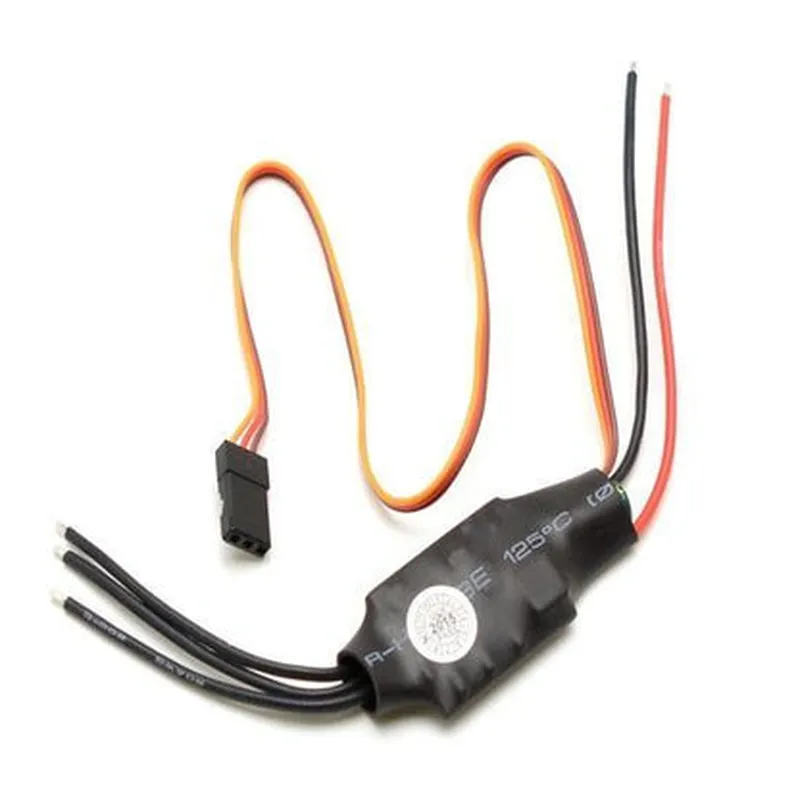
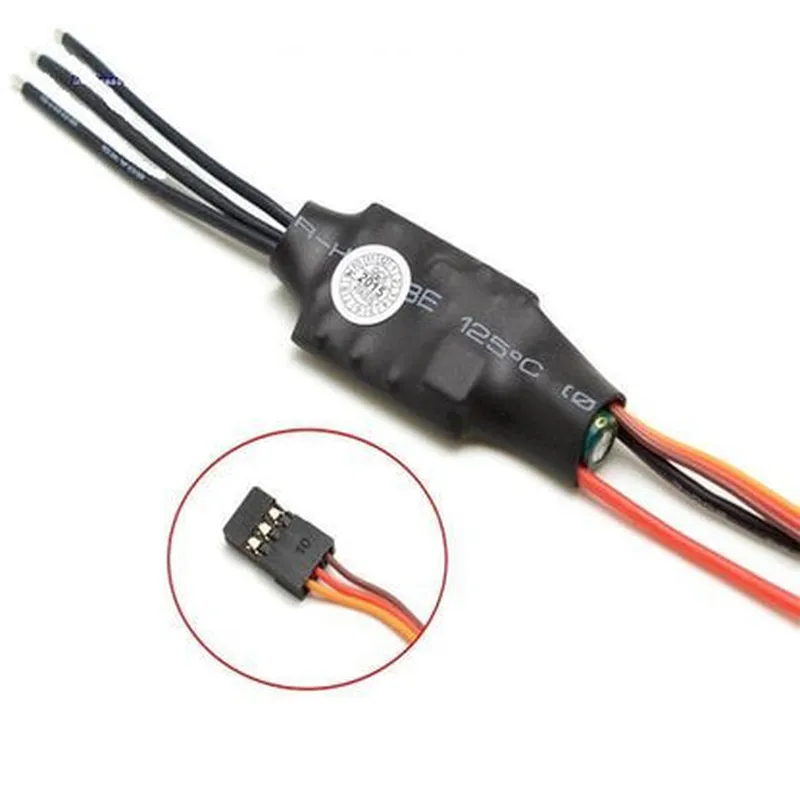
SimonK ESC 12A

Buy Now on Stufin

Component Name

SimonK ESC 12A

Overview

The SimonK ESC 12A is a high-performance Electronic Speed Controller (ESC) designed for brushless motors in various applications, including racing drones, FPV aircraft, and other IoT devices. This ESC is part of the SimonK series, known for their reliability, efficiency, and high-performance capabilities.

Functionality

The SimonK ESC 12A is a Brushless DC (BLDC) motor controller that converts DC power from a battery to three-phase AC power for driving brushless motors. Its primary function is to regulate the speed and direction of the motor, ensuring efficient and reliable operation.

Key Features

  • High Current Rating: The SimonK ESC 12A is capable of handling a maximum continuous current of 12A, making it suitable for demanding applications with high-power motors.
  • High-Speed PWM: The ESC features a high-speed Pulse Width Modulation (PWM) frequency of up to 32kHz, allowing for precise and efficient motor control.
  • Low Voltage Protection (LVP): The ESC has a built-in LVP, which prevents the motor from running when the battery voltage drops below a certain threshold (typically 3.2V per cell), protecting the battery from over-discharge.
  • Overcurrent Protection: The SimonK ESC 12A features overcurrent protection, which shuts down the motor in case of excessive current draw, preventing damage to the ESC and motor.
  • Active Braking: The ESC supports active braking, which helps to slow down the motor quickly and efficiently, reducing wear on the motor and mechanical components.
  • Adjustable Settings: The ESC allows for adjustable settings, including PWM frequency, motor timing, and LVP threshold, using a dedicated programming tool or software.
  • Compact Design: The SimonK ESC 12A has a compact design, making it suitable for space-constrained applications and IoT devices.
  • High-Efficiency Design: The ESC features a high-efficiency design, minimizing heat generation and maximizing overall performance.
  • Multirotor Compatibility: The SimonK ESC 12A is designed to work seamlessly with multirotor systems, including quadcopters, hexacopters, and octocopters.
  • Compatibility: The ESC is compatible with a wide range of brushless motors and is suitable for various applications, including drone racing, FPV, and aerial photography.

Continuous Current

12A

Peak Current

24A (10s)

Voltage Range

6-25V

PWM Frequency

up to 32kHz

LVP Threshold

3.2V per cell (adjustable)

Dimensions

25.5mm x 15mm x 5mm

Weight

5g

RoHS Compliant

Yes

CE Certified

Yes

Warranty

1-year limited warranty

Technical Support

Dedicated customer support, documentation, and community resources available.

By providing a comprehensive overview of the SimonK ESC 12A, this documentation aims to assist technical professionals and informed hobbyists in understanding the functionality, features, and specifications of this high-performance ESC, enabling them to make informed design and implementation decisions for their IoT projects.

Pin Configuration

  • SimonK ESC 12A Pinout Explanation
  • The SimonK ESC 12A is a popular Electronic Speed Controller (ESC) designed for brushless motors in various applications, including drones, robots, and other IoT devices. The ESC has a total of 9 pins, which are explained below:
  • Pin 1: VCC (5V Power Supply)
  • Function: Provides 5V power supply to the ESC's internal circuitry
  • Connection: Connect to a 5V power source, such as a battery or a voltage regulator
  • Importance: Ensures proper operation of the ESC
  • Pin 2: GND (Ground)
  • Function: Provides a common ground reference point for the ESC
  • Connection: Connect to the negative terminal of the power source or the ground plane of the circuit board
  • Importance: Essential for proper operation and safety of the ESC
  • Pin 3: Signal (PWM Input)
  • Function: Receives the PWM (Pulse Width Modulation) signal from the flight controller or other control devices
  • Connection: Connect to the PWM output of the flight controller or control device
  • Importance: Controls the motor speed and direction based on the PWM signal
  • Pin 4: Motor A (Phase A)
  • Function: Drives the phase A winding of the brushless motor
  • Connection: Connect to the phase A wire of the brushless motor
  • Importance: Enables the motor to rotate in a specific direction
  • Pin 5: Motor B (Phase B)
  • Function: Drives the phase B winding of the brushless motor
  • Connection: Connect to the phase B wire of the brushless motor
  • Importance: Enables the motor to rotate in a specific direction
  • Pin 6: Motor C (Phase C)
  • Function: Drives the phase C winding of the brushless motor
  • Connection: Connect to the phase C wire of the brushless motor
  • Importance: Enables the motor to rotate in a specific direction
  • Pin 7: BEC (Battery Eliminator Circuit) 5V Output
  • Function: Provides a 5V regulated output for powering external devices, such as receivers or flight controllers
  • Connection: Connect to the power input of external devices, if required
  • Importance: Convenient power source for external devices, but not essential for ESC operation
  • Pin 8: BEC GND (Ground)
  • Function: Provides a ground reference point for the BEC output
  • Connection: Connect to the ground plane of the circuit board or the negative terminal of the power source
  • Importance: Ensures proper operation of the BEC output
  • Pin 9: Telemetry (Optional)
  • Function: Transmits telemetry data, such as motor speed and ESC temperature, to external devices
  • Connection: Connect to a telemetry receiver or a data logger, if required
  • Importance: Optional feature for monitoring ESC performance and debugging purposes
  • Connection Structure:
  • 1. Connect the VCC (Pin 1) to a 5V power source.
  • 2. Connect the GND (Pin 2) to the negative terminal of the power source or the ground plane of the circuit board.
  • 3. Connect the Signal (Pin 3) to the PWM output of the flight controller or control device.
  • 4. Connect the Motor A (Pin 4), Motor B (Pin 5), and Motor C (Pin 6) to the corresponding phase wires of the brushless motor.
  • 5. If using the BEC output, connect the BEC 5V Output (Pin 7) to the power input of external devices, and connect the BEC GND (Pin 8) to the ground plane of the circuit board or the negative terminal of the power source.
  • 6. If using telemetry, connect the Telemetry (Pin 9) to a telemetry receiver or a data logger.
  • Important Notes:
  • Ensure proper soldering and connections to prevent damage to the ESC or motor.
  • Use a suitable gauge wire to connect the motor wires to the ESC.
  • Refer to the ESC's datasheet and user manual for specific recommendations and guidelines.

Code Examples

SimonK ESC 12A Documentation
Overview
The SimonK ESC 12A is a high-performance Electronic Speed Controller (ESC) designed for use in a variety of IoT applications, including drones, robotics, and autonomous vehicles. This ESC is capable of handling high-current motor loads up to 12A and features a compact design, making it an ideal choice for space-constrained projects.
Technical Specifications
Input Voltage: 7-16V
 Output Current: 12A continuous, 15A burst
 Compatible Motors: Brushless DC motors
 Communication Protocol: PWM (Pulse Width Modulation)
 Dimensions: 25mm x 15mm x 5mm
Code Examples
### Example 1: Basic Motor Control using Arduino
In this example, we'll demonstrate how to control a brushless DC motor using the SimonK ESC 12A with an Arduino Board.
Hardware Requirements
SimonK ESC 12A
 Arduino Board (e.g., Arduino Uno)
 Brushless DC motor
 Power source (e.g., battery or power supply)
Code
```c
const int escPin = 9;  // Pin for ESC control signal
void setup() {
  pinMode(escPin, OUTPUT);
}
void loop() {
  // Set motor speed to 50% (128/255)
  analogWrite(escPin, 128);
  delay(1000);
// Set motor speed to 100% (255/255)
  analogWrite(escPin, 255);
  delay(1000);
// Set motor speed to 0% (0/255)
  analogWrite(escPin, 0);
  delay(1000);
}
```
Explanation
In this example, we use the `analogWrite()` function to generate a PWM signal on the designated ESC control pin (pin 9). The duty cycle of the PWM signal determines the motor speed, where 0 represents 0% speed and 255 represents 100% speed. We demonstrate three different motor speeds in this example: 50%, 100%, and 0%.
### Example 2: Motor Control using Raspberry Pi (Python)
In this example, we'll demonstrate how to control a brushless DC motor using the SimonK ESC 12A with a Raspberry Pi and Python.
Hardware Requirements
SimonK ESC 12A
 Raspberry Pi (e.g., Raspberry Pi 4)
 Brushless DC motor
 Power source (e.g., battery or power supply)
Code
```python
import RPi.GPIO as GPIO
import time
# Set up GPIO mode
GPIO.setmode(GPIO.BCM)
# Define ESC control pin
esc_pin = 18
# Set up ESC control pin as an output
GPIO.setup(esc_pin, GPIO.OUT)
# Set initial motor speed to 0%
pwm = GPIO.PWM(esc_pin, 50)  # 50 Hz PWM frequency
pwm.start(0)
try:
    while True:
        # Set motor speed to 50%
        pwm.ChangeDutyCycle(50)
        time.sleep(1)
# Set motor speed to 100%
        pwm.ChangeDutyCycle(100)
        time.sleep(1)
# Set motor speed to 0%
        pwm.ChangeDutyCycle(0)
        time.sleep(1)
except KeyboardInterrupt:
    # Clean up
    pwm.stop()
    GPIO.cleanup()
```
Explanation
In this example, we use the RPi.GPIO library to access the Raspberry Pi's GPIO pins. We define the ESC control pin and set it up as an output. We then create a PWM object with a 50 Hz frequency and initialize it to 0% duty cycle. The main loop demonstrates three different motor speeds: 50%, 100%, and 0%, using the `ChangeDutyCycle()` method to adjust the PWM signal.
These examples demonstrate the basic functionality of the SimonK ESC 12A and can be easily adapted to more complex IoT applications.