

Stufin
Home Quick Cart Profile

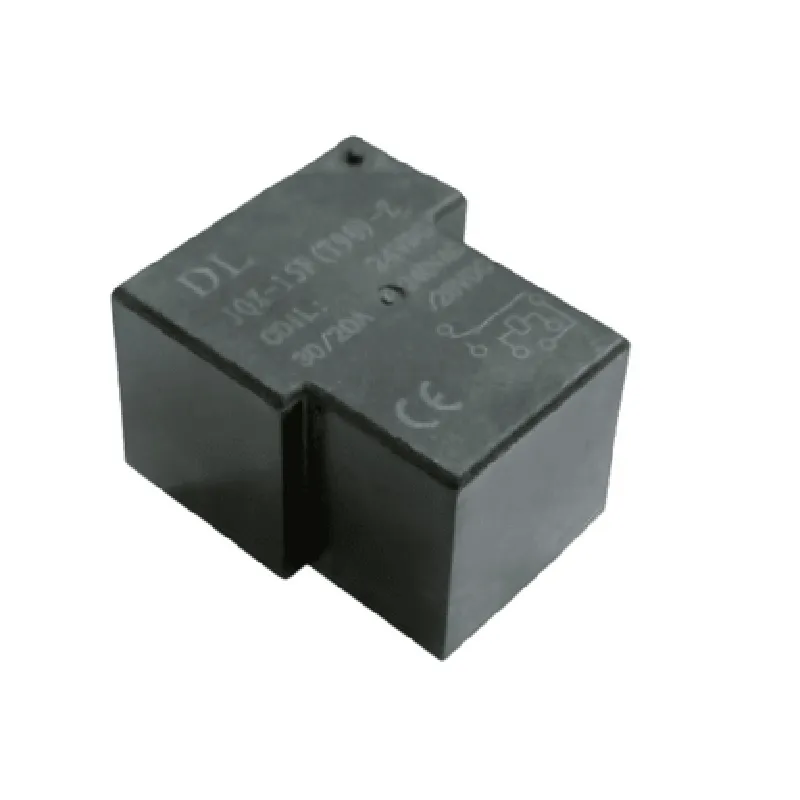
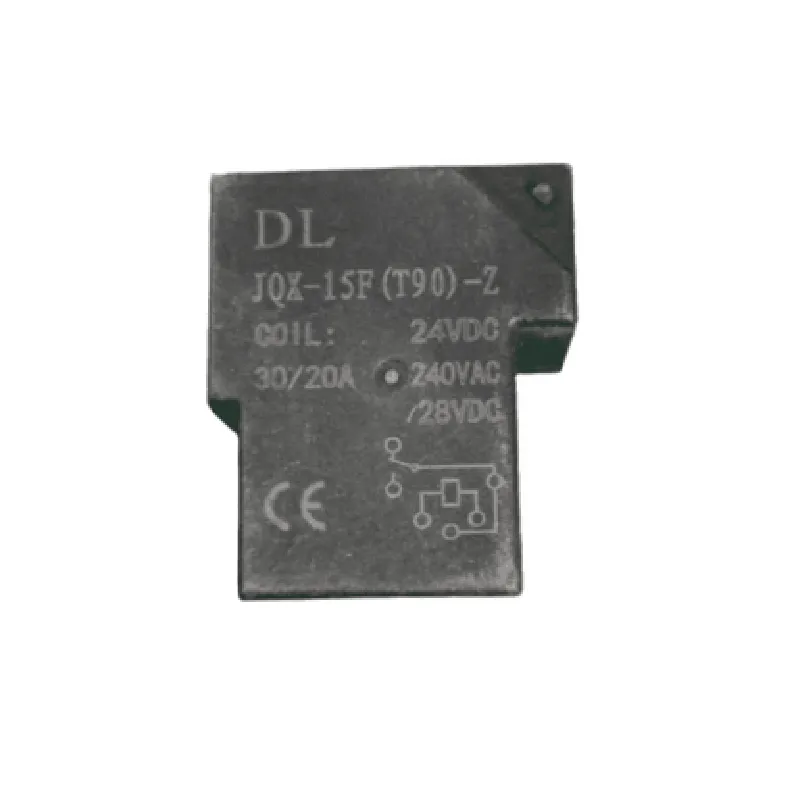
JQX-15F(T90) Coil Voltage DC 24V 6 Pin Power Relay

Buy Now on Stufin

Component Description

JQX-15F(T90) Coil Voltage DC 24V 6 Pin Power Relay

Overview

The JQX-15F(T90) is a DC 24V 6-pin power relay, specifically designed to handle high-power switching applications in various industries, including industrial automation, IoT, and more. This relay is a type of electromagnetic relay that utilizes an electrical signal to control the flow of electrical power to a connected load.

Functionality

The JQX-15F(T90) relay operates by using an electrical signal from a microcontroller or other control device to energize the internal coil, which then attracts a metal contact to switch the connected load on or off. The relay can be used to control devices such as motors, lights, heaters, and other high-power equipment.

Key Features

  • Coil Voltage: The relay operates with a DC 24V coil voltage, making it compatible with a wide range of control systems and microcontrollers.
  • 6-Pin Configuration: The relay has a 6-pin configuration, consisting of three pins for the coil (VCC, GND, and Signal) and three pins for the normally open (NO) and normally closed (NC) contacts.
  • High-Power Switching: The relay is capable of handling high-power switching applications, making it suitable for use in industrial automation, motor control, and other high-power applications.
  • High-Reliability: The JQX-15F(T90) relay features a high-reliability design, ensuring consistent performance and long-term durability in demanding environments.
  • Compact Size: The relay has a compact size, making it ideal for use in space-constrained applications and reducing overall system size.
  • Low Power Consumption: The relay has a low power consumption of approximately 200mW, reducing heat generation and increasing overall efficiency.
  • Fast Switching Time: The relay features a fast switching time of approximately 10ms, ensuring rapid response to control signals.
  • Isolation: The relay provides electrical isolation between the coil and contacts, ensuring safe and reliable operation in high-voltage applications.
  • Operating Temperature Range: The relay operates within a wide temperature range of -40C to 85C, making it suitable for use in various environmental conditions.
  • UL and CE Compliant: The relay is compliant with UL and CE standards, ensuring safety and reliability in a wide range of applications.

Technical Specifications

| Parameter | Value |

| --- | --- |

| Coil Voltage | DC 24V |

| Coil Resistance | 360 ohms 10% |

| Contact Rating | 10A @ 250VAC, 10A @ 30VDC |

| Switching Time | 10ms (max) |

| Operating Temperature Range | -40C to 85C |

| Storage Temperature Range | -40C to 125C |

| Operating Humidity | 5% to 95% RH |

| Weight | Approximately 20g |

Applications

The JQX-15F(T90) relay is suitable for use in various applications, including

Industrial automation

IoT devices

Motor control

Lighting control

HVAC systems

Security systems

Medical devices

Aerospace and defense systems

Conclusion

The JQX-15F(T90) coil voltage DC 24V 6-pin power relay is a high-reliability, high-power switching component designed for use in demanding applications. With its compact size, low power consumption, and fast switching time, it is an ideal choice for a wide range of industries and applications.

Pin Configuration

  • JQX-15F(T90) Coil Voltage DC 24V 6 Pin Power Relay Documentation
  • Overview
  • The JQX-15F(T90) is a 6-pin power relay module designed for controlling high-power devices with a DC 24V coil voltage. It is a widely used component in various IoT applications, including home automation, industrial control, and power management systems.
  • Pinout Description
  • The relay module has 6 pins, which are explained below:
  • Pin 1: VCC (DC 24V)
  • Function: Coil voltage supply
  • Description: This pin is connected to a DC 24V power source, which energizes the relay coil.
  • Pin 2: IN (Input Signal)
  • Function: Control signal input
  • Description: This pin receives the control signal from a microcontroller or any other control device to switch the relay on or off.
  • Pin 3: GND (Ground)
  • Function: Ground connection
  • Description: This pin is connected to the ground of the power supply and provides a return path for the coil current.
  • Pin 4: Normally Open (NO)
  • Function: Normally open contact
  • Description: This pin is connected to the load (device to be controlled) and is normally open ( disconnected) when the relay is in the de-energized state.
  • Pin 5: Common (COM)
  • Function: Common contact
  • Description: This pin is connected to the load (device to be controlled) and serves as the common terminal for both normally open and normally closed contacts.
  • Pin 6: Normally Closed (NC)
  • Function: Normally closed contact
  • Description: This pin is connected to the load (device to be controlled) and is normally closed (connected) when the relay is in the de-energized state.
  • Connection Structure
  • To connect the pins, follow this structure:
  • 1. VCC (Pin 1) -> 24V DC Power Source
  • Connect the VCC pin to a reliable 24V DC power source.
  • 2. IN (Pin 2) -> Control Signal (e.g., Microcontroller Output)
  • Connect the IN pin to a digital output from a microcontroller or any other control device.
  • 3. GND (Pin 3) -> Ground
  • Connect the GND pin to the ground of the power supply and the control device.
  • 4. NO (Pin 4) -> Load (Device to be Controlled)
  • Connect the NO pin to the load (device to be controlled) that needs to be switched on when the relay is energized.
  • 5. COM (Pin 5) -> Load (Device to be Controlled)
  • Connect the COM pin to the load (device to be controlled) that serves as the common terminal for both normally open and normally closed contacts.
  • 6. NC (Pin 6) -> Load (Device to be Controlled)
  • Connect the NC pin to the load (device to be controlled) that needs to be switched off when the relay is energized.
  • Important Notes
  • Ensure the power supply voltage matches the relay's coil voltage rating (24V DC).
  • Use a suitable current-limiting resistor in the control signal path to prevent damage to the relay or the control device.
  • Always follow proper safety precautions when working with electrical circuits and high-power devices.
  • By following this documentation, you should be able to properly connect and use the JQX-15F(T90) power relay module in your IoT projects.

Code Examples

JQX-15F(T90) Coil Voltage DC 24V 6 Pin Power Relay Documentation
Overview
The JQX-15F(T90) is a 6-pin power relay module designed for high-power switching applications. It features a DC 24V coil voltage and is suitable for use in a wide range of IoT projects, including home automation, industrial control, and robotics.
Pinout
The JQX-15F(T90) has a 6-pin interface, with the following pinout:
Pin 1: VCC (24V DC power supply)
 Pin 2: IN (Input signal, active high)
 Pin 3: NC (Normally Closed)
 Pin 4: NO (Normally Open)
 Pin 5: GND (Ground)
 Pin 6: COM (Common)
Operating Characteristics
Coil voltage: 24V DC
 Contact rating: 10A, 250V AC/30V DC
 Operating frequency: 50Hz/60Hz
 Operating temperature: -40C to 85C
Code Examples
Example 1: Basic Relay Control with Arduino
In this example, we'll use an Arduino Uno board to control the JQX-15F(T90) relay module. We'll turn the relay on and off using a simple button press.
```c++
const int relayPin = 2;  // Pin 2 on the Arduino Uno
const int buttonPin = 3;  // Pin 3 on the Arduino Uno
void setup() {
  pinMode(relayPin, OUTPUT);
  pinMode(buttonPin, INPUT);
}
void loop() {
  int buttonState = digitalRead(buttonPin);
  if (buttonState == HIGH) {
    digitalWrite(relayPin, HIGH); // Turn the relay on
  } else {
    digitalWrite(relayPin, LOW); // Turn the relay off
  }
  delay(50);
}
```
Example 2: Home Automation with Raspberry Pi and Python
In this example, we'll use a Raspberry Pi board to control the JQX-15F(T90) relay module using Python. We'll create a simple script to turn a lamp on and off using the relay.
```python
import RPi.GPIO as GPIO
import time
# Set up the GPIO library
GPIO.setmode(GPIO.BCM)
# Define the relay pin
relay_pin = 17
# Set the relay pin as an output
GPIO.setup(relay_pin, GPIO.OUT)
while True:
  # Turn the relay on
  GPIO.output(relay_pin, GPIO.HIGH)
  print("Lamp is on")
  time.sleep(5)
# Turn the relay off
  GPIO.output(relay_pin, GPIO.LOW)
  print("Lamp is off")
  time.sleep(5)
```
Example 3: IoT Automation with ESP32 and MicroPython
In this example, we'll use an ESP32 board to control the JQX-15F(T90) relay module using MicroPython. We'll create a simple script to turn a fan on and off using the relay.
```python
import machine
import utime
# Define the relay pin
relay_pin = machine.Pin(23, machine.Pin.OUT)
while True:
  # Turn the relay on
  relay_pin.value(1)
  print("Fan is on")
  utime.sleep(5)
# Turn the relay off
  relay_pin.value(0)
  print("Fan is off")
  utime.sleep(5)
```
Note: In all examples, ensure that the relay module is properly connected to the microcontroller board and the power supply. Also, adjust the pin numbers according to your specific board and setup.