Stufin
Home Quick Cart Profile

Original WCS2720 Hall Effect based Linear Current Sensor (0-20A)


Buy Now on Stufin

Component Name

Original WCS2720 Hall Effect based Linear Current Sensor (0-20A)
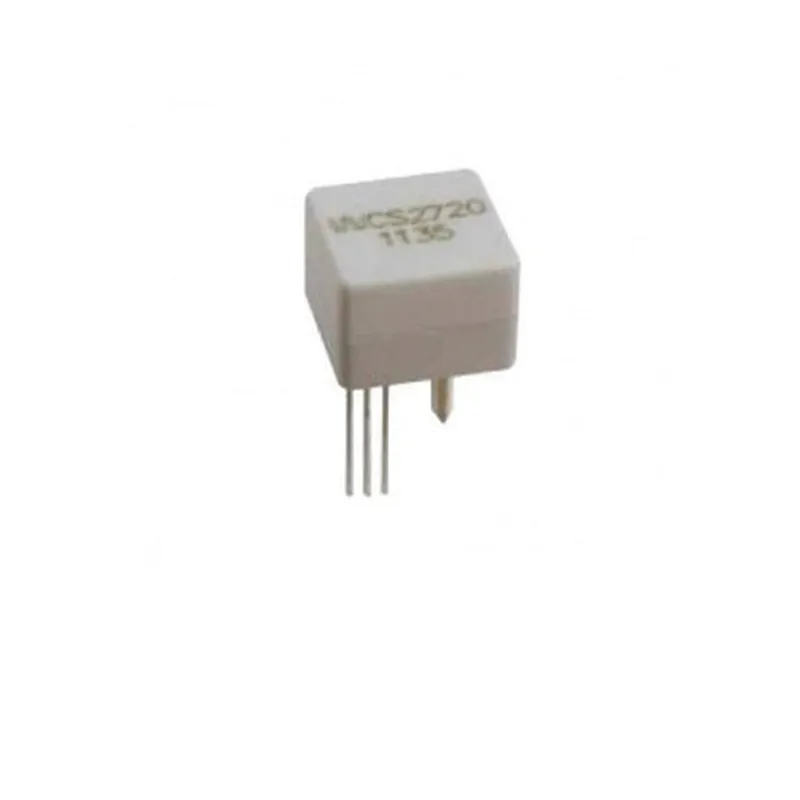
Overview

The Original WCS2720 Hall Effect based Linear Current Sensor is a high-precision, open-loop current sensor designed to measure linear DC currents ranging from 0 to 20A. This sensor utilizes the Hall Effect principle to detect changes in the magnetic field generated by the current flow, providing an accurate and reliable measurement of the current.

Functionality

The WCS2720 current sensor is designed to measure the linear DC current flowing through a conductor, such as a wire or a busbar. The sensor operates on the principle of the Hall Effect, which states that when a current flows through a conductor, it generates a magnetic field perpendicular to the direction of the current flow. The Hall Effect sensor measures the strength of this magnetic field and converts it into a proportional voltage output, allowing for accurate current measurement.

Key Features

  • Linear Output: The WCS2720 provides a linear output voltage proportional to the measured current, making it suitable for applications requiring high accuracy and linearity.
  • Hall Effect Principle: The sensor utilizes the Hall Effect principle, which ensures high accuracy and reliability in current measurement.
  • Wide Operating Range: The WCS2720 can measure currents ranging from 0 to 20A, making it suitable for a wide range of applications.
  • High Sensitivity: The sensor has a high sensitivity of 100mV/A, ensuring accurate measurements even at low current levels.
  • Low Power Consumption: The WCS2720 has a low power consumption of 10mA, making it suitable for battery-powered or energy-efficient applications.
  • Compact Design: The sensor has a compact design, making it ideal for applications where space is limited.
  • Operating Temperature: The WCS2720 can operate in temperatures ranging from -20C to 80C, making it suitable for use in various environmental conditions.
  • Isolation: The sensor provides electrical isolation between the primary circuit and the output signal, ensuring safe and reliable operation.
  • High Accuracy: The WCS2720 has a high accuracy of 1.5% (typical) and 3% (maximum), ensuring reliable current measurements.
  • RoHS Compliant: The sensor is RoHS (Restriction of Hazardous Substances) compliant, making it an environmentally friendly option.

Applications

  • Power Supplies: The sensor can be used to monitor current draw in power supplies, ensuring efficient and safe operation.
  • Motor Control: The WCS2720 can be used to monitor motor current in applications such as industrial automation, HVAC systems, and electric vehicles.
  • Battery Management: The sensor can be used to monitor battery charging and discharging currents in applications such as renewable energy systems and electric vehicles.
  • Industrial Automation: The WCS2720 can be used to monitor current in industrial automation applications, such as PLC systems and robotics.
The Original WCS2720 Hall Effect based Linear Current Sensor is suitable for a wide range of applications, including

Technical Specifications

| Parameter | Value |

| --- | --- |

| Measurement Range | 0-20A |

| Sensitivity | 100mV/A |

| Linearity | 1.5% (typical), 3% (maximum) |

| Operating Voltage | 5V |

| Power Consumption | 10mA |

| Operating Temperature | -20C to 80C |

| Isolation | Electrical isolation between primary circuit and output signal |

| Response Time | 10s |

| Output Impedance | 1k |

Package and Dimensions

The WCS2720 is available in a compact, surface-mount package with dimensions of 12mm x 10mm x 4mm.

Pin Configuration

  • Original WCS2720 Hall Effect based Linear Current Sensor (0-20A) Pinout and Connection Guide
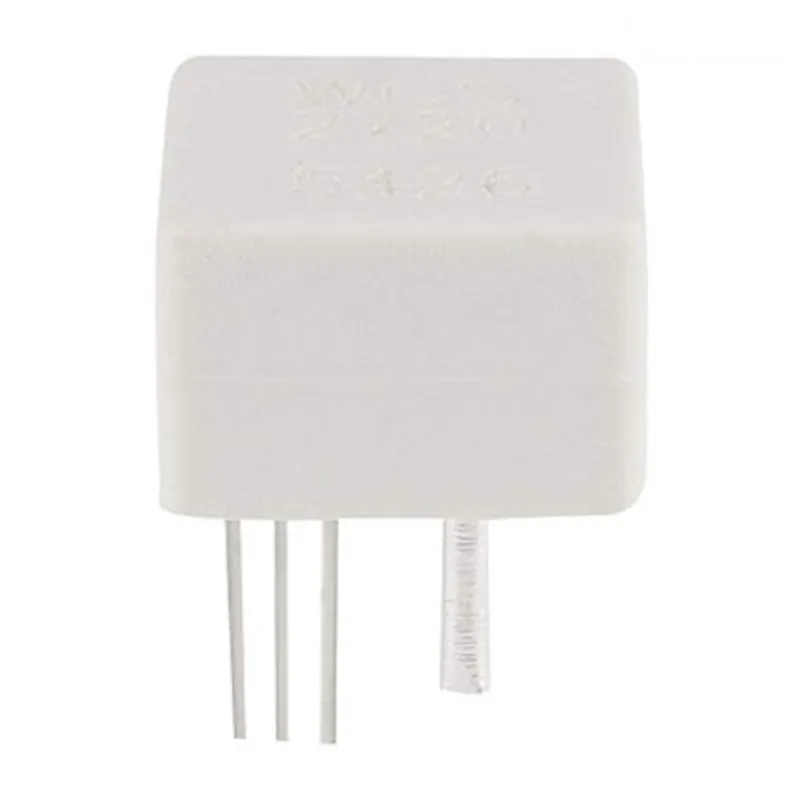
  • The Original WCS2720 is a Hall Effect based linear current sensor capable of measuring currents up to 20A. It provides a high-accuracy, high-sensitivity, and low-power consumption solution for various IoT applications. Here's a detailed explanation of each pin and a step-by-step connection guide:
  • Pin Description:
  • 1. VCC (Pin 1):
  • Function: Power supply pin
  • Description: This pin connects to the positive terminal of the power supply (typically 5V)
  • Recommended voltage range: 4.5V to 5.5V
  • 2. GND (Pin 2):
  • Function: Ground pin
  • Description: This pin connects to the negative terminal of the power supply (GND)
  • 3. VIN+ (Pin 3):
  • Function: Current sensing input positive terminal
  • Description: This pin connects to the positive terminal of the current-carrying wire
  • 4. VIN- (Pin 4):
  • Function: Current sensing input negative terminal
  • Description: This pin connects to the negative terminal of the current-carrying wire
  • 5. VOUT (Pin 5):
  • Function: Output voltage pin
  • Description: This pin provides an analog output voltage proportional to the measured current
  • Connection Structure:
  • To connect the WCS2720, follow these steps:
  • Step 1: Power Supply Connection
  • Connect VCC (Pin 1) to the positive terminal of the power supply (typically 5V)
  • Connect GND (Pin 2) to the negative terminal of the power supply (GND)
  • Step 2: Current Sensing Connection
  • Connect VIN+ (Pin 3) to the positive terminal of the current-carrying wire
  • Connect VIN- (Pin 4) to the negative terminal of the current-carrying wire
  • Step 3: Output Connection
  • Connect VOUT (Pin 5) to an analog-to-digital converter (ADC) or a microcontroller's analog input pin
  • Important Notes:
  • Ensure the current-carrying wire is properly connected to the VIN+ and VIN- pins to avoid measurement errors.
  • The WCS2720 has a built-in overcurrent protection. However, it's essential to add external protection components (e.g., fuses or PTCs) to prevent damage from excessive currents.
  • The output voltage (VOUT) is proportional to the measured current. The output voltage range is 0-5V, with 0V indicating 0A and 5V indicating 20A.
  • By following this pinout and connection guide, you can effectively use the Original WCS2720 Hall Effect based Linear Current Sensor (0-20A) in your IoT applications.

Code Examples

Original WCS2720 Hall Effect based Linear Current Sensor (0-20A) Documentation
Overview
The Original WCS2720 is a high-accuracy, Hall Effect-based linear current sensor capable of measuring currents up to 20A. This sensor provides a linear output voltage proportional to the input current, making it an ideal choice for various IoT applications, including power monitoring, battery management, and motor control.
Pinout and Hardware Description
The WCS2720 current sensor has a 5-pin package with the following pinout:
VCC: Supply voltage (typically 5V)
 GND: Ground
 VIN: Input current sensing terminal
 VOUT: Output voltage terminal
 ENABLE: Enable pin (active high)
Specifications
Measurement range: 0-20A
 Sensitivity: 100mV/A
 Accuracy: 1% of full scale
 Response time: 1s
 Operating temperature: -40C to 125C
Code Examples
### Example 1: Basic Current Measurement using Arduino
This example demonstrates how to use the WCS2720 current sensor with an Arduino board to measure the current flowing through a load.
```c
const int sensorPin = A0;  // VOUT pin connected to analog input A0
const int enablePin = 2;   // ENABLE pin connected to digital output 2
const float sensitivity = 0.1;  // 100mV/A
void setup() {
  pinMode(enablePin, OUTPUT);
  digitalWrite(enablePin, HIGH);  // Enable the sensor
  Serial.begin(9600);
}
void loop() {
  int sensorValue = analogRead(sensorPin);
  float current = sensorValue  sensitivity;
  Serial.print("Current: ");
  Serial.print(current, 2);
  Serial.println(" A");
  delay(1000);
}
```
### Example 2: Current Monitoring using Raspberry Pi and Python
This example demonstrates how to use the WCS2720 current sensor with a Raspberry Pi board to monitor the current flowing through a load using Python.
```python
import RPi.GPIO as GPIO
import time
GPIO.setmode(GPIO.BCM)
sensor_pin = 18  # VOUT pin connected to GPIO 18
enable_pin = 23  # ENABLE pin connected to GPIO 23
GPIO.setup(enable_pin, GPIO.OUT)
GPIO.output(enable_pin, GPIO.HIGH)  # Enable the sensor
while True:
    adc_value = GPIO.input(sensor_pin)
    current = adc_value  0.1  # 100mV/A
    print("Current: {:.2f} A".format(current))
    time.sleep(1)
```
Note: In this example, we assume the use of an ADC module (e.g., ADC0832) to convert the analog output voltage of the WCS2720 to a digital value.
Important Considerations
Ensure proper wiring and connection of the sensor to the microcontroller or single-board computer.
 Use a suitable voltage regulator to power the sensor, if necessary.
 Implement protective measures (e.g., overcurrent protection, thermal monitoring) in your design to prevent damage to the sensor or surrounding components.
By following these examples and guidelines, you can effectively integrate the Original WCS2720 Hall Effect-based linear current sensor into your IoT projects, enabling accurate and reliable current measurement and monitoring.