M5 Stack Mini Angle Unit with Potentiometer


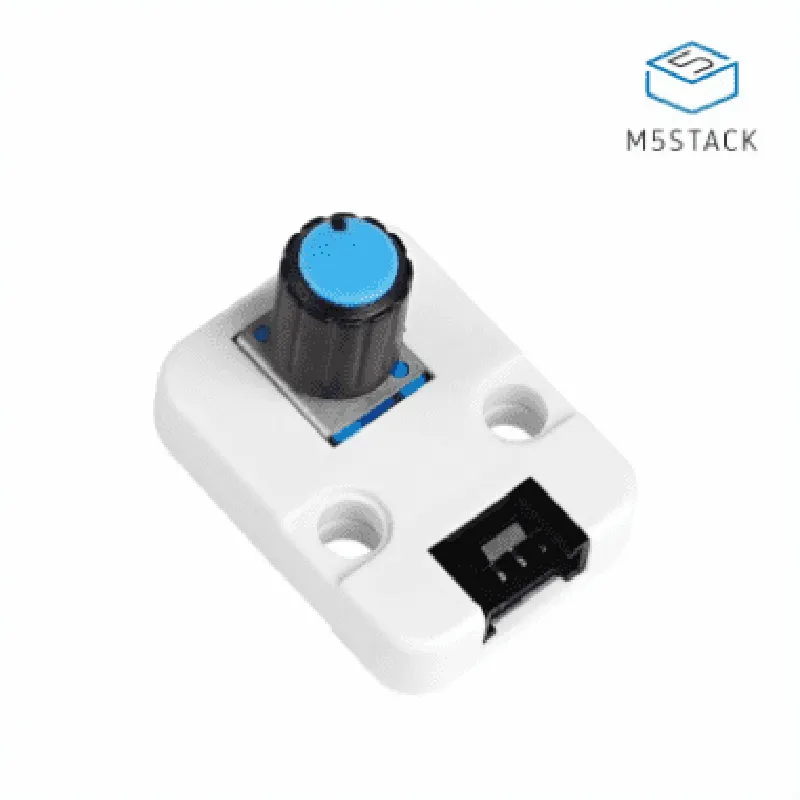
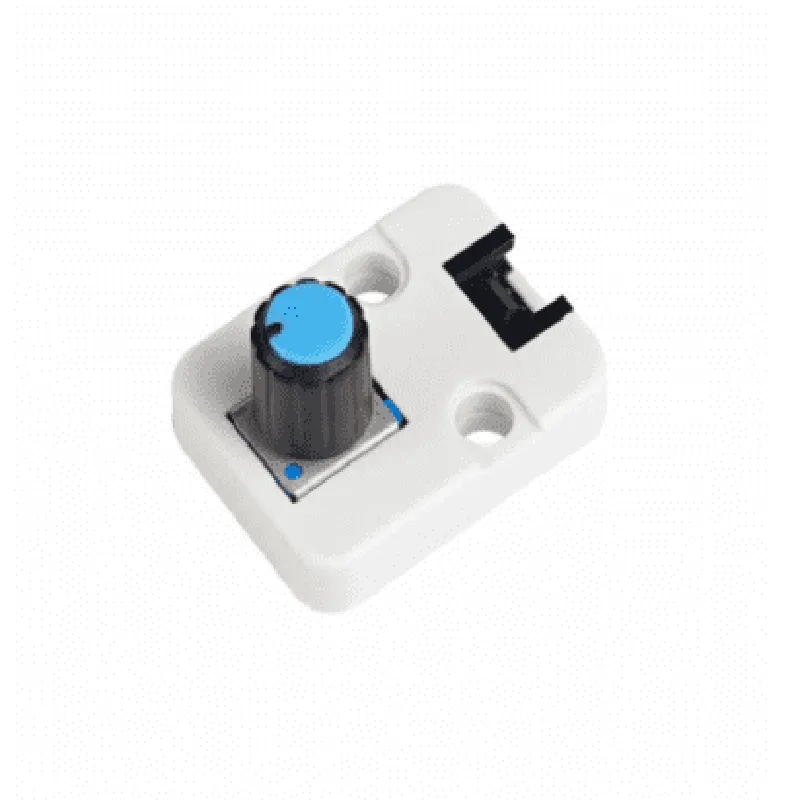
M5 Stack Mini Angle Unit with Potentiometer
The M5 Stack Mini Angle Unit with Potentiometer is a compact, modular component designed for IoT and robotics applications. It combines a precise potentiometer with a robust servo motor, enabling accurate angle measurements and control. This module is part of the M5 Stack series, known for their versatility and ease of integration into various projects.
| The M5 Stack Mini Angle Unit with Potentiometer serves two primary functions |
Offers accurate angle measurements with a resolution of 0.1
Operates over a range of 0 to 300
Provides a highly linear output signal, ensuring reliable and consistent measurements
Delivers a high torque output, making it suitable for applications requiring precision control
Operates at a low power consumption, reducing heat generation and minimizing power supply requirements
Built with durable materials, ensuring long-lasting performance and reliability
| M5 Stack Interface |
The module features a compact, stackable design, making it easy to integrate into M5 Stack-based projects
Connects to the M5 Stack using a standard Grove interface, minimizing wiring complexity
Compatible with a wide range of M5 Stack boards and modules, allowing for seamless integration into various applications
The module features a sturdy, metal shaft that can be easily attached to external components or mechanisms
Offers multiple mounting options, including screws and adhesives, for secure installation in various environments
Designed to operate in a wide range of temperatures (-20C to 80C) and humidity levels (20% to 80%)
25 x 25 x 14 mm (L x W x H)
20 grams
3.3V to 5V
15mA (idle), 100mA (max)
UART, I2C, or API (dependent on the connected M5 Stack board)
| The M5 Stack Mini Angle Unit with Potentiometer is an ideal component for various IoT and robotics applications, including |
Robotics and automation systems
Industrial control systems
Medical devices and equipment
Aerospace and defense applications
Prototyping and proof-of-concept projects
By combining the precision of a potentiometer with the control capabilities of a servo motor, this module provides a robust and versatile solution for angle measurement and control in a wide range of applications.
M5 Stack Mini Angle Unit with Potentiometer DocumentationOverviewThe M5 Stack Mini Angle Unit with Potentiometer is a compact IoT component designed for precise angle measurement and control applications. It features a high-precision potentiometer that provides analog output proportional to the angular displacement of the shaft. This documentation provides a comprehensive guide to using the M5 Stack Mini Angle Unit with Potentiometer, including code examples for various contexts.Hardware CharacteristicsHigh-precision potentiometer with 10k impedance
Operating voltage: 3.3V - 5V
Analog output voltage range: 0V - VCC
Shaft rotation angle range: 0 - 300
Resolution: 0.1
Interface: 3-pin (VCC, GND, OUT)Software Libraries and DependenciesThe M5 Stack Mini Angle Unit with Potentiometer can be used with the official M5Stack Arduino library. Ensure you have the latest version of the library installed in your Arduino IDE.Code Examples### Example 1: Basic Angle MeasurementThis example demonstrates how to read the angle value from the potentiometer and display it on the serial console.```c++
#include <M5Stack.h>#define POT_PIN 32 // Analog input pin for potentiometervoid setup() {
M5.begin();
Serial.begin(115200);
}void loop() {
int potValue = analogRead(POT_PIN);
float angle = (potValue / 4096.0) 300.0; // Convert analog value to angle (0 - 300)
Serial.print("Angle: ");
Serial.print(angle);
Serial.println(" degrees");
delay(50);
}
```### Example 2: Servo Control using Angle FeedbackThis example demonstrates how to use the M5 Stack Mini Angle Unit with Potentiometer as feedback for a servo motor. The servo motor is controlled to maintain a specific angle setpoint.```c++
#include <M5Stack.h>
#include <Servo.h>#define POT_PIN 32 // Analog input pin for potentiometer
#define SERVO_PIN 13 // Digital output pin for servoServo myServo;void setup() {
M5.begin();
myServo.attach(SERVO_PIN);
}void loop() {
int potValue = analogRead(POT_PIN);
float angle = (potValue / 4096.0) 300.0; // Convert analog value to angle (0 - 300)
int setpoint = 150; // Desired angle setpoint (150)
int error = angle - setpoint;
if (error > 10) {
myServo.write(180); // Rotate servo clockwise
} else if (error < -10) {
myServo.write(0); // Rotate servo counter-clockwise
} else {
myServo.write(90); // Hold servo at current position
}
delay(50);
}
```Note: In the examples above, the `POT_PIN` and `SERVO_PIN` definitions should be adjusted according to your specific setup.These code examples demonstrate the basic usage of the M5 Stack Mini Angle Unit with Potentiometer. The component can be used in various IoT applications, such as robotics, automation, and smart devices, where precise angle measurement and control are essential.