

Stufin
Home Quick Cart Profile

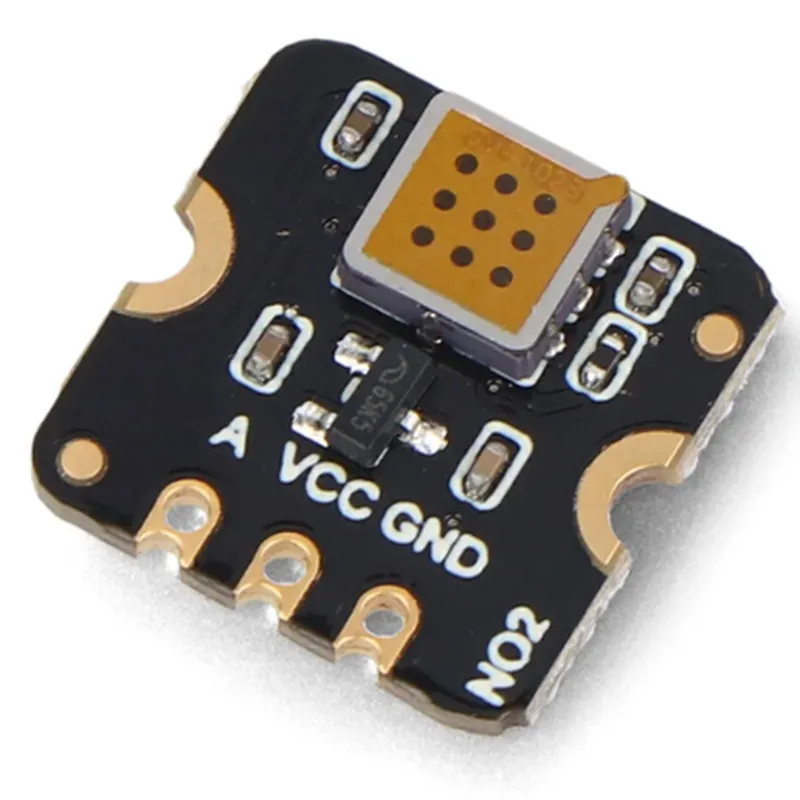
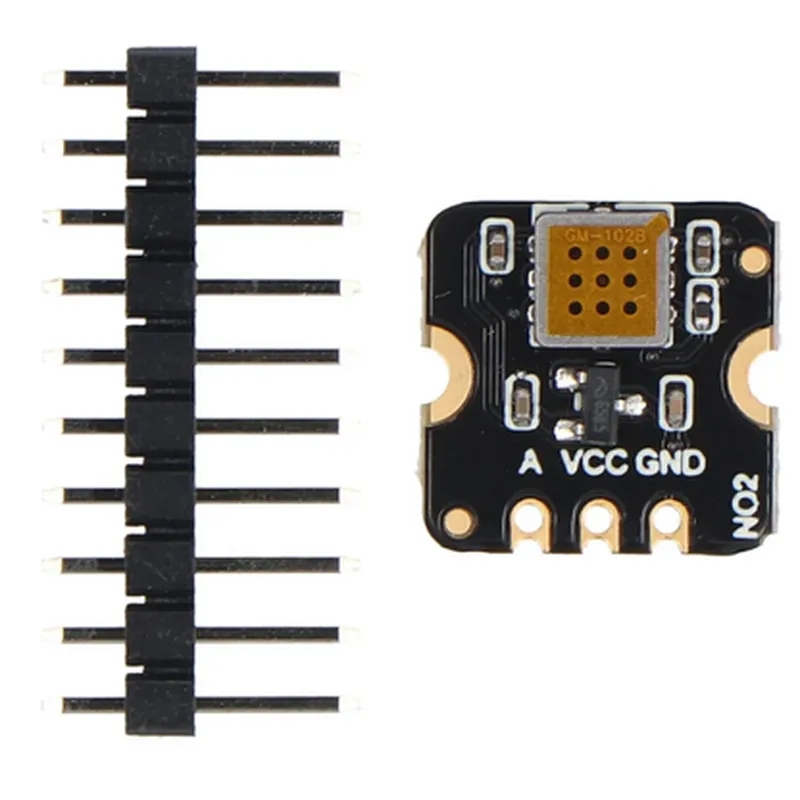
Fermion: MEMS Nitrogen Dioxide NO2 Gas Detection Sensor

Buy Now on Stufin

Fermion

MEMS Nitrogen Dioxide (NO2) Gas Detection Sensor

Overview

The Fermion MEMS Nitrogen Dioxide (NO2) Gas Detection Sensor is a cutting-edge, miniature sensor designed to detect and measure nitrogen dioxide (NO2) gas concentrations in the air. This sensor utilizes Micro-Electro-Mechanical Systems (MEMS) technology to provide high accuracy, reliability, and sensitivity in a compact package.

Functionality

The Fermion NO2 Gas Detection Sensor is designed to detect and quantify the concentration of nitrogen dioxide (NO2) gas in the air. NO2 is a toxic gas that can cause respiratory problems and is a key contributor to air pollution. The sensor's primary function is to provide real-time measurements of NO2 concentrations, allowing users to monitor and respond to changes in air quality.

Key Features

  • High Sensitivity and Accuracy: The Fermion NO2 sensor boasts high sensitivity and accuracy, enabling it to detect NO2 concentrations as low as 10 ppb (parts per billion).
  • MEMS Technology: The sensor's MEMS design ensures a compact form factor, low power consumption, and high reliability.
  • Real-Time Measurement: The sensor provides real-time measurements of NO2 concentrations, allowing for swift response to changes in air quality.
  • Low Power Consumption: The sensor operates at a low power consumption of <5 mA, making it suitable for battery-powered devices and IoT applications.
  • Wide Operating Range: The sensor can operate in a wide temperature range of -20C to 50C and humidity range of 20% to 80% RH.
  • Digital Output: The sensor provides a digital output, allowing for easy integration with microcontrollers, IoT platforms, and other digital systems.
  • Small Form Factor: The sensor's compact design (12.8 mm x 9.8 mm x 2.5 mm) makes it ideal for integration into space-constrained devices and applications.
  • Long-Term Stability: The sensor's MEMS design and proprietary sensing technology ensure long-term stability and minimal drift, reducing the need for frequent calibration.
  • Compliance with Industry Standards: The Fermion NO2 sensor meets or exceeds industry standards for gas detection sensors, including those set by the US Environmental Protection Agency (EPA).

Technical Specifications

Sensing Principle

Electrochemical

Sensing Material

Proprietary MEMS-based sensing material

Detection Range

10 ppb to 500 ppm

Accuracy

10% of reading or 2 ppb, whichever is greater

Response Time

<30 seconds

Power Supply

3.3 V or 5 V DC

Interface

I2C or UART digital output

Operating Temperature

-20C to 50C

Operating Humidity

20% to 80% RH

Applications

The Fermion NO2 Gas Detection Sensor is suitable for a wide range of applications, including

Air quality monitoring systems

Industrial process control and emissions monitoring

Environmental monitoring and pollution control

HVAC and ventilation systems

Wearable devices and personal air quality monitors

IoT and smart city applications

Conclusion

The Fermion MEMS Nitrogen Dioxide (NO2) Gas Detection Sensor is a cutting-edge, high-performance sensor designed for accurate and reliable measurement of NO2 gas concentrations. Its compact design, low power consumption, and digital output make it an ideal choice for a wide range of applications, from industrial process control to wearable devices and IoT platforms.

Pin Configuration

  • Fermion: MEMS Nitrogen Dioxide NO2 Gas Detection Sensor Pinout
  • The Fermion MEMS Nitrogen Dioxide NO2 Gas Detection Sensor has a total of 6 pins, which are described below:
  • Pin 1: VCC (Power Supply Voltage)
  • Function: Power supply voltage input
  • Voltage range: 3.3V to 5.5V
  • Recommended voltage: 3.3V or 5V
  • Description: This pin is used to power the sensor and should be connected to a stable power supply voltage.
  • Pin 2: GND (Ground)
  • Function: Ground connection
  • Description: This pin is used as a reference point for the sensor's internal circuitry and should be connected to the ground plane of the system.
  • Pin 3: SCL (I2C Clock Signal)
  • Function: I2C clock signal input
  • Description: This pin is used as the clock input for the I2C communication protocol. It should be connected to the SCL pin of the microcontroller or I2C master device.
  • Pin 4: SDA (I2C Data Signal)
  • Function: I2C data signal input/output
  • Description: This pin is used for data transmission and reception between the sensor and the microcontroller or I2C master device. It should be connected to the SDA pin of the microcontroller or I2C master device.
  • Pin 5: INT (Interrupt Output)
  • Function: Interrupt output signal
  • Description: This pin is used to indicate when the sensor has detected a change in the NO2 gas concentration. The pin goes high when a threshold is exceeded, and can be used to trigger an interrupt on the microcontroller.
  • Pin 6: NC (No Connection)
  • Function: No internal connection
  • Description: This pin is not connected internally and should be left unconnected.
  • Connection Structure:
  • To connect the Fermion MEMS Nitrogen Dioxide NO2 Gas Detection Sensor to a microcontroller or I2C master device, follow the below structure:
  • Connect Pin 1 (VCC) to a 3.3V or 5V power supply voltage.
  • Connect Pin 2 (GND) to the ground plane of the system.
  • Connect Pin 3 (SCL) to the SCL pin of the microcontroller or I2C master device.
  • Connect Pin 4 (SDA) to the SDA pin of the microcontroller or I2C master device.
  • Connect Pin 5 (INT) to an interrupt input pin on the microcontroller (if using interrupt mode).
  • Leave Pin 6 (NC) unconnected.
  • Note: Make sure to use level shifters or voltage dividers if the microcontroller or I2C master device operates at a different voltage level than the sensor.
  • Recommendation: Before connecting the sensor to a microcontroller or I2C master device, ensure that the power supply voltage and communication protocol settings are correctly configured to match the sensor's requirements.

Code Examples

Fermion: MEMS Nitrogen Dioxide NO2 Gas Detection Sensor
Overview
The Fermion: MEMS Nitrogen Dioxide NO2 Gas Detection Sensor is a high-performance, low-power gas sensor that detects nitrogen dioxide (NO2) concentrations in the air. This sensor utilizes Micro-Electro-Mechanical Systems (MEMS) technology to provide accurate and reliable measurements. The sensor is designed for use in various applications, including air quality monitoring, industrial automation, and environmental monitoring.
Technical Specifications
Supply Voltage: 3.3V to 5.5V
 Operating Temperature: -20C to 50C
 Sensitivity: 10 ppb to 500 ppb NO2
 Accuracy: 10%
 Response Time: <10 seconds
 Output Signal: Analog (0-3.3V) or Digital (UART, I2C)
Code Examples
### Example 1: Arduino Analog Read
In this example, we will connect the Fermion NO2 Gas Detection Sensor to an Arduino board and read the analog output signal to measure the NO2 concentration.
```cpp
const int no2Pin = A0;  // Analog input pin for NO2 sensor
void setup() {
  Serial.begin(9600);
}
void loop() {
  int no2Value = analogRead(no2Pin);
  float no2Concentration = (no2Value  3.3) / 1023;  // Convert analog value to voltage (0-3.3V)
  no2Concentration = (no2Concentration - 0.5) / 0.08;  // Convert voltage to NO2 concentration (ppb)
Serial.print("NO2 Concentration: ");
  Serial.print(no2Concentration);
  Serial.println(" ppb");
delay(1000);
}
```
### Example 2: Raspberry Pi Python UART Interface
In this example, we will connect the Fermion NO2 Gas Detection Sensor to a Raspberry Pi and read the digital output signal using the UART interface.
```python
import serial
import time
# Initialize UART connection
ser = serial.Serial('/dev/ttyUSB0', 9600, timeout=1)
while True:
    # Send command to sensor to take a measurement
    ser.write(b'meas
')
    time.sleep(0.5)
# Read response from sensor
    response = ser.readline().decode().strip()
# Extract NO2 concentration from response
    no2_concentration = int(response.split(':')[1].strip())
print(f'NO2 Concentration: {no2_concentration} ppb')
time.sleep(1)
```
### Example 3: ESP32 MicroPython I2C Interface
In this example, we will connect the Fermion NO2 Gas Detection Sensor to an ESP32 board and read the digital output signal using the I2C interface.
```python
import machine
import utime
# Initialize I2C interface
i2c = machine.I2C(scl=machine.Pin(22), sda=machine.Pin(21))
# Set I2C address of sensor
i2c_addr = 0x5A
while True:
    # Send command to sensor to take a measurement
    i2c.writeto(i2c_addr, b'meas')
# Read response from sensor
    response = i2c.readfrom(i2c_addr, 2)
# Extract NO2 concentration from response
    no2_concentration = int.from_bytes(response, 'big')
print(f'NO2 Concentration: {no2_concentration} ppb')
utime.sleep(1)
```
Note: In these examples, the sensor's VCC pin should be connected to the power supply (3.3V or 5V), and the GND pin should be connected to the ground. The sensor's output signal pin (analog or digital) should be connected to the corresponding input pin on the microcontroller board.