555 Timer IC


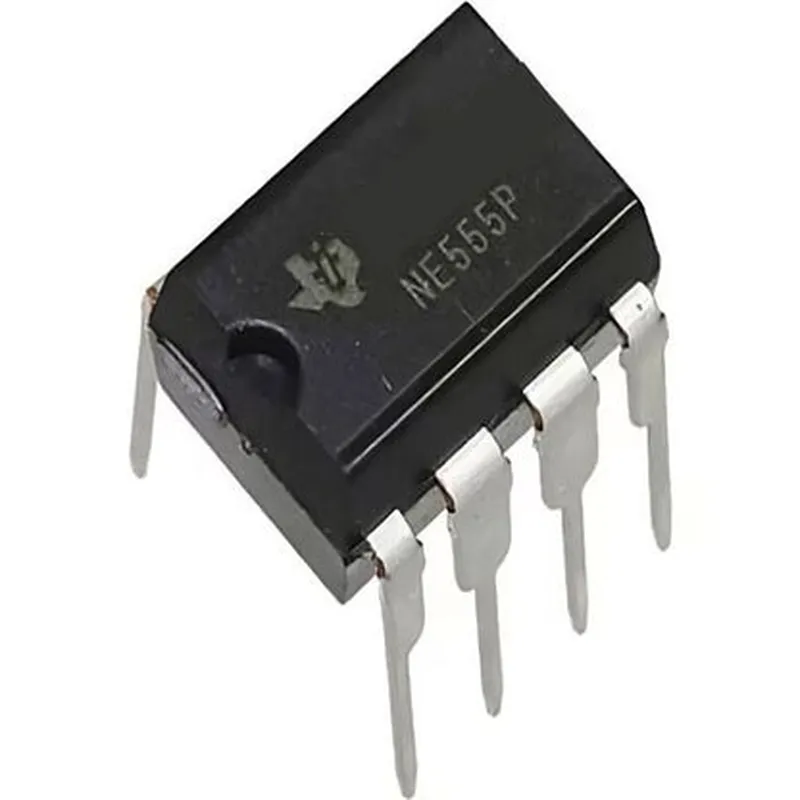
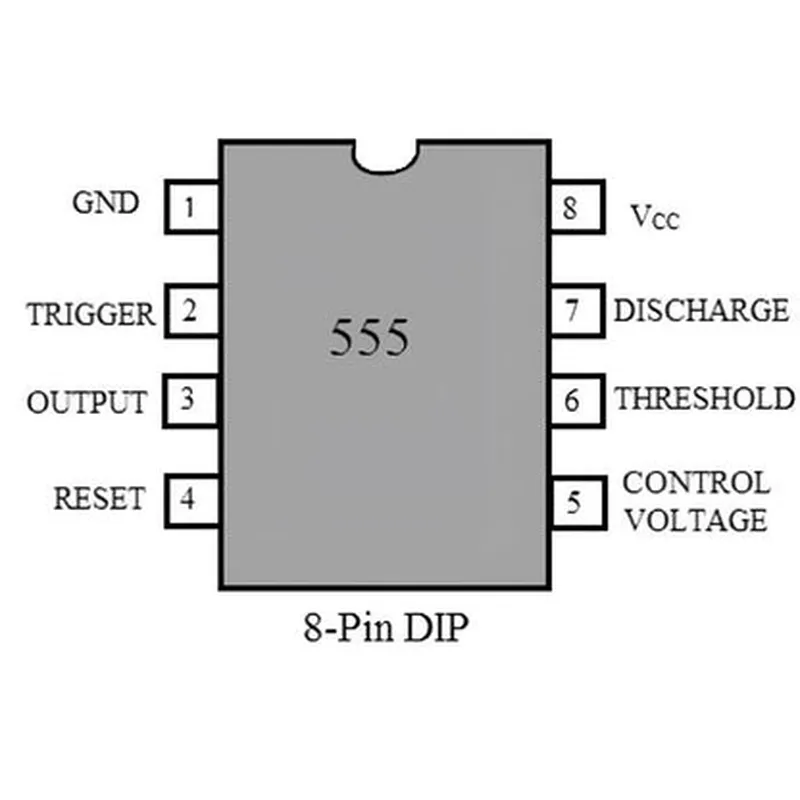
555 Timer IC
The 555 Timer IC is a widely used and versatile integrated circuit (IC) that operates as a timer, oscillator, or flip-flop device. It is a crucial component in various electronic circuits, particularly in applications requiring timing, pulse generation, and oscillation. The 555 Timer IC is an 8-pin device that provides a precise timing interval, making it an essential component in many Internet of Things (IoT) projects, robots, and embedded systems.
| The 555 Timer IC can operate in three primary modes |
| The 555 Timer IC has an 8-pin package with the following pinout |
| The 555 Timer IC is widely used in various applications, including |
The 555 Timer IC is a versatile and widely used component in electronic circuits, offering a range of timing, oscillation, and pulse generation capabilities. Its low power consumption, flexibility, and ease of use make it an essential component in many IoT projects, robots, and embedded systems.
555 Timer IC DocumentationOverviewThe 555 Timer IC is a highly versatile and widely used integrated circuit (IC) in various electronic circuits. It is a type of timer IC that can operate in three modes: monostable, bistable, and astable. The 555 Timer IC is commonly used in digital and analog circuits for applications such as timing, pulse generation, and oscillation.Pin ConfigurationThe 555 Timer IC has 8 pins:1. VCC (Supply Voltage)
2. GND (Ground)
3. Trigger (Input)
4. Reset (Input)
5. Control Voltage (Input)
6. Threshold (Input)
7. Discharge (Output)
8. Output (Output)Code Examples### Example 1: Monostable Mode (One-Shot Timer)In this example, we will create a simple one-shot timer using the 555 Timer IC in monostable mode.Circuit DiagramConnect VCC to a 5V power supply
Connect GND to ground
Connect Trigger (pin 3) to a push-button switch
Connect Output (pin 6) to an LED
Connect a 1k resistor between VCC and the trigger pin
Connect a 10F capacitor between the trigger pin and GNDArduino Code
```c
void setup() {
pinMode(6, OUTPUT); // Output pin
}void loop() {
digitalWrite(6, HIGH); // Initial output state
if (digitalRead(3) == LOW) { // Trigger pin is grounded
delay(1000); // Wait for 1 second
digitalWrite(6, LOW); // Output goes low
}
}
```
ExplanationWhen the push-button switch is pressed, the trigger pin is grounded, and the 555 Timer IC generates a single pulse at the output pin, turning the LED on for 1 second.### Example 2: Astable Mode (Oscillator)In this example, we will create a simple oscillator using the 555 Timer IC in astable mode.Circuit DiagramConnect VCC to a 5V power supply
Connect GND to ground
Connect Threshold (pin 6) to a 1k resistor
Connect the resistor to a 10F capacitor
Connect the capacitor to GND
Connect Output (pin 3) to an LED
Connect a 1k resistor between Output and VCCArduino Code
```c
void setup() {
pinMode(3, OUTPUT); // Output pin
}void loop() {
analogWrite(3, 128); // Output a 50% duty cycle signal
}
```
ExplanationThe 555 Timer IC oscillates at a frequency determined by the values of the resistors and capacitors, generating a square wave at the output pin. The LED will blink at the same frequency.Note: These examples are simplified and are meant to demonstrate the basic usage of the 555 Timer IC. In a real-world scenario, you would need to consider additional components, such as resistors, capacitors, and power supply decoupling, to ensure stable operation.I hope this helps! Let me know if you have any questions or need further clarification.