RDS3115MG 15KG Large Torque 180 Degree Servo Motor with Brackets


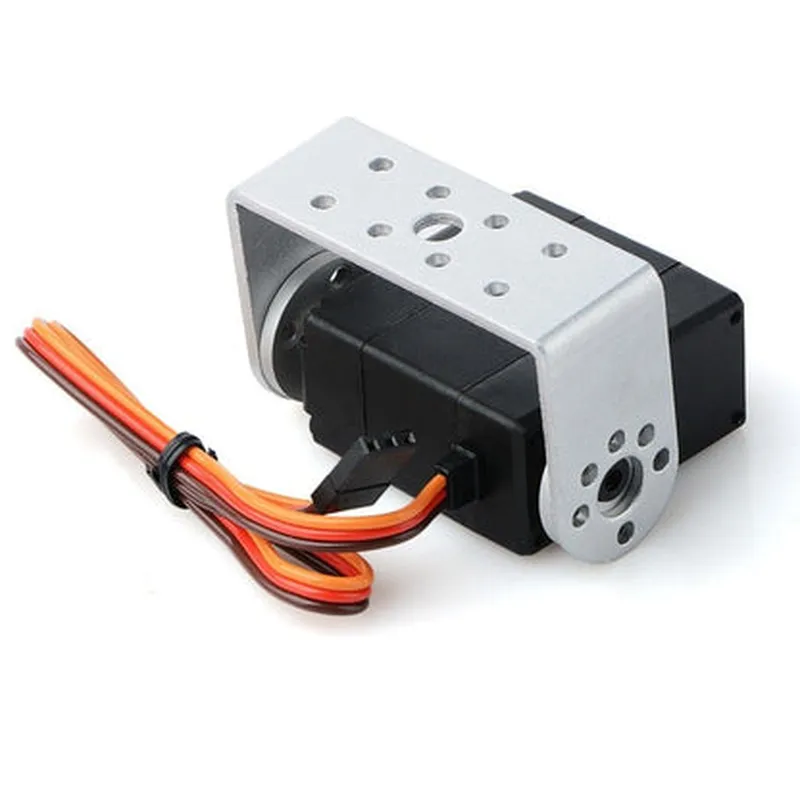
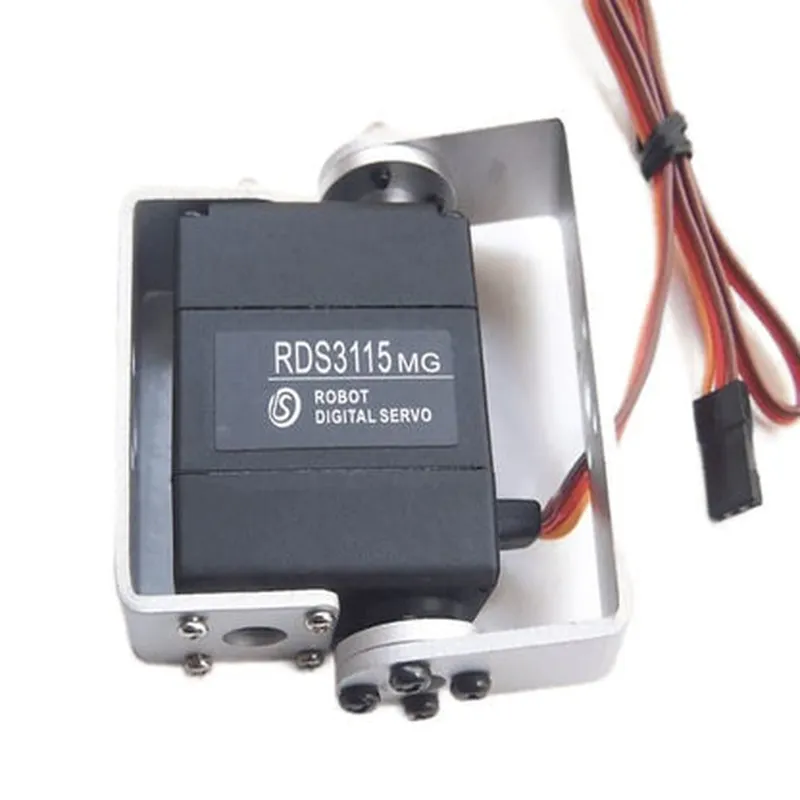
RDS3115MG 15KG Large Torque 180 Degree Servo Motor with Brackets
The RDS3115MG is a high-performance servo motor designed for applications requiring high torque and precise control. This device is a versatile and powerful component suitable for various IoT projects, robotics, and automation systems.
The RDS3115MG servo motor is designed to rotate a shaft to a specific angular position, holding it there until instructed to move to another position. This motor uses pulse-width modulation (PWM) signals to control its movement, allowing for precise and smooth operation. The servo motor can rotate up to 180 degrees, making it suitable for applications requiring a wide range of motion.
### Mechanical Characteristics
15kg/cm (208.8 oz-in)
0.12 sec/60 (4.8V), 0.10 sec/60 (6.0V)
180 degrees
Metal gear
Dual ball bearing
DC motor with encoder
25T spline
### Electrical Characteristics
4.8V - 6.0V
1.2A (at 4.8V), 1.5A (at 6.0V)
5.76W (at 4.8V), 9W (at 6.0V)
### Control and Interface
3-wire (VCC, GND, Signal)
PWM (Pulse-Width Modulation)
50Hz (standard), 150Hz (optional)
0 - 180
### Physical Characteristics
40.7mm x 20.6mm x 44.5mm (motor body), 59.5mm x 25.5mm x 44.5mm (including brackets)
140g (motor body), 220g (including brackets)
Aluminum alloy (motor body), ABS plastic (brackets)
### Additional Features
| High-precision metal gears | Ensuring smooth and quiet operation |
Reducing friction and increasing motor lifespan
| 180-degree rotation | Suitable for applications requiring a wide range of motion |
Ideal for integration into space-constrained projects
Providing accurate position feedback
| The RDS3115MG servo motor is suitable for various IoT projects, robotics, and automation systems, including |
Robotics and robotic arms
Automotive systems
Industrial automation
UAVs (Unmanned Aerial Vehicles) and drones
Home automation systems
Medical devices
Before using the servo motor, ensure proper connection and configuration according to the datasheet and user manual.
Handle the motor and brackets with care to prevent damage.
Use proper mounting and securing methods to prevent motor vibration and noise.
Avoid overloading the motor, as this can lead to damage or failure.
By following the guidelines and precautions outlined in this documentation, the RDS3115MG servo motor can be safely and effectively integrated into a wide range of IoT projects and applications.
RDS3115MG 15KG Large Torque 180 Degree Servo Motor with BracketsOverviewThe RDS3115MG is a high-torque, 180-degree servo motor designed for demanding applications requiring precise control and significant rotational force. This servo motor comes with brackets for easy installation and mounting. It is suitable for various IoT projects, including robotics, automation, and mechanical systems.Technical SpecificationsOperating Voltage: 6.0V - 12.0V
Torque: 15kg-cm
Speed: 0.17sec/60
Rotation Angle: 180
Signal Frequency: 50Hz
Operating Temperature: -20C - 60CConnecting the Servo MotorTo control the RDS3115MG servo motor, you will need a microcontroller or a dedicated servo controller. The motor has three connections:VCC (Red Wire): Power supply (6.0V - 12.0V)
GND (Black Wire): Ground
Signal (Yellow/White Wire): Control signal (50Hz)Code Examples### Example 1: Using an Arduino BoardIn this example, we will use an Arduino board to control the RDS3115MG servo motor.```cpp
#include <Servo.h>Servo myServo; // Create a servo objectvoid setup() {
myServo.attach(9); // Attach the servo to pin 9
}void loop() {
myServo.write(0); // Set the servo to 0 degrees
delay(1000);myServo.write(90); // Set the servo to 90 degrees
delay(1000);myServo.write(180); // Set the servo to 180 degrees
delay(1000);
}
```### Example 2: Using a Raspberry Pi with PythonIn this example, we will use a Raspberry Pi and Python to control the RDS3115MG servo motor.```python
import RPi.GPIO as GPIO
import time# Set up GPIO mode
GPIO.setmode(GPIO.BCM)# Set up the servo pin
servo_pin = 18
GPIO.setup(servo_pin, GPIO.OUT)# Create a PWM object
pwm = GPIO.PWM(servo_pin, 50)# Start the PWM
pwm.start(0)try:
while True:
# Set the servo to 0 degrees
pwm.ChangeDutyCycle(2.5)
time.sleep(1)# Set the servo to 90 degrees
pwm.ChangeDutyCycle(7.5)
time.sleep(1)# Set the servo to 180 degrees
pwm.ChangeDutyCycle(12.5)
time.sleep(1)except KeyboardInterrupt:
pwm.stop()
GPIO.cleanup()
```Note: In the Raspberry Pi example, you need to install the RPi.GPIO library and configure the GPIO pins accordingly.Important Safety ConsiderationsEnsure the power supply meets the motor's voltage and current requirements.
Avoid overloading the motor, as it may lead to damage or failure.
Keep the motor away from direct sunlight, moisture, and extreme temperatures.
Follow proper safety guidelines when working with electrical components.